image_1752123720635.webp

February 19, 2025

With an IMF determined to punish past misdemeanours and a government unwilling to embrace meaningful reform, Pakistan’s gas sector is as good as finished and will take industry down with it.

For over three decades, the government actively promoted industrial captive power generation, yet as energy sector mismanagement has resulted in surplus power capacity and escalating tariffs, captive power producers (CPPs) have been made the scapegoat. As the power sector crisis deepened, CPPs were blamed. Under the 2024 Stand-By Arrangement (SBA), the government proposed eliminating CPPs’ gas usage and forcing them onto the national grid to address stranded power capacity. However, this policy—developed without adequate analysis—risks destabilizing both the gas and industrial sectors, with broader economic repercussions. After months of uncertainty regarding gas supply for captive power, the government has opted not to cut off supply but has instead hiked the captive gas tariff to Rs. 3,500/MMBtu plus an additional “grid transition levy” to force industrial energy demand to the grid.

Energy pricing in Pakistan lacks any coherent market-driven logic. Power and gas tariffs are set based on arbitrary calculations that balance the government’s books—even then to the extend possible—rather than reflecting economic realities or ensuring efficient resource allocation. The grid transition levy is the latest in a series of such ill-conceived interventions.

Its stated goal is to align the cost of gas-fired captive generation with the B3 grid tariff, removing any cost advantage for captive power. Yet even the Ordinance through which it has been implemented is unclear about the mechanism with which to achieve this. It first directs authorities to calculate the levy by comparing industrial B3 tariffs with captive power costs, only to contradict itself by mandating automatic rate hikes—5% immediately, increasing to 20% by August 2026.

These conflicting approaches expose the policy’s lack of foresight. If the intent is to eliminate the cost advantage of captive power, then the appropriate mechanism would be a benchmark tariff applied across the board rather than a levy, given that captive consumers can currently avail gas through the utilities at Rs. 3,500/MMBtu or through third-party access at mutually negotiated rates.

Given the variation in effective prices faced by consumers, for the levy to achieve its objective it needs to be tailored to each consumer’s effective gas price. Moreover, for third-party access consumers, economic logic suggests that shippers would simply adjust prices to match the benchmark, capturing the levy as profit rather than achieving the intended policy outcome. This is a textbook case of market distortion, where intervention begets more intervention, ultimately failing to achieve its objective.

Beyond pricing, the assumption that captive consumers can seamlessly transition to the grid is deeply flawed. Grid inefficiencies, infrastructure limitations, and supply reliability remain major concerns. Captive plants operate at different efficiencies based on gas quality and operational conditions, yet the levy applies a blanket cost increase.

The most efficient plants will be penalized, while inefficient operations on the national grid are effectively rewarded.

While the Power Division has directed DISCOs and K-Electric to sign service level agreements (SLAs) with industrial consumers that include penalties for non-compliance, the very need for such agreements raises fundamental concerns. Shouldn’t the national grid inherently provide reliable, high-quality power to all consumers without requiring formal assurances? The fact that DISCOs are now pledging improved supply through SLAs is, in itself, an admission that the existing grid power supply is inadequate for industrial consumers.

Moreover, the SLA clause mandating consumers to source at least 70% of their energy consumption from the grid is highly problematic. Globally, industrial consumers integrate multiple energy sources—including solar, wind, furnace oil, coal, and gas-fired captive power generation—to optimize costs and ensure energy security. There is no regulatory restriction in Pakistan preventing such integration, and this requirement contradicts international best practices. It also severely impacts export-oriented industries, which are increasingly under pressure to meet sustainability commitments and transition towards carbon neutrality. While Pakistan benefits from significant hydropower capacity, the overall carbon footprint of grid electricity remains high due to the intermittency of renewables and continued reliance on thermal generation. Restricting industrial consumers’ ability to diversify energy sources not only undermines their environmental objectives but also weakens their global competitiveness.

Additionally, the cost implications of this requirement are severe. Forcing consumers to rely predominantly on an expensive grid deprives them of the opportunity to optimize costs through alternative, more affordable energy sources. Moreover, fines imposed on DISCOs for SLA violations offer little incentive for genuine compliance, as the financial burden inevitably circles back to consumers—further exacerbating already prohibitive power tariffs.

Adding to the absurdity is the claim that the levy’s revenue will be used to lower power tariffs. Even at Rs. 3,500/MMBtu, captive power generation is already more expensive than the January 2024 B3 grid tariff of ~13 cents/kWh even for the most efficient generators:


Gas consumption has plummeted, as reflected in declining Sui line pack reports, but whether grid consumption increases correspondingly increase remains to be seen. Alternative fuel sources such as furnace oil or coal-fired captive power remain cheaper than grid electricity, further undermining the policy’s effectiveness and making any significant revenue generation from the levy highly questionable.

Rather than introducing arbitrary levies and counterproductive administrative controls, the government should embrace a market-based approach. Textile industries, for instance, have consistently stated their willingness to pay full RLNG rates for self-generation. Yet, instead of allowing industries to procure gas at international prices, the government supplies the same to other consumers at highly subsidized rates, contributing to a Rs. 3 trillion gas circular debt. Pricing out the highest-paying consumers will only lead to exacerbation of the circular debt, billions in lost exports and millions of job losses.

The core issue is that true market reforms would expose the fragile economic equilibrium the government has built through administrative and price controls, and cross-subsidies—not just in energy, but across taxation and industrial policy as well.

Consider the Export Facilitation Scheme, which is actively discouraging domestic value addition in exports while promoting imports. Since July 2024, imported raw materials have been duty- and sales-tax-exempt under EFS, while locally produced inputs are subject to an 18% sales tax. If an exporter purchases local supplies, they must first pay 18% sales tax, then wait six to ten months to file for a refund, only to receive a partial reimbursement of about 70% after a delay of over 6 months, while the remaining 30% remains indefinitely stuck in a broken manual processing system that has seen no progress for years.

Despite universal acknowledgment of the distortionary impact of this policy, the government has refused to correct it. The result has been catastrophic: over 100 spinning units—representing 40% of Pakistan’s production capacity—have already shut down, with the remainder teetering on the brink of insolvency. If unaddressed, this crisis will inevitably spread further downstream to weaving, processing, and garment manufacturing, if energy prices don’t kill them first.

The government must decide whether it genuinely supports economic reform or if it intends to persist with the status quo. If it is serious about reform, it must embrace a market-driven approach—starting with the energy sector.

The grid transition levy must be abandoned, and the gas market must be fully opened, allowing industries to procure gas through third-party access or import their own LNG, free from government-imposed price distortions. The role of the Sui companies in upstream gas allocation should be phased out, restricting them to the gas transportation business only while allowing private-sector players to take over supply.

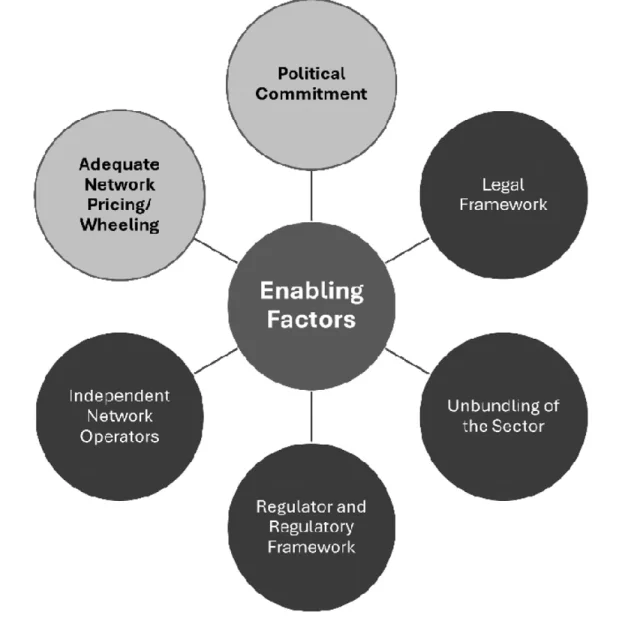
Beyond gas sector reform, Pakistan must also move towards liberalization of the power sector by operationalizing the Competitive Trading Bilateral Contract Market (CTBCM) that would allow industries to procure competitively priced electricity through B2B contracts. However, for CTBCM to succeed, it must have a rational and transparent wheeling charge of 1 to 1.5 cents/kWh, excluding cross subsidies and stranded costs of the grid, to ensure that industrial consumers are not burdened with extraneous costs unrelated to their actual consumption. A well-functioning power market will improve efficiency, encourage competition, and provide industries with reliable and cost-effective electricity, removing one of the biggest constraints to economic growth.

This would also enable industries access to clean and green electricity that is an increasing necessity for maintaining global competitiveness under upcoming international trade regulations, such as the EU’s Carbon Border Adjustment Mechanism (C-BAM) and existing net zero commitments that require exporters to demonstrate low carbon emissions during production.

If the government is serious about industrial growth, opening up of energy markets is the only way forward. Pakistan’s economy cannot afford half-measures. The continued reliance on flawed interventions will only deepen the crisis. The choice is clear: let the market decide.

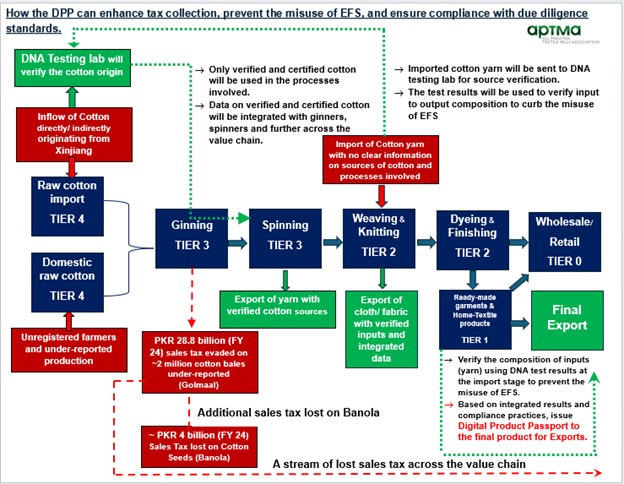
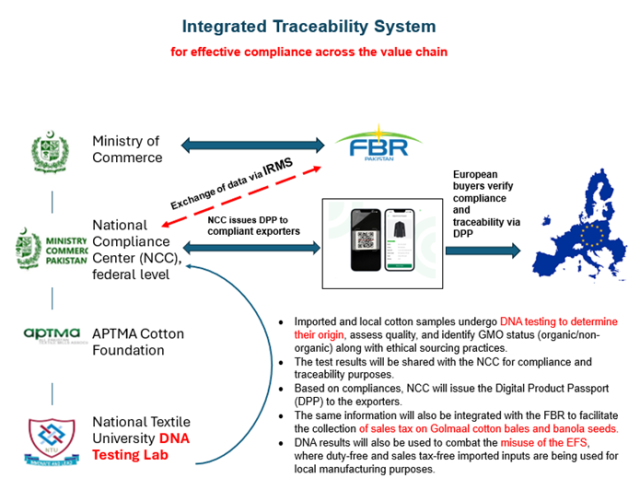
image_1753073243528-1280x853.webp

February 14, 2025

By Shahid Sattar | Sarah Javaid
As the EU tightens its regulations, many countries view compliance as a mere obligation, but the implications of this can have benefits far beyond maintaining trade relations. By aligning with sustainability standards, Pakistan can unlock access to global value chains, drive export-led growth, and tackle long-standing inefficiencies in the industrial value chain, including under-reporting, sales tax evasion, and the misuse of EFS.

With the EU accounting for 30% of Pakistan’s total exports, any regulatory shift from the EU will inevitably impact Pakistan’s trade. Rather than viewing this as a challenge, the policy makers need to turn this into an opportunity. While Pakistan has made progress under the GSP+ since 2014, continued access to the EU market will now depend upon compliance with their emerging regulations.

One such framework is the Digital Product Passport (DPP) under the Eco-design for Sustainable Products Regulation (ESPR), which was introduced in mid-2023 and will be enforced from 2027 onwards in sectors such as textiles, metals, and batteries. As the name suggests, the DPP represents a digital transformation in the industry’s value chain, enhancing transparency by digitally documenting product origins and production processes. It ensures due diligence in human rights and environmental standards across the value chain, preventing any product from qualifying for export without meeting transparency requirements. These requirements will be verified through a QR code displaying key production details, hence making the DPP a mandatory requirement for exporting to the EU.

But there’s more to it. Beyond ensuring due diligence, digitization through the DPP offers a real-time solution to perennial issues like under-invoicing, under-reporting, and EFS misuse. Pakistan must recognize this as a strategic advantage. Greater transparency will not only enhance access to global markets but also reinforce tax compliance.

Why Digitizing the Value Chain through DPP is Imperative?

Since 2013, Pakistan’s exports to the EU have grown significantly, with total exports increasing by 76% and textile exports by 87%. However, as buyers now prioritize transparency and traceability, the DPP is no longer just a compliance requirement – it is a binding regulatory necessity for maintaining and expanding Pakistan’s presence in the EU market.

Given this shift, it is crucial to recognize the link between the DPP and its potential role in addressing Pakistan’s structural challenges.

The FBR has long sought to curb tax evasion through initiatives like the Track and Trace System (TTS), but its limited scope has failed to eliminate illicit practices in many sectors such as tobacco and cement. True value chain traceability requires a broader approach – one that ensures due diligence while tackling tax fraud.

Pakistan’s textile sector remains highly fragmented, with SMEs constituting a significant portion of the value chain, primarily operating at the ginning and spinning stages. Many SMEs either supply large exporters or cater to the domestic market, but the lack of integration across the textile value chain leaves multiple supply channels vulnerable to tax evasion.

Following the FY 2025 budget’s removal of the sales tax exemption on local supplies for exports under the EFS, exporters increasingly turned to duty-free and sales tax-free imported yarn, which was comparatively cheaper. This shift away from sourcing domestic inputs – such as yarn from SMEs – combined with the EU’s strict traceability requirements, has made identifying the origins of imported yarn critical. Any product containing yarn that directly or indirectly originates from Xinjiang (Uighur region) faces an EU ban, jeopardizing not only exports but also brand credibility and future trade policies.

Despite these concerns, gaps in monitoring imported yarn usage persist. Many manufacturers misuse the EFS by diverting duty-free inputs to local production instead of exports, distorting the local yarn and cotton market. In parallel with the illegal use of this policy, 40% of SME spinning units have shut down due to the influx of imported inputs, further impacting local farmers who are left without buyers for their cotton.

At the farming stage, a significant number of unregistered cotton farmers in Pakistan operate within an informal market, relying heavily on uncertified seeds. This has led to poor cotton yields, increasing Pakistan’s dependence on high-value cotton imports from the US and Brazil.

Another major challenge requiring DPP’s digital intervention is the widespread tax evasion in cotton trading, commonly referred to as “Golmaal.” Approximately 2 million cotton bales are under-reported annually to evade sales tax. Estimates suggest that in FY 2024 alone, PKR 32.8 billion in sales tax was lost due to Golmaal cotton bales and banola, perpetuating tax evasion across the value chain.

Given these deep-rooted challenges, implementing the DPP is a fundamental prerequisite. A robust digital traceability system will ensure compliance, curb tax evasion, eliminate Golmaal practices, and expose corruption under the EFS.

Strategic Use of DPP and Role of FBR:

The implementation of this system requires urgent action from the FBR, starting with the creation of a centralized database shared with relevant ministries, such as the Ministry of Commerce. All players in the textile value chain must register and integrate into the system to qualify for exports to the EU. The final product will carry a QR-coded DPP, containing compliance details from farm to finished garment.

To begin with the first tier of the value chain, unregistered farmers will need to register once the DPP is implemented. Mandatory registration will enhance traceability and boost cotton productivity by curbing the use of fake seeds, documenting farmers’ produce, and streamlining underreported production.

To track Golmaal cotton bales, RFID (Radio Frequency Identification) technology can assign unique group IDs for real-time monitoring from the field to ginning, storage, and shipping, all linked to the centralized database. Similarly, QR codes on yarn, fabric, and finished products will trace raw material origins – whether imported or domestic – while also verifying compliance with sustainability standards, including water and energy usage, as well as any form of forced labor practices. Transaction records documenting manufacturers, suppliers, and buyers will ensure full value chain visibility.

With real-time digital records, the FBR can monitor value addition at each stage, significantly reducing tax evasion. Value addition currently stands at 5% in ginning, 10% in spinning, 15% in weaving/knitting, 20% in finishing, and 50% in garment manufacturing. The DPP will make this data transparent for policymakers. Linking it to POS-based tax collection will automate tax calculations, eliminating underreporting, fake invoicing, and ghost transactions, while also reducing manual intervention in tax collection.

Preventing the misuse of EFS through automation:

As discussed, the EFS has caused two major distortions in the textile value chain: the misuse of duty-free imports in local manufacturing and the challenge of tracing imported yarn origins. These issues undermine the system’s purpose and demand immediate intervention.

As of 2024, EFS supports over 1,700 exporters, who must submit an annual reconciliation statement within 30 days of the fiscal year’s end, with audits every five years. The previous five-year retention period for duty-free imports – now reduced to nine months – enabled large-scale misuse, with imports meant for exports diverted to local manufacturing to evade taxes.

Consequently, concerns arise over the origins of imported inputs, putting supply chain credibility at stake.

Ensuring export compliance with the EU now hinges on tracing imported yarn – its cotton source, production process, and adherence to sustainability standards. The DPP will strengthen oversight by digitally linking each imported input under EFS to its final exported product, preventing misuse and guaranteeing compliance.

By integrating DNA testing and digital verification, imported yarn and fabric can be tested at entry points and assigned a QR code verifying their origin. These records will be matched with final products to ensure compliance with EU regulations and prevent EFS misuse.

This system will ensure exporters use duty-free inputs within the nine-month retention period, eliminating misdeclaration and diversion. Failure to reconcile input usage with output will result in penalties or EFS revocation by the FBR.

Additionally, sales tax collection will be automated, ensuring that tax refunds under zero-rated regimes like EFS are granted only to genuine exporters.

Urgent call for making traceability mandatory in Pakistan:

To make this digital transformation happen, the government needs to urgently step up.

Past experiences demonstrate that without a legally binding system, the desired outcome will remain elusive. Therefore, the NCC must be designated as the sole regulatory body for exporters’ compliance.

A centralized database integrated with the NCC will enable it to oversee compliance with sustainability standards across the value chain and issue DPPs (in the form of QR codes) to textile exporters, allowing European buyers to access due diligence details directly from the final product.

Exporters who fail to provide the required information will not receive a DPP and, consequently, will be unable to export.

This will ensure exporters cooperate in data sharing and adhere to tax regulations. Non-compliance should result in penalties, including the revocation of EFS benefits.

Urgent attention is needed to designate the NCC as the regulatory authority and make the DPP a mandatory requirement. This will not only give Pakistan a first-mover advantage in South Asia but also enhance tax management, ensuring the country stays ahead in both sustainability and fiscal discipline.


image_1751957963369.webp

January 20, 2025

Pakistan’s industry is teetering on the brink of collapse, with policies that are actively dismantling it.

Chief among the culprits is the prohibitive cost of energy, driven by a deeply dysfunctional energy sector. Without urgent reforms to rationalize and reduce energy costs to globally competitive levels, Pakistan will remain trapped in a cycle of stagnation, incapable of exploiting its industrial potential to stimulate exports and generate sustainable income growth and development.

Instead of enabling growth, current policies are accelerating deindustrialization, decimating well-established sectors of the economy. The textile value chain, particularly the spinning and weaving sectors, are glaring examples. These sectors are integral not only for export earnings but also for sustaining employment and supporting ecosystems of livelihoods. Yet, they are now in existential peril due to energy costs that are nearly double those of competitor countries, coupled with counterproductive fiscal policies.

With grid tariffs in Pakistan between 13-16 cents/kWh compared to 5-9 cents in competing countries and energy accounting for up to 54% of conversion costs across the textile value chain, another major blow came with the withdrawal of the zero-rating and sales tax exemption on local supplies for export manufacturing. This policy subjected domestic inputs to an 18% sales tax while imports of the same goods remain duty- and tax-free under the Export Facilitation Scheme. Such a policy defies economic logic and international trade norms, including those under the WTO framework, which emphasize creating a level playing field between local industries and imports. Countries worldwide often tilt the playing field to protect their domestic industries. Pakistan, conversely, has done the opposite—effectively subsidizing foreign manufacturers while taxing its own. The result has been devastating for local production, creating distortions that undermine the competitiveness of Pakistani products in both domestic and global markets.

However, even if this fiscal imbalance were rectified, Pakistan’s textile sectors would still face insurmountable challenges. Energy costs remain the principal bottleneck. Yarn and cloth produced domestically are uncompetitive against imports even after paying customs duties, regulatory duties, and sales tax on imports. Energy is the primary driver of this disparity, eroding the global competitiveness of Pakistan’s exports and dismantling energy-intensive upstream segments of the textile value chain.

Pakistan is uniquely positioned as one of only three countries in the world with a complete textile and apparel value chain—from cotton growing, spinning, and weaving to apparel manufacturing. This integrated ecosystem is a key advantage in an era where global buyers prioritize supply chain resilience. Geopolitical tensions and increasing risks in global value chains (GVCs) have made it imperative for brands to diversify sourcing towards destinations with full value chain capabilities. Pakistan could be a viable alternative to countries like China, but its potential is severely undermined by domestic policies that systematically dismantle its textile value chain.

Some argue that Pakistan’s recent uptick in textile exports suggests resilience. This claim is misguided. The uptick merely reflects partial recovery following the disruption of Bangladesh’s textile industry, which diverted temporary orders to Pakistan. With Bangladesh’s operations now restored, this artificial boost is unlikely to be sustained. Moreover, textile exports peaked at $19.3 billion in FY22, and the country is still struggling to reach that level. Even if growth resumes, the potential for export expansion is capped at approximately $25 billion due to limited production capacity—an unachievable target under the prevailing energy prices and punitive business environment.

Industrial policy is also about more than export earnings; it is equally about employment generation and sustaining economic ecosystems. The textile industry in Pakistan drives job creation across the value chain, from farming communities in the cotton economy to skilled and semi-skilled workers in textile production hubs. Policies that drive deindustrialization have devastating consequences for millions of livelihoods, increasing unemployment and exacerbating social inequality. With negligible investment in productive sectors, these displaced jobs are not being replaced, compounding the country’s economic woes.

Furthermore, the reliance on imports to replace domestic inputs undermines net foreign exchange earnings. While a few large exporters may sustain themselves by adding value to increasingly imported inputs, this model results in lower overall domestic value addition. Import dependence erodes the broader industrial ecosystem and does not add enough to, if not taking away from, foreign exchange reserves, leaving the country even more vulnerable.

A comprehensive and urgent overhaul of energy and fiscal policies is essential to halt the ongoing deindustrialization and unhamper the country’s economic potential. Restoring the zero-rating and sales tax exemption for export-oriented local supplies is a necessary first step to level the playing field for domestic industries. However, fiscal adjustments alone will not suffice. The energy sector demands radical reform to enable globally competitive costs for industrial consumers.

Most importantly, grid power tariffs must be reduced to a competitive 9 cents/kWh for industrial users. Second, the Competitive Trading Bilateral Contract Market (CTBCM) must be operationalized. This would enable industrial consumers to procure clean electricity at competitive prices through B2B contracts while also meeting net-zero requirements and preparing for the EU’s Carbon Border Adjustment Mechanism. To make it successful, however, the use of system/wheeling charge must be set at a financially viable 1-1.5 cents/kWh, excluding cross subsidies and stranded costs, as opposed to proposed charge of ~10 cents/kWh by the CPPA-G that is unsustainable, negates the benefits of competitive electricity procurement, and is more than the full cost of electricity in competing countries.

In the gas sector, the government must refrain from shutting off gas supply to captive power plants only to force their users to the grid. Power availability and grid infrastructure is not equipped to absorb the additional load from captive users, as acknowledged by the Secretary Power Division before the Senate Standing Committee on Energy. In Karachi, for instance, there is not enough physical space to install grid stations to service current captive users, while the grid infrastructure under HESCO is too old and outdated to support large industrial loads. Many industrial users across the country lack grid connections or sufficient sanctioned load and face prohibitive costs and delays of up to three years for new connections and load enhancement. Until the necessary grid infrastructure is in place and power tariffs are reduced to a competitive 9 cents/kWh that automatically incentivize a transition to the grid, policies that restrict gas supply to captive generators and force an unnatural switch to the grid will only exacerbate the challenges faced by industry.

Grid reliability is another critical issue. Export-quality textile production cannot tolerate frequent power outages, fluctuations, or blips, which cause costly disruptions and damage sophisticated machinery. Many industries have also invested in high-efficiency combined heat and power (CHP) plants that not only generate electricity but also produce the steam and hot water required for industrial processes. Forcing these industries to rely solely on grid electricity would require additional investment in inefficient gas-fired boilers, raising operational costs and wasting valuable gas resources. In any case, “captive” gas tariffs are just a misnomer invented to justify discriminatory pricing for different industrial uses. In-house power generation, as also declared by the Supreme Court, is in fact an industrial process just like other industrial applications as long as the power generated is used to add value within the same industrial facility.

Gas supply to captive users must thus continue to such units at ring-fenced RLNG prices with rationalized UFG and no gross subsidies in the immediate term. Simultaneously, the gas sector must be liberalized to reduce inefficiencies and encourage competitive procurement. Industrial users should have the option to import RLNG directly and access 35% of new domestic gas discoveries under the direct access policy approved by the CCI. It is of utmost importance to open up the energy markets and allow industries to choose whichever energy source makes them competitive, be it grid electricity or gas-fired captive generation.

Pakistan’s economic crisis cannot be resolved without addressing these systemic issues crippling industrial sectors. A vibrant, competitive industrial base is the foundation of sustainable economic growth, employment, and export earnings. Current policies are dismantling this foundation, with energy costs and fiscal distortions driving deindustrialization. Policymakers must act decisively to create a level playing field for local industries, rationalize energy costs, and foster an environment conducive to exports, investment and economic growth.


image_1751956532276.webp

January 9, 2025

Almost three years into Pakistan’s economic crisis, the illusion of stability in indicators like the exchange rate and inflation without a resurgence of capital and forex inflows offers little reassurance about the future of the economy and country.

Rather than recovery, the current stability is more a function of stifled growth. Inflation was reported at 4.1% in December 2024, but this owes more to a demand-side recession than meaningful progress. The economic slowdown has subdued price increases as incomes and purchasing power remain well below pre-crisis levels, reflected in dismal GDP growth of 0.92% for the first quarter of FY25, including a 1.03% contraction in industrial output.

The underlying fragility of this stability amidst the absence of growth is unmistakable as economic policies appear to be a deliberate recipe for economic self-destruction. Manufacturing industries are buckling under the weight of exorbitantly high energy prices, compounded by uncertainty regarding continuation and affordability of gas supply for captive power generation. At the same time, following changes in the Export Facilitation Scheme, local industry has been subjected to an 18% sales tax on inputs for export manufacturing, while imports of the same remain exempt from both duties and taxes. This dual pressure has brought industrial sectors, particularly the textile value chain, to the brink of collapse.

The government’s withdrawal of the sales tax exemption on local supplies under EFS has placed Pakistani cotton growers, spinners and weavers at a significant disadvantage. This mindless policy has crippled domestic producers, leaving them unable to compete with counterparts in the United States, Brazil, China, Uzbekistan, and beyond. Unsurprisingly, the consequences have been devastating. Around 25% of spinning mills have already shut down, and others are operating at less than half their capacity.

The spinning sector now stands at the edge of ruin. With over 12 million installed spindles, the sector has the capacity to consume more than 16 million bales of cotton annually. Its collapse would unravel the entire textile value chain, starting with cotton farmers, whose livelihoods depend on a thriving spinning industry to sustain demand for their crop. Cotton farming, which injects $2–3 billion annually into the rural economy, provides a lifeline to some of Pakistan’s most vulnerable communities. The ripple effects of its decline would exacerbate rural poverty, disproportionately impacting women, who form a significant share of the labour force in cotton-picking and related activities. A deteriorating rural economy would further depress household incomes, reduce spending power, and deepen the already stark inequalities in marginalized regions.

It also puts at risk the government’s agricultural revival initiatives like the Green Pakistan Initiative that include large-scale cotton cultivation as a cornerstone. These plans are doomed without a robust spinning sector to sustain demand for domestic cotton. The IMF’s prohibition on crop support pricing has further exacerbated the challenges faced by farmers. Without guaranteed profitability, farmers have little incentive to cultivate cotton, particularly as the industrial base that once supported them crumbles. It is important to recognize that Pakistan’s cotton, characterized by higher trash and moisture content and smaller bale sizes, is not suited for international markets. Its primary utility lies in local consumption, making domestic demand critical to sustaining the cotton economy.

By mid-2024, domestic production of yarn was down by over 40% YoY, and the situation has significantly worsened since then. This sector has absorbed billions of dollars in investment over the years, most recently under TERF, and plays a pivotal role in supporting the country’s export-oriented economy. Its collapse would represent not just a devastating loss of industrial capacity but also a sunk cost of over $15 billion. The spinning sector is the key link between the cotton economy and downstream industries like weaving, dyeing, and garment manufacturing. If this sector is allowed to wither, it will trigger a catastrophic loss of employment and economic activity.

The onslaught does not end with domestic policies. Chinese cotton yarn, largely produced using Xinjiang cotton, has flooded Pakistani markets at prices local producers cannot match. With significantly lower energy (electricity priced at 5 cents/kWh) and other input costs, and much higher productivity, China’s dumping of cheap yarn has further devastated Pakistan’s spinning industry. This issue is now also complicated by geopolitical risks. Xinjiang cotton faces sanctions from the United States, and the incoming US administration’s hardline stance on China could expose Pakistan’s economy and textile sector to additional vulnerabilities if domestic yarn continues to be replaced by imported, predominantly Chinese, yarn.

The energy crisis further compounds these challenges, rendering Pakistani spinning—where energy now accounts for around 54% of conversion costs, up from 35% two years ago–even less competitive. International competitors enjoy electricity tariffs ranging 5-9 cents/kWh while Pakistan’s industries face rates ranging 13-16 cents/kWh. Natural gas prices present a similar disparity, with local industries paying over $12/MMBtu, compared to $6–$9/MMBtu in competing countries. These input costs make Pakistani exports uncompetitive in global markets, even before factoring in duties and taxes.

The looming disconnection and price hikes of gas supply to industrial captive generation facilities has created further uncertainty regarding the future of the textile industry. The IMF is bent on forcing industries to transition to a prohibitively expensive and unreliable grid. The proposal of raising gas/RLNG prices to Rs. 4,100 per MMBtu plus a 5% levy, with plans for further hikes and additional levies, is equally disastrous as shutting off gas supply to captive power plants. Such measures would render in-house power generation financially unviable. Major textile companies have already begun shifting to alternatives like furnace oil-based generation—costlier and environmentally damaging options necessitated by the uncompetitive energy landscape.

Instead of enforcing unsustainable energy policies, the government should allow market principles to guide resource allocation. Industries must be permitted to import their own RLNG and operationalize the Council of Common Interests’ approved policy for direct procurement of up to 35% of new domestic gas discoveries. Only by securing access to competitively priced inputs can Pakistan’s industrial sectors grow, compete in global markets, and create jobs.

The economic implications of inaction are dire. If the spinning and cotton sectors collapse, Pakistan will be forced to increase reliance on imported inputs, eroding any gains from value-added textile exports. The resulting structural imbalance would undermine efforts to reduce the trade deficit and weaken the competitiveness of Pakistani exports.

International buyers are also changing their sourcing preferences. Recent disruptions to global value chains—ranging from the COVID-19 pandemic to the Ukraine war and climate change—have prompted buyers to favour suppliers capable of offering end-to-end solutions. This shift toward “super vendors,” who provide fully integrated supply chains from raw material to finished product, puts Pakistan at a disadvantage. The decline of the spinning sector would fragment the country’s textile value chain, diminishing its appeal as a sourcing destination and further shrinking its share of global markets.

Allowing this critical industry to wither would represent a colossal failure of governance, with far-reaching consequences for Pakistan’s economy. High energy costs, inequitable tax policies, and poor planning have placed the industry in a chokehold.

The current trajectory is unsustainable. Without immediate corrective action, the destruction of Pakistan’s spinning and cotton sectors will trigger a cascade of economic and social devastation. Millions of jobs are at risk, particularly in rural areas, where alternative employment opportunities are scarce.

The path forward is clear: the government must prioritize the survival of local industries. This means addressing the energy crisis, ensuring equitable tax policies, and fostering an environment where domestic producers can compete on a level playing field with international rivals which is most optimally achieved by restoring the Export Facilitation Scheme to its pre-Finance Act 2024 form, including the zero rating/sales tax exemption on local supplies for export manufacturing.  

The time for half-measures has passed. Failure to act will leave Pakistan as its own worst enemy.


image_1753074896485-1280x854.webp

January 8, 2025

By Shahid Sattar | Sarah Javaid
While the government celebrates its ambitious five-year Transformation Plan: The URAAN Pakistan, (2024-2029), the business community is left wondering how this will be achieved given the current economic environment.

The initiative structured around five core pillars: Exports, E-Pakistan, Environment, Energy & Infrastructure, and Equity, Ethics & Empowerment (5Es), has no implementation strategy.

All eyes are now on what new measures the government intends to introduce to liberate the industrial community from the recurring cycle of weak policy enforcement, which continues to hinder industrial growth, investment, and export expansion.

The document, which sets its sights on seeing Pakistan “among the ten largest economies of the world by 2047” alongside a target of USD 50 billion in exports over the next four years (though some pages of the document suggest USD 60 billion), is unlikely to lead to any policy shift.

Such policy frameworks have been introduced repeatedly in the past – with little or no real impact.

Meanwhile, the textile industry, the country’s leading export sector, continues to be suffocated by unrealistic tax regimes, the removal of zero-rating on local inputs for export manufacturing, exorbitant energy prices, regressive policies on captive power plants, and declining cotton production.

Team URAAN must recalibrate its approach by reversing these policies and redirecting its efforts toward addressing the real issues.

Textile exports remain the first line of defense:

Pakistan’s import dependency is precarious. Initially concentrated on petroleum products and machinery, imports have expanded to cover a broad range of food commodities, including palm oil, tea, and pulses, driving up the import bill.

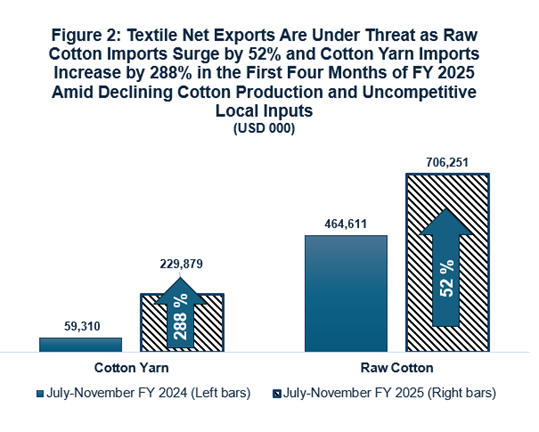
Alarmingly, this trend is now extending to the textile sector. The rising import of raw cotton is particularly concerning, surging to USD 1.7 billion in FY 2023 and already reaching USD 706 million in the first four months of FY 2025, a more than 50% increase from the same period last year.

Once self-sufficient in cotton, Pakistan has now become a major net importer; in fact, the largest importer of U.S. cotton; a shift driven by successive crop failures.

With that, production costs for key crops, including cotton, have doubled since 2023, further increasing the sector’s reliance on imports.

The country’s export mix is rapidly deteriorating. Apart from IT and agricultural exports -which remain opportunistic and unreliable – textile exports are the only glimmer of hope for Pakistan’s balance of payments and therefore require urgent attention and support.

Yet, the sector is facing increasing pressure from government policies that threaten its long-term sustainability.

Export diversification will come with the right infrastructure:

Diversifying the product mix and export markets is essential for Pakistan’s export growth. However, advancing sophistication and value addition requires the country to ascend the economic complexity ladder – an area that has consistently been neglected and remains uncertain.

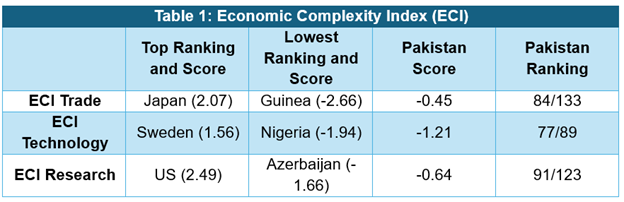
Pakistan ranks 85th in economic complexity globally as of 2022, unchanged since 2000. This stagnant position highlights the country’s ongoing struggle to produce technologically advanced goods and services, with negative performance across key indicators such as trade, technology, and research (Table 1).

The IT sector stands out as a relatively more complex industry with growth potential. However, unstable connectivity and frequent internet slowdowns cast a long shadow over ambitions to expand IT exports. Without guaranteed, reliable infrastructure, investment in the sector will remain elusive.

In a country always grappling with basic internet stability, the transition to the 4th and 5th Industrial Revolutions is more of a distant aspiration than an imminent possibility. Until critical infrastructure gaps are addressed, Pakistan’s vision of entering the 5th industrial revolution – as highlighted in the document – will remain unachievable.

Forced pre-mature deindustrialization:

The 5th industrial revolution remains a distant goal; instead, Pakistan’s policy landscape is driving key industries, including textiles, toward premature deindustrialization.

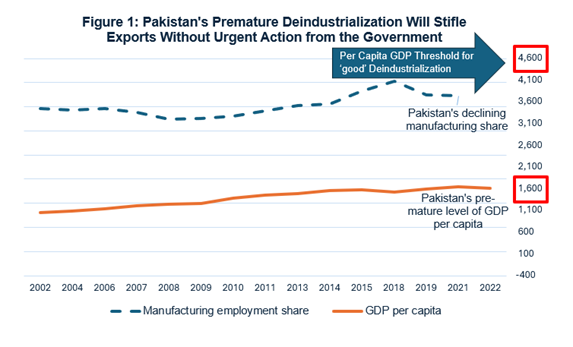
Historically, the textile sector benefited from a vertically integrated value chain, keeping import dependency low by relying on local raw materials such as cotton and intermediates like yarn. However, with over 25% of spinning units closed, other units operating at 50% or less capacity, and millions of jobs lost – adding to the 4.5 million already unemployed in the economy – the industry is now on the path to rapid deindustrialization, especially as the share of manufacturing in the country continues to decline (Figure 1).

This industrial decline is contributing to rising poverty, which has become a growing concern. According to a recent World Bank report, high inflation has deepened poverty in non-agriculture sectors, with the poverty rate rising to 40.5% in FY24, up from 40.2% in FY23. As industrial activity slows and employment opportunities dwindle, an additional 2.6 million Pakistanis have fallen below the poverty line, and this number is likely to increase rapidly.

Deindustrialization typically occurs as economies progress and per capita incomes rise beyond middle-income levels. However, Pakistan remains far below this threshold. The country’s premature deindustrialization, driven by the shutdown of upstream industries, risks triggering severe economic disruptions.

Considering this troubling trend, achieving export-led growth will not be possible unless critical policy reforms are undertaken.

Counterproductive economic policies come with a significant economic cost:

This premature deindustrialization is largely driven by the government’s counterproductive economic policies, particularly the heavy tax burden and frequent policy shifts that exacerbate the challenges faced by the textile industry.

The FY25 budget has placed exporters under the normal tax regime, subjecting them to a 1% advance minimum turnover tax, adjustable against a 29% final income tax, along with an additional super tax of up to 10%. Despite this, exporters are still required to pay a 1.25% advance tax on export proceeds (including a 0.25% export development surcharge). Subjecting exporters to double taxation is unjustified and discriminatory, particularly given that textile businesses operate on high volumes and low margins.

No other country taxes its export sector in such an illogical manner. Achieving USD 50 billion in exports within four years under this tax structure is nothing short of absurd.

This is further compounded by the removal of zero-rating on local supplies for export manufacturing under the EFS, leading to an 18% sales tax that undermines competitiveness by making domestically sourced raw materials more expensive than imported alternatives, which are exempt from both duties and sales tax. As a result, exporters have shifted to imported inputs, with imports of raw cotton and cotton yarn surging by 52% and 288%, respectively, in the first four months of the current fiscal year compared to the same period last year (Figure 2).

Adding to the financial strain, the sales tax refund system is plagued with delays, with refunds often taking six months or longer – or, in most of the cases, partially deferred, further intensifying the burden on exporters. As highlighted in the World Bank’s Economic Memorandum, the current tax regime in Pakistan is ‘complex and opaque,’ with refunds taking an average of 18 months to process, as compared to the 72-hour timeline stipulated under the sales tax rules.

In addition to these challenges, the government’s decision to cut gas supplies to the CPPs has dealt a further blow to the industry. How can team URAAN pursue USD 50 billion in exports while implementing policies that make it impossible to even maintain the current export levels?

Revival of fresh investment and the upgradation of industrial plants are the need of the hour:

As Milton Friedman once observed, trade deficits are not inherently harmful. The true concern arises when trade imbalances coincide with fiscal mismanagement, as is the case with Pakistan.

A few years ago, Pakistan was a cotton exporter. Today, it has transformed into a net importer, becoming the largest buyer of U.S. cotton. How much longer can Pakistan sustain this growing import dependency without seeing a corresponding boost in exports?

For Pakistan to achieve export-led growth, it is imperative to safeguard every segment of the value chain, with an emphasis on reducing import dependency wherever possible. The ongoing decline in cotton production and the closure of textile units will continue to undermine net exports. Preserving progress in value-added textile exports is critical to prevent turning the balance of trade into a zero-sum game.

In this context, reassessing Pakistan’s corporate tax structure is urgent, as the current burden stifles investment. The EFS must be reinstated to its pre-Finance Act 2024 form, including the zero-rating of local supplies used in export manufacturing. This restoration is essential to ensure fair competition for domestic producers against imported substitutes, which has become critical as businesses face closure due to the changes in EFS rules.

Cotton remains the cornerstone of Pakistan’s textile industry, and immediate action is needed to enhance domestic production. Declining cotton yields, driven by factors such as the lack of climate-resilient seeds, limited mechanization, and insufficient advisory services, are costing Pakistan an estimated USD 4 billion annually in direct losses, along with USD 15 billion in GDP, as per our estimates.

In short, the government’s 5E framework cannot drive export growth if businesses remain stifled under oppressive tax regimes and structural challenges. Pakistan must avoid premature deindustrialization and focus on safeguarding net exports by addressing these issues and adopting the proposals outlined above.

Without delay, the team URAAN needs to prioritize fixing structural issues faced by the businesses, rather than focusing on repetitive rhetoric.


image_1753075713678.webp

December 21, 2024

By Shahid Sattar | Sarah Javaid
After a challenging year in 2023, Pakistan’s value-added textile sector has demonstrated remarkable resilience in 2024. Export data reveals a return to pre-crisis performance levels, echoing the record-breaking achievements of 2022. At the outset of the current fiscal year, projections for textile and apparel exports estimated a range of USD 15-16 billion for FY 2025. However, the latest export figures suggest a potential recovery to the export levels seen in 2022.

As the current calendar year ends, a sneak peek at value-added textile exports during CY 2024 indicates a strong finish, reinforcing optimism that CY 2025 might at least match the record levels of 2022, if not outperform.

In order to ensure a better year for exports in 2025, key actions are needed, including continuing gas supplies to captive power plants, reversing the withdrawal of zero-rating on local supplies, reducing industrial power tariffs, and boosting domestic cotton production to safeguard net exports.

Textile Industry Performance: A Sneak Peek into the 2024 Calendar Year:

Pakistan’s total value-added exports (knitwear, woven garments, and home textiles), which saw a 15% decline in the 12-month CY 2023 compared to CY 2022, are expected to rebound with a year-on-year growth of 13% in CY 2024 as the year closes on a positive note for the downstream industry. A closer look at the numbers reveals that value-added textile exports have reached, or in some cases exceeded, the monthly levels seen in 2022. Knitted garments outperformed 2022’s record in October 2024 (Figure 1a), while woven garments and home textiles came close to matching their 2022 peaks (Figure 1b and 1c). Despite remaining below the USD 500 million mark per month, knitted garment exports show potential to surpass this threshold if the current growth trend persists.

The bullish trend in Pakistan’s value-added textile exports can be attributed to a mix of demand-side and supply-side factors, including rising demand from the West for compliant suppliers, increased orders driven by the weak performance of regional peers, and a global demand surge fueled by easing inflation in the US and Eurozone. If this momentum continues, Pakistan’s export growth could stay strong through 2025, further fueling the textile sector’s recovery and growth.

Global Trade is Projected to See an Uptick in 2025:

Meanwhile, WTO economists forecast a 2.7% increase in world merchandise trade volume in 2024, recovering from the -1.2% contraction in 2023. This rebound is primarily driven by declining inflation in Pakistan’s key export markets, the US and Eurozone. Lower inflation has enabled monetary easing, setting the stage for increased economic activity and demand for imports, which boosts the outlook for Pakistan’s textile exports in these regions.

Building on 2024’s momentum, the global trade outlook for 2025 is even more optimistic, with world merchandise trade projected to grow by 3.0%, despite challenges like regional conflicts and policy uncertainty. Asia is expected to lead global trade, with export growth of 4.7% and import growth of 5.1%.

These global trends present a significant opportunity for Pakistan’s export sectors, particularly value-added textiles, to sustain their growth in 2025. With knitted garments already surpassing 2022 export levels and woven garments and home textiles approaching their peaks, Pakistan’s exporters are well-positioned to capitalize on the global recovery, provided that supportive policies are enacted to maintain competitiveness and ensure long-term growth.

Did Pakistan’s Export Gain Ground Amid Bangladesh’s Setbacks?

While future demand for Pakistan’s exports from Western markets shows potential for growth, Bangladesh has also played a short-term role in driving Pakistan’s exports. Political unrest and labor disputes in Bangladesh caused some export orders, between December 2024 and March 2025, to be redirected to textile producers in Asia, including Pakistan. Although this redirection has provided short-term gains, other developments in Bangladesh could have long-term implications for Pakistan’s exports throughout 2025.

The Bangladesh Knitting Owners Association (BSCIC) has reported significant strain on the industry, with over 2,300 registered and unregistered factories struggling, many of which have closed in the past 18 months. An estimated 85% of BSCIC knit traders are operating at a loss. Bangladesh has already experienced a decline in knitted garment exports, dropping from USD 6.43 billion in the four-month period from July to October 2023 to USD 5.34 billion in the same period in 2024.

In contrast, Pakistan has demonstrated remarkable growth in value-added exports, with an overall increase of 21% during the same period (Figure 2a). This includes 19% growth in knitted garments, along with 25% and 20% growth in woven and home textiles, respectively, outpacing Bangladesh (Figure 2b).

Given that both Pakistan and Bangladesh share the same key markets for textile exports, this growth in Pakistan’s exports is particularly noteworthy and underscores its ability to perform well in 2025, contingent on protecting the full value chain and sustaining export momentum across all segments.

The grass isn’t always greener on the other side:

Although 2024 proved to be a strong year for downstream textile exports, it has been a setback for the upstream sector. Data indicates that Pakistan’s exports of cotton, cotton yarn, cotton cloth, and other intermediate goods are at their lowest in the past three years, even falling below 2023 levels. In 2022, exports of this group were valued at USD 3.5 billion, while in 2023, they decreased to USD 3.02 billion. However, in 2024, exports are expected to hover around USD 2.7 billion (Figure 3).

While value-added exports have driven overall growth, the decline in upstream textile exports may prevent total exports from reaching 2022 levels. Given this declining trend in exports of intermediate goods, total exports for CY 2024 are projected to reach USD 17 billion, with USD 13.4 billion from value-added textiles, USD 2.4 billion from intermediates, and USD 1.2 billion from other textile exports.

A Word of Warning—if the declining trend in intermediate goods’ production and exports continues due to withdrawal of zero-rating and rising energy costs, CY 2025 may not match even 2024 levels and could fall significantly below those of 2022.

As a result of these policy lapses, Pakistan is on the brink of facing an annual export loss of intermediates valued at USD 3 to 3.2 billion.

Based on our projections, value-added textile exports in CY 2025 are expected to remain consistent with CY 2024 levels, hovering around USD 13.3 billion (Figure 4a). However, the total export outlook hinges on the recovery of intermediate exports. If this downward trend continues, Pakistan’s total textile exports are projected to remain around USD 16.9 billion in CY 2025 (Figure 4b).

What Lies Ahead for Exports?

Amid declining inflation, the SBP has reduced the policy rate by 750 basis points since July 2024, bringing it to 13%, offering some relief to the strained business community. This follows a challenging period when Pakistan faced a record-high policy rate of 22% for 12 consecutive months (June 2023–July 2024), which significantly pressured businesses. This strain was further exacerbated by the 2024 budget, which shifted businesses from a fixed tax regime to the normal tax regime, resulting in a cumulative tax burden of 39%, including the super tax.

However, with total exports rising by 8.7% (July-Oct 2024), driven by growth in value-added textile exports, recent data indicates signs of recovery in economic activity. Nevertheless, given the policy volatility in Pakistan’s economic landscape, the future still remains uncertain.

Market Based Solution is the only Sustainable Solution:

To sustain the export momentum which is the only sustainable solution to Pakistan’s twin deficit problem, the government must foster an environment that promotes industrial activity rather than stifles it. Cutting gas supplies to Captive Power Plants is a counterproductive policy that not only jeopardizes textile manufacturing but also drives up gas prices for lifeline consumers, who have long benefited from cross subsidies provided by the industry.

Aligning Pakistan’s Policies with International Regulations through Traceability and Compliance:

Apart from addressing the power sector’s structural challenges, the government must prioritize enhancing Pakistan’s export competitiveness in international markets through compliance and traceability.

As textile value chains evolve, super-vendors – vertically integrated companies managing all processes across the value chain – are emerging as the future of global supply networks. Buyers are now seeking fewer, but more reliable partners, driven by rising trade tensions and ethical sourcing concerns.

Pakistan’s textile businesses are well-positioned to meet these demands, but their success depends on compliance with international regulations. To strengthen Pakistan’s position in global value chains, the government must operationalize the National Compliance Center and align with Western policies without any further delay. Traceability and adherence to environmental and labor standards must be ensured from cotton fields to finished garments, guaranteeing compliance at every stage and preventing the negative impact of ‘blaming and shaming’ on Pakistan’s textile exports.

Through establishing a comprehensive traceability plan, Pakistan will unlock a first-mover advantage in the region.

In conclusion, to sustain the export growth momentum of 2024 and beyond, securing competitive access to inputs—whether energy or raw materials—is crucial. Protecting all segments of the value chain is vital to avoid disruptions that could jeopardize overall export performance. Prioritizing compliance with international standards is equally important. The government must focus on export-led growth and sustainable solutions to fiscal mismanagement, rather than relying on short-term fixes.

As the current year comes to an end, the industry hopes for a policy-shock-free year and, most importantly, a Happy New Year for Pakistan’s export sector and overall economy.


image_1753083350606.webp

December 16, 2024

Pakistan’s energy sector stands ensnared in inefficiencies, financial instability, and a chronic inability to implement meaningful reform.

With the combined gas and power sector circular debt now exceeding Rs 5 trillion, and electricity tariffs among the highest in the world, Pakistan’s energy sector is in despair and has severely eroded industrial sectors’ competitiveness.

Despite decades of promises, reform initiatives like the Competitive Trading Bilateral Contracts Market (CTBCM) have exposed rather than addressed the sector’s systemic dysfunctions. Central to this failure is the absence of competitive and feasible wheeling charges for business-to-business (B2B) power contracts, a key enabler without which CTBCM or any other free-market model is bound to fail.

Indeed, the CTBCM risks being stillborn—ambitiously conceived but fatally undermined by structural flaws and poor implementation.

The CTBCM, intended as a solution to inefficiencies in Pakistan’s electricity sector, is a prime example of these challenges. Despite its promise of introducing wholesale competition, the initiative is hampered by significant obstacles that call its viability into question.

One of the CTBCM’s greatest hurdles is systemic inertia. Much of Pakistan’s power generation remains tied up in long-term contracts with excessive guaranteed returns, stifling market-driven dynamics. Without renegotiating these agreements, competition becomes an illusion.

Meanwhile, the country’s energy infrastructure is riddled with inefficiencies, theft, and excessive transmission losses. These failings inflate costs and burden the system with unsustainable circular debt. Instead of addressing these foundational issues, policymakers appear content to layer new initiatives over old problems, exacerbating rather than solving the crisis.

Currently, Pakistan operates under a single-buyer model where electricity procurement is centralized, a setup that fosters inefficiency by passing costs directly onto consumers through inflated tariffs.

The CTBCM aims to shift this model by introducing competition in the electricity market through bilateral contracts and dynamic pricing. Yet, the framework has been burdened with structural flaws, including the contentious inclusion of stranded costs and cross-subsidies in wheeling charges.

Stranded costs, the legacy financial liabilities tied to underutilized capacity, and cross-subsidies, aimed at protecting vulnerable consumers, are critical elements of the dysfunction. Their inclusion in wheeling charges has turned bulk power consumers (BPCs) into the scapegoats of a broken system. Instead of addressing the root causes of these costs through renegotiations or targeted reductions, the government has chosen to pass

them on, inflating wheeling charges to unsustainable levels.

The Discos’ and CPPA-G’s proposed Use of System Charges (UoSC), averaging Rs 27.16/kWh, are far removed from what is economically viable for industries or competitive in global markets. At 9.7 cents/kWh, the wheeling charge alone in Pakistan would be as much as twice the full power tariffs in countries like China, India, Bangladesh and Vietnam.

When challenged on the inclusion of stranded costs and cross-subsidies in wheeling charges, the Power Division entities frequently lean on the argument that these provisions are mandated by the Power Policy.

However, this justification is as unconvincing as it is shortsighted. Policies are not immutable doctrines; they are practical tools designed to evolve with shifting realities. Insisting on treating the Power Policy as a rigid, unchangeable mandate reflects a lack of political will to confront rooted interests and rethink outdated frameworks.

What’s more troubling is that the CPPA-G’s exorbitant figure raises serious questions about the bureaucracy’s commitment to reform. The proposal appears designed to perpetuate the status quo, and discourage reform rather than enable it. If the true goal were to incentivize competition and pave the way for a functional electricity market, a proposal with such prohibitive charges would never have been advanced.

Adding to these bureaucratic hurdles, bulk power consumers (BPCs) opting for wheeling arrangements would face the requirement of a one-year advance notice. This stipulation creates further disincentives for industries already grappling with high energy costs, as it forces them to bear the financial burdens of an inefficient grid for an extended period even after committing to shift. Worse still, even after exiting the grid, these consumers would be charged for recovery of stranded costs for up to five years. This extended financial obligation unfairly penalizes industries pursuing competitive alternatives.

Moreover, CTBCM must include the option of a hybrid setup—allowing consumers to draw power from both private suppliers and the grid. This would preserve grid reliability while prioritizing competitive wheeling arrangements. Such a policy can foster a more balanced energy market and help mitigate the rigidity and inefficiency currently plaguing Pakistan’s energy governance.

Another critical issue is that Pakistan’s regulatory framework lacks the resources and expertise to oversee a reform like the CTBCM.

Regulatory bodies in lower-income countries often operate with significantly fewer resources than their developed counterparts, leaving gaps in enforcement, oversight, and transparency. Poor regulation enables monopoly abuse and cartel-like behaviour among power producers, as seen in California and Turkey, where distorted markets led to inflated prices and financial losses. A stable, transparent, and fair regulatory framework is necessary to attract investment and maintain confidence in the energy sector.

Implementing the CTBCM without first strengthening regulatory institutions risks compounding existing problems. The plan calls for the creation of multiple new organizations, which could easily devolve into avenues for patronage and waste, with leadership positions awarded based on connections rather than competence. Instead of fostering competition, such a setup would exacerbate existing inefficiencies and deepen the financial strain on the energy sector.

The consequences of these policies are dire. By inflating grid tariffs and wheeling charges with stranded costs and cross-subsidies, the government has accelerated the exodus of industries from the grid to captive sources like solar power and gas/FO/coal-fired captive generation.

While this shift benefits individual enterprises, it undermines the stability and sustainability of the grid and power sector. As the pool of contributors shrinks, per-unit prices increase, pushing remaining consumers—industrial and otherwise—further into financial strain and towards more competitive alternatives.

Amid this grim outlook, recent negotiations and the termination of contracts with Independent Power Producers (IPPs) offer a glimmer of progress. These renegotiations signal a long-overdue move to rationalize the burdensome long-term agreements that have hamstrung the energy sector for decades.

Similarly, the reduction of the cross-subsidy from Rs 240 billion to an estimated Rs 75-100 billion is a notably welcome step toward alleviating the financial burden on industrial consumers. However, even at reduced levels, the cross-subsidy remains economically unviable, continuing to distort energy prices and erode the competitiveness of critical economic sectors.

To address these challenges holistically, the power sector bureaucracy must fundamentally reassess its pricing strategies. Stranded costs and cross subsidies must not be included in the wheeling charge if it is to be made financially viable for B2B power contracts.

Additionally, the one-year notice requirement for transitioning to wheeling must be revisited to foster greater flexibility and encourage broader participation in competitive energy markets, and the concept of hybrid BPCs must be allowed.

Finally, implementing a robust regulatory framework is crucial to ensuring transparency, equity, and efficiency across the energy sector, laying the groundwork for sustainable reform.

It should be crystal clear to all stakeholders involved that without market-driven and financially viable wheeling charges, the CTBCM is doomed to fail. These charges are the backbone of any functional electricity market, and their absence renders the promise of competition a hollow illusion, ensuring that the CTBCM will remain an exercise in futility rather than a pathway to meaningful reform.


image_1753082530732.webp

December 9, 2024

Pakistan’s textile industry, a key component of the economy and a full-spectrum value chain, is unravelling under the weight of poorly conceived policies. The government frequently champions private sector-led growth in rhetoric, yet its actions are stifling competition and undermining the very firms they claim to support.

Instead of fostering market-driven progress, policies remain entrenched in short-termism and mismanagement, suffocating the private sector and driving Pakistan closer to economic collapse. The textile sector – a vital contributor to exports and employment—now finds itself in a crisis, its decline symptomatic of broader structural failures.

At the centre of this are two policy measures: the elimination of gas supply to captive power plants (CPPs) by January 2025 and the withdrawal of zero-rating for local supplies under the Export Facilitation Scheme (EFS). These decisions, taken under the guise of economic adjustments to meet IMF conditions, reflect a myopic focus on immediate fiscal concerns rather than the long-term health of Pakistan’s industrial base.

From cotton farming to spinning, weaving, and garment production, Pakistan is one of only three countries with a full textile value chain that supports an entire ecosystem of employment, sustaining millions of livelihoods and billions in revenue.

However, this value chain is fragmenting thanks to short-sighted policies that actively exacerbate the challenges faced by this sector.

The removal of zero-rating for local supplies under the Export Facilitation Scheme has hit upstream segments of the textile industry – such as spinning and weaving – particularly hard. These segments, critical for creating intermediate goods used in finished textile products, now face an 18% sales tax, while imported inputs remain duty-free and exempt from sales tax.

This imbalance creates an uneven playing field, making imported inputs cheaper and more attractive than domestically produced goods.

The consequences have been immediate and dire: domestic yarn production fell by 40% year-on-year in 2024, while yarn imports surged to an unprecedented 27 million kilograms in November 2024, up 391% YoY.

The resulting erosion of local manufacturing capacity has destabilized the entire value chain, jeopardizing jobs, exports, and the trade balance.

Compounding this problem is the inefficiency of the sales tax refund system, which has failed to provide exporters with timely and adequate reimbursements.

Refunds, legally required to be processed within 72 hours, are often delayed by six months or more. Exporters typically recover only 60% of their claims, according to the World Bank’s 2022 Country Memorandum.

These delays and partial refunds add an additional interest cost of 10-15% to working capital required for procurement of intermediate inputs made in Pakistan, eroding competitiveness and forcing exporters to substitute domestic inputs with imports to avoid cash flow constraints.

While recent months have seen a modest increase in textile exports of approximately $200 million, this is concentrated in a handful of large companies and attributable to a low base effect from when Pakistan’s economic crisis was at its peak last year.

It does little to offset the broader challenges and financial unsustainability facing the industry and economy. In fact, the limited progress underscores the fragility of the sector, as critical segments of the value chain continue to face deindustrialization, threatening its long-term viability.

If the government genuinely aspires to foster private sector-led growth, it must offer the private sector breathing space it so desperately needs.

One way forward would be to adopt a progressive sales tax structure akin to India’s model. This system applies a graduated tax rate of 5-12% on raw materials and inputs as they progress up the value chain, with final consumer goods taxed at the higher rates of 12-18%.

Such a structure not only ensures robust revenue collection under the value-added GST regime—where input taxes are fully refundable—but also provides a fairer, more efficient tax framework that bolsters local industries.

By aligning taxation policy with industrial development goals, this approach would safeguard domestic producers while maintaining fiscal discipline.

Energy policy missteps are another major source of the crisis. The decision to eliminate gas supply to captive power plants reflects a fundamental misunderstanding of Pakistan’s energy and industrial dynamics.

Captive power plants, which many industries rely on, provide a stable and cost-effective alternative to the national grid, which is both expensive and unreliable.

Grid electricity costs in Pakistan range from 14–16 cents/kWh, significantly higher than the 5–9 cents/kWhin regional competitors like China, Bangladesh, India, and Vietnam.

Moreover, the grid is plagued by frequent interruptions, voltage fluctuations, and frequency instability, rendering it unsuitable for precision industries such as textiles.

The government argues that diverting gas from CPPs to the grid will optimize resource allocation and improve efficiency. Yet this rationale fails to account for the efficiency of CPPs, particularly those using combined heat and power systems, which operate at 80–90% efficiency.

In contrast, government-run RLNG plants achieve net efficiencies of just 40–52%, as the grid suffers from substantial transmission and distribution losses. Forcing industries to rely on the grid would not only increase their costs but also destabilize their operations, pushing many firms toward closure.

The cumulative effects of these policies threaten a cascading collapse of the textile value chain.

As spinning mills shut down due to exorbitant energy costs, weaving units are next in line to fail. This domino effect will ripple through the entire sector, crippling the cotton sector, destroying livelihoods, and plunging the economy into deeper instability.

The textile sector, which accounts for $3–6 billion in annual exports, is vital to Pakistan’s foreign exchange earnings. Its collapse would exacerbate an already precarious balance of payments crisis, further depleting foreign reserves and undermining economic stability.

The broader energy landscape of Pakistan is a result of decades of mismanagement and inefficiency. Circular debt in the gas and power sectors now exceeds Rs. 5 trillion, a testament to years of poor governance, unrealistic pricing models, and unplanned capacity additions.

The decision to eliminate CPPs is emblematic of this broader failure, conflating systemic issues with short-term fixes that only exacerbate inefficiencies. Instead of addressing the root causes of circular debt and grid inefficiency, policymakers are imposing measures that threaten to dismantle the very industries that underpin the economy.

To provide industrial sectors with competitively priced energy and allow them to compete in international markets, Pakistan must adopt a comprehensive, market-driven approach that prioritizes efficiency and transparency.

The continuation of RLNG supply to industrial self-generation facilities is essential, with measures to ensure ring-fenced RLNG pricing for stability, rationalized unaccounted-for-gas (UFG) rates in line with actual UFG of RLNG consumers, and the elimination of cross-subsidies that force industries to subsidize gas consumption in other sectors like fertilizer.

Additionally, industries must be granted the right to import their own RLNG, with transmission and distribution facilitated through wheeling on the Sui companies’ network. This would enable greater flexibility and reduce dependence on an inefficient centralized system.

Further reforms should grant industries the right to establish bilateral contracts with local gas fields, consistent with government policies that allow third-party access to 35% of domestic gas resources from new discoveries.

In the power sector, the operationalization of the Competitive Trading Bilateral Contracts Market (CTBCM) is imperative, enabling industries to engage in B2B contracts for power procurement.

This must be supported by rational Use of System and wheeling charges that exclude cross-subsidies and stranded costs. Such a framework would ensure access to competitively priced electricity while adhering to international environmental regulations and supporting net-zero targets.

Particularly, the distinction between gas used for power generation and other industrial applications must end, as in-house power generation, often through cogeneration systems, is an integral part of the industrial process.

Many industries utilize cogeneration not only for power but also for heat, steam, and hot water, making energy an essential input to manufacturing. It is not the government’s role to dictate how this input is used within industrial premises. A uniform gas tariff for industry is not only fair but essential for sustaining industrial competitiveness.

Importantly, all these recommendations are grounded in market principles without any reliance on subsidies. They represent a clear pathway toward creating an energy system that supports industrial growth while maintaining fiscal discipline.

By fostering a competitive, transparent, and market-oriented energy framework, Pakistan can provide its industries with the tools they need to drive economic recovery and sustainable development.

It is also important to address the flawed structure of the winter incentive package for incremental consumption that could otherwise be an excellent means to stimulate demand on the grid.

The package has been designed to fail as it is exceedingly complex and difficult for industrial consumers to comprehend and implement.

The estimated savings for the industry under the package amount to only 5-6%, which is inadequate for meaningful rejuvenation, particularly when savings are capped at 25% of incremental consumption over base units.

Power consumption among APTMA members was down by approximately 40% YoY in October 2024, and 60% compared to the year before, with similar trends in other LSM industries.

To benefit from the incremental package in its current form, industries must first recover their reduced consumption to previous years’ levels, which is calculated based on the 50-30-20 weighted average of the past three years for the same month. After this, they are required to increase power usage by an additional 25% to fully maximize benefits.

This mechanism is highly unrealistic, as increasing power consumption is tied to manufacturing demand, which depends on confirmed orders. Scaling up production also involves significant costs, including labour and other overheads, which far outweigh the limited relief offered by the 25% incremental savings.

The 25% cap on incremental consumption is also unnecessarily restrictive. Current demand remains highly suppressed due to skyrocketing tariffs over the past two years, meaning the tipping point for higher generation costs is still far off. Removing the cap would allow industries greater flexibility to benefit from the package.

Furthermore, the proposed Rs. 26.07/kWh tariff is misaligned with actual marginal generation costs, which, based on expected winter demand levels of 8,000-13,000 MW, is closer to Rs. 17/kWh.

The higher tariff figure provided by CPPA-G appears inflated and fails to create a meaningful incentive for industries to increase energy demand on the grid. A revised tariff closer to Rs. 17/kWh would encourage significantly higher consumption and support the government’s energy demand and transition-to-grid objectives.


image_1753082088612.webp

November 29, 2024

By Shahid Sattar | Sarah Javaid
Six years after their imposition, the Section 301 tariffs under the U.S. Trade Act of 1974 continue to significantly impact Chinese imports, especially in the textiles and apparel sectors. Initially implemented in 2018, these tariffs targeted 5,745 products, with rates increasing to 25% and an additional 10% tariff. The tariffs were aimed at addressing intellectual property theft and other unfair trade practices, as outlined by the U.S.

In addition to the strain on the Chinese textile and apparel industries through these tariffs, the world has witnessed a shift in global textile supply chains, with U.S. GSP textile beneficiaries and alternative sourcing destinations stepping in to fill the void.

A 15% tariff was applied to imports of apparel, on top of the WTO’s Most Favored Nation (MFN) tariffs, which in 2018 averaged 14.4% for knitted apparel (HS Chapter 61) and 10.4% for woven apparel (HS Chapter 62). These tariffs were compounded by additional duties and anti-dumping measures aimed at specific Chinese companies and apparel products.

This evolving scenario prompted discussions on which countries were poised to benefit from China’s declining apparel exports to the U.S. While several contenders were expected, Pakistan emerged as one of the potential South Asian players that could benefit.

Trade War’s Toll on China’s Textile Exports to the U.S.

Later in 2019, the U.S. enacted the Uyghur Forced Labor Prevention Act (UFLPA) to counter forced labor practices in China. Combined with tariffs and legislative measures, Chinese exports to the U.S. have suffered significant losses: USD 5.4 billion in knitted garments (Figure 1a), USD 5.6 billion in woven garments (Figure 1b), and USD 425 million in home textiles (Figure 1c). Despite extremely high tariffs, China continued to export its low-cost articles, such as blankets, bed linen, toilet linen, kitchen linen, and other made-up articles under the home textiles category, with a noticeable shift towards tariff lines with comparatively lower duties.


China Plus One

Simultaneously, China’s manufacturing landscape underwent a significant transformation, driven by rising wages, stricter environmental regulations, and the adoption of digital technologies. Many Chinese companies began relocating operations to overseas destinations or shifting production to China’s western inland regions as part of the “China Plus One” strategy, aimed at diversifying supply chains and reducing dependence on China.

This shift spurred discussions about alternative manufacturing hubs for labor-intensive Chinese textile businesses, with Pakistan emerging as a potential candidate. However, the relocation of Chinese manufacturing to Pakistan was impeded by security concerns, a challenge that still remains unresolved.

One Country’s Loss Is Another Country’s Gain

Trade wars inevitably create distortions for some players while offering opportunities to others. For countries in South Asia, the US-China trade war was a significant opportunity.

As the largest single buyer of textiles and apparel, the U.S. remains a lucrative market for countries like Pakistan and Bangladesh, which rely heavily on textile and apparel exports.

However, much of the opportunity was seized by Vietnam, Cambodia, and Mexico. Between 2018 and 2023, China’s value-added textile exports to the U.S. declined by USD 11.5 billion, but South Asia collectively exported only USD 3.6 billion to the U.S., missing an estimated USD 8 billion potential (Figure 2). Southeast Asian countries, particularly Vietnam and Cambodia, increased exports to the U.S. by USD 3.1 billion, while Mexico benefitted significantly from the shift, aided by zero tariffs under the United States-Mexico-Canada Agreement (USMCA) effective from 2020.

However, during this period, Pakistan achieved a notable Average Annual Growth Rate (AAGR) in U.S. imports of value-added textiles. The country led in AAGR for woven garments, with Bangladesh closely competing in knitted garments and India in the market for made-up articles (Figure 3a). A deeper analysis of South Asia’s potential to seize these opportunities lies in examining its share of the U.S. import basket. While China’s share sharply declined, South Asian economies saw minimal or stagnant growth in their share of U.S. imports of value-added textiles, highlighting a missed opportunity to capitalize on China’s diminishing export footprint (Figure 3b).

Although the USD 8 billion gap is substantial, reclaiming the lost share of China’s textile exports to the US demands a more strategic approach from countries like Pakistan.

The Role of the US GSP in Capturing China’s Lost Exports to the U.S.

All these economies, including Pakistan, once benefited from the U.S. GSP program before losing their statuses: Pakistan’s expired in 2020, Bangladesh’s was terminated in 2013 following the Rana Plaza incident, and India’s was revoked in 2019 due to insufficient market access. However, the benefits for Pakistan were minimal, with only 1.5% of its value-added textile exports to the U.S. (USD 42 million out of USD 2.9 billion in 2020) qualifying for GSP preferences.

India and Bangladesh similarly experienced limited gains, with just 0.46% and 0.7% of their value-added textile exports benefiting under GSP before their statuses were revoked. In contrast, ASEAN countries effectively took advantage of U.S. trade realignments. In 2023, ASEAN exports worth USD 11.7 billion benefited from GSP status, solidifying their position as key suppliers to the U.S. market.

South Asia’s minimal reliance on the U.S. GSP program is one of the many reasons for not fully leveraging the U.S.-China trade war. Facing tariffs of up to 16%, Pakistan’s value-added textile exports could have greatly benefited from improved access to the U.S. market, potentially capturing a larger share of U.S. imports.

Potential versus Capacity

Two major developments have reshaped global trade in value-added textiles: China’s shift away from textiles to focus on other value chains and the relocation of its textile industries due to U.S. tariffs.

Viet Nam, with its competitive labor costs, extensive trade agreements, and growing manufacturing capabilities, has long attracted Chinese investments in sectors like furniture and textiles. However, it has yet to emerge as a global manufacturing hub capable of replacing China.

When it comes to Pakistan, in 2023, the U.S. imported USD 144.4 million worth of knitted garments from Pakistan under China’s top tariff lines in the U.S. import basket, compared to USD 3 billion from China for the same tariff lines. Similarly, U.S. imports of woven garments from Pakistan totaled USD 315.5 million, significantly lower than the USD 2.6 billion sourced from China. For made-up articles, Pakistan exported USD 473.5 million to the U.S., significantly less than the USD 6.3 billion supplied by China on the same tariff lines (see Figures 1a, 1b, and 1c).

Pakistan struggles to export textiles exceeding USD 100 million per tariff line in categories where China’s exports run into billions. A major challenge is the inadequate pricing of inputs within Pakistan, which undermines the competitiveness of its exports, making them even less competitive in the face of high duties.

While these figures demonstrate Pakistan’s ability to export and compete in international markets to some extent, they also reveal the structural barriers hindering its full potential. With an estimated annual textile manufacturing capacity of USD 25 billion, Pakistan’s textile exports peaked at USD 19 billion in 2022, the best year for Pakistan’s trade economy. The USD 6 billion gap from its capacity remains, which Pakistan can unlock by addressing structural inefficiencies and embracing market-driven pricing across the value chain.

A Trump Card for Pakistan’s Exports?

Structural inefficiencies and the absence of market-driven pricing present challenges, while a downturn in global demand could worsen the situation. With Donald Trump’s return to the U.S. presidency, tariffs are set to become a key component of his economic agenda. Trump argues these tariffs will not burden the U.S. economy but shift costs to other countries, particularly China and those closely associated with it. While China has endured much of the impact, such tariffs could severely affect economies like Pakistan, where exports are already under pressure. Meanwhile, Trump’s administration is considering a flat 20% tariff on all imports as part of its broader trade strategy.

The U.S. remains Pakistan’s largest trading partner, contributing a significant trade surplus. In 2024, Pakistan exported USD 5.4 billion to the U.S., approximately 20% of its total exports, with textiles and apparel making up more than 70% of that figure. A 20% tariff could disrupt Pakistan’s manufacturing sector, especially its textile and apparel industries, which are central to its export economy. The timing is particularly challenging as Pakistani businesses are also grappling with high taxes and an energy crisis.

However, there is a potential silver lining. Trump’s tariff policy primarily targets economies benefiting from China’s relocated production, so countries like Vietnam, Cambodia, Mexico, and Canada are at greater risk. Pakistan, which does not fall into this category, may avoid these tariffs. Bangladesh’s new government, focused on strengthening trade ties with both China and the U.S., may face foreign policy dilemmas. Alternatively, Trump’s plans to renegotiate the USMCA could completely shift attention away from South Asia.

For Pakistan, effective economic diplomacy is essential to expanding its export footprint in the U.S. market. The pressing question remains: how should Pakistan strategize its diplomacy to strengthen its trade position amid these global shifts?

Charting a way forward

To secure its position in the U.S. market, Pakistan must actively pursue the revival of GSP status by negotiating its renewal and advocating for revised tariff lines to secure duty-free or reduced-duty access. Such access is essential in the ongoing tariff war.

Pakistan’s products in the U.S. market primarily cater to low- to middle-income groups. Additional tariffs would make Pakistani products less competitive, ultimately reducing demand for Pakistani apparel in the U.S.

With that, Pakistan is the second-largest destination for U.S. long-staple raw cotton after China. In 2023, Pakistan imported over USD 379 million worth of U.S. cotton, primarily for clothing and blanket manufacturing. Cotton imports were even higher in 2022, reaching USD 615 million. As domestic cotton production fails to meet demand, the U.S. remains a crucial supplier, with its raw cotton entering Pakistan duty-free. This contrasts sharply with the high tariffs, up to 16% imposed on Pakistan’s value-added textiles exported to the U.S.

With declining domestic crop production, Pakistan’s reliance on imported cotton is expected to grow. Under the Caribbean Basin Trade Partnership Act (CBTPA), apparel assembled in the Caribbean and Central America using U.S.-origin fabrics, yarns, and threads enters the U.S. duty-free. However, raw cotton falls outside the CBTPA’s scope and is governed by general trade agreements.

The window of opportunity created by the U.S.-China trade war may be closing, and it is uncertain whether the U.S. will continue favoring South Asian textile and apparel industries. However, Pakistan still has room to maneuver. Economic diplomacy will be critical in advocating for Pakistan’s interests in the U.S. market. The real challenge lies in addressing internal structural issues that hinder export growth, which deserves immediate attention from the decision-makers.

To begin with, it is extremely urgent for Pakistani authorities to negotiate a trade agreement with the U.S. to secure duty-free or reduced-duty access for value-added textiles assembled in Pakistan using U.S.-origin cotton, before the opportunity slips through the cracks again.


image_1751953638987-1280x720.webp

November 20, 2024

Smog choking Pakistan’s major urban hubs is a tragedy that has been decades in the making, rooted in poor policy implementation and systemic negligence.

The single largest contributor to this crisis is transportation. In Lahore, for instance, transport emissions accounted for 83.15% of total emissions in 2022 (Figure 1). The problem is not confined to Lahore; across Punjab, transportation has consistently been the largest contributor of emissions. Between 1990 and 2020, it accounted for 39% of all emissions in the province, far outstripping industries, energy, agriculture, and other sources (Figure 2).

Underlying this grim reality is the failure of oil refineries to upgrade their facilities through the deemed duty—a 12.5% tax on both petrol and High-Speed Diesel (HSD) introduced in 2002 to finance refinery upgrades, improve fuel quality and reduce emissions. The policy was subsequently modified by successive governments and today, the deemed duty remains in place only on HSD at a rate of 7.5% per litre. It is important to note that the policy was problematic by design, because as per the law all duties collected must first be deposited in the consolidated fund from where disbursement is regulated by the government through approvals from the Ministry of Finance and Planning commission with oversight by the AGPR; however, all these checks were neatly bypassed.

Despite being operational for over two decades and generating an estimated $9 billion in funds, the deemed duty has failed to deliver on its promise. The escrow accounts mandated to safeguard these funds and ensure their use for refinery modernization were never opened. Instead, the funds were diverted elsewhere, leaving Pakistan dependent on outdated refineries that continue to produce sub-standard fuels. This mismanagement has not only prevented the adoption of cleaner fuel standards but has also entrenched the reliance on polluting fuels, exacerbating emissions and air pollution, as the number of registered vehicles in just Punjab has increased by 60% over the last decade.

As shutting down its largest cities during winter month has become a norm across Punjab, the country must confront this crisis with honesty. The problem is a failure of governance, compounded by outdated urban planning, weak regulatory enforcement, and vested interests that have consistently prioritized profit over public health. If meaningful progress is to be made, the government must shift its focus to attacking the core problem by enforcing stricter fuel quality standards, curbing the unchecked growth of private vehicle use, and increasing access to modern public transit.

Deemed duty was designed as a financial mechanism to facilitate cleaner fuel production. Using these funds, refiners were expected to upgrade their infrastructure to produce high-quality, low-emission fuels. However, the system was abused. Refiners collected the levy but failed to undertake any upgrades. Pakistan continues to rely on sub-standard fuels, which are not only harmful to the environment but also to public health.

For comparison, India implemented Bharat Stage VI fuel standards (equivalent to Euro VI) in 2020, achieving a sulfur content of 10 parts per million (ppm) in diesel. Pakistan, in contrast, lags significantly behind, with diesel containing up to 500 ppm of sulfur—50 times higher than global best practices. Developed countries like Germany phased out such high-sulfur fuels over two decades ago, while even emerging economies like Brazil and Mexico have adopted stricter standards.

This reliance on outdated, polluting fuels exacerbates smog and represents a massive missed opportunity. Cleaner fuels could have drastically reduced vehicular emissions, which contribute to more than 80% of urban air pollution. Instead, the failure to implement deemed duty objectives as intended has locked the country into a downward spiral of worsening air quality and higher health costs.

The World Bank estimates that air pollution costs Pakistan nearly 6% of its GDP annually. This includes healthcare expenses, productivity losses, and premature deaths caused by respiratory and cardiovascular diseases linked to poor air quality. For perspective, Fair Finance Pakistan estimates that air pollution causes over 128,000 deaths annually in Pakistan; the real number is likely much higher.

As smog levels now regularly cross hazardous thresholds across Punjab, lockdowns and school closures have become routine during the winter months. These measures bring commercial activity to a halt, affecting livelihoods, especially for daily wage earners. The impact on education is profound as children miss weeks of school each year, causing huge learning losses and widening the educational deficit.

While deemed duty mismanagement is a central failure, it is not the only contributor to Pakistan’s smog crisis. Urban sprawl and transport emissions have created a perfect storm for pollution.

The number of registered vehicles in Pakistan has grown from approximately 4 million in 2000 to over 20 million by 2020. This fivefold increase is directly tied to the absence of affordable and efficient public transportation. Across the country, private cars and motorcycles dominate the roads, leading to endless traffic congestion and idling—a major source of nitrogen oxides (NOx) and particulate matter (PM2.5), both key components of smog. Instead of investing in accessible and rapid public transit systems to address this growing crisis, successive governments have wasted billions on constructing flyover after flyover and underpass after underpass. Rather than resolving traffic congestion, this myopic approach has only shifted traffic bottlenecks to the next choke point, worsening the problem.

The rapid, unchecked spread of housing societies on the outskirts of major cities has further compounded the problem. This horizontal growth has led to longer commute times, increased fuel consumption, and a sprawling network of dusty construction sites. The resulting layer of dust mixes with industrial and vehicular emissions, forming the dense, toxic haze now characteristic of Punjab’s winters.

Countries facing similar challenges have demonstrated that tackling smog requires bold, consistent action. In 2013, for instance, China launched an aggressive campaign to combat air pollution. The government implemented strict emissions standards, shut down polluting factories, and invested heavily in public transportation and renewable energy. Beijing’s AQI levels dropped by nearly 40% within five years. Key to this success was political will and strong enforcement of regulations.

Once considered one of the most polluted cities in the world, Mexico City turned its air quality around by investing in clean public transport, including a network of electric buses and a metro system. The city also introduced vehicle emissions testing and restricted the use of older, high-emission vehicles.

Singapore’s model of vertical urban development, combined with an extensive public transport network, minimizes reliance on private vehicles. The city-state also imposes high taxes on car ownership and prioritizes green spaces, significantly improving air quality despite its dense population. These examples highlight the importance of integrated strategies that combine policy enforcement, urban planning, and public investment.

To tackle smog, Pakistan must adopt a comprehensive approach that addresses both immediate and systemic issues. First and foremost, the government must audit and recover the billions collected under the deemed duty levy over the past two decades. These funds should be ring-fenced and strictly allocated for mandatory refinery upgrades to produce Euro VI-compliant fuels, ensuring a significant reduction in vehicular emissions. Alongside this, Pakistan must immediately enforce stricter fuel standards, such as transitioning to low-sulfur diesel (10 ppm), and implement an annual mandatory emissions test of each vehicle to align with international benchmarks and drastically cut emissions from the transport sector.

Investing in affordable and efficient public transportation is equally critical. Expanding metro systems, bus rapid transit (BRT) networks, and electric bus fleets can reduce reliance on private vehicles, as evidenced by cities across the world where mass transit has significantly lowered pollution levels and improved mobility. This must be complemented by urban planning reforms that promote vertical expansion and mixed-use developments, reducing the need for long commutes. Simultaneously, unregulated construction must be curtailed, and green spaces preserved, to mitigate dust pollution and improve urban air quality.

To directly curb the impact of high-emission vehicles, the government should introduce a hefty road tax on fuel-intensive and oversized vehicles, such as large pickup trucks and land cruisers, especially in urban areas where their use is both unnecessary and environmentally damaging. This tax should be steep enough to actively discourage their presence on city roads, ensuring it cannot simply be paid off as a convenience fee. By targeting these vehicles, the government can not only reduce pollution but also address the nuisance they pose to urban mobility and public safety.

To complement efforts in curbing vehicle emissions, the government must designate car-free zones in urban centres, particularly in commercial hubs. These zones, supported by efficient public transport systems, would significantly reduce vehicular emissions without resorting to economically disruptive measures like commercial lockdowns or early shop closures. By limiting private vehicle access in high-traffic areas, such policies would not only improve air quality but also create safer, more pedestrian-friendly spaces. Moreover, the establishment of such zones would incentivize the public to rely on mass transit options, gradually fostering a culture of public transport use. Over time, this shift can help reduce dependency on private vehicles and align urban transportation systems with global best practices, ensuring cleaner, more liveable cities.

Simultaneously, additional measures must target other, secondary sources of pollution. Subsidizing modern farming equipment can help eliminate crop-burning practices, while stricter emissions controls on industrial facilities can address another major contributor to poor air quality. Finally, accountability and transparency are paramount. Independent oversight mechanisms must be established to ensure policies are implemented as designed, and penalties for non-compliance by refineries and other polluters must be enforced.

With this multifaceted strategy, Pakistan can begin to reclaim its cities from the grip of smog and ensure a healthier, more sustainable future.


LOCATIONS

Where We Are


GET IN TOUCH

Follow Our Activity


IslamabadKarachiLahore