botany-g1a54acd16_1920-1280x850.jpg

July 18, 2018

Collapse of Pakistan cotton sector
Shahid Sattar
“Business Recorder”
July 11, 2018
Decrease in cotton acreage, per hectare yield and imprudent government policies have taken a heavy toll on cotton production. According to Pakistan Central Cotton Committee’s (PCCC’s) report, cotton production target has been missed by 15 percent for the year 2018. The following table shows the cotton area and production targets and achievements for the year 2017-18.
Over the last five years, cotton production has decreased from 13.86 million bales to 11.98 million bales, witnessing a decrease of 14pc which has caused a loss of Rs 535 billion (almost 2 percent of total GDP) to the economy.
Moreover, as the sowing of cotton crop 2018-19 is in progress, only 48pc crop has been sown in Sindh against the target of 0.62 million hectares whereas Punjab has achieved 95pc of the target (2.31 million hectares) till June. Total sowing of country stands at 2.494 million hectares, witnessing a decline of 8.8pc over the last five years.
Apparently the main reason for the decline in cotton crop is low per hectare yield (further decreased by 6.2pc over the last five years), which has left Pakistan with the only choice to import cotton to meet domestic demand. Under these conditions when import of cotton is the last resort to meet excess demand, 11pc cotton duty will worsen the situation and will leave Pakistan globally uncompetitive. Along with high custom duties government is hunting textile industry with non-tariff barriers (NTB).As per the NTB restrictions, cotton importers are not allowed to import cotton in more than one shipment against one permit which inflates the input costs. It will also directly impact the textile and garments exports, 75pc of which are cotton based.
In addition to low yield many other mutually reinforcing factors have also impacted the cotton production. For example better returns of sugarcane because of special policy incentives offered to sugar industry by government, has eventually frustrated cotton growing farmers. So they shifted from cotton to sugarcane which resulted in a 15pc increase in sugarcane acreage and significant decrease in cotton acreage.
Apart from technical and administrative challenges, climate change and irregular rainfall is also adding fuel to the fire. Farmers also blame widespread use of genetically modified Bt. Seeds, seeds mafia and water scarcity for low production of cotton. Farmers claim that Seed mafias are posing a substantial threat to cotton crop by selling fake Bt. seeds which results in a loss of 2-3 million cotton bales every year. The low toxin level (0.2-0.6 per gram) in those fake seeds and outdated Bt. technology has lost its effectiveness against severe cotton diseases like cotton bollworms and other insects.
Water scarcity has also played a major role in shrinkage of cotton production. At present, farmers fear that because of severe water shortage the production of cotton may decline by 35-40 percent further compared to last year. Along with water and energy crisis, the enormous increase in water, gas, fuel and electricity prices have also impacted the yield per hectare.
Besides drop in production, cotton quality is also deteriorating. Fake Bt. seeds with low toxin level and contamination are impacting both production and quality of cotton. Against the international standard of 2.5g/bales, Pakistan produces highly contaminated cotton with an average contamination of 18g/bale which causes a monetary loss of almost $1.4 billion every year.
Besides these issues, low Investment in cotton research is also a matter of high concern. Pakistan’s investment in Cotton R&D is lowest than other countries. It is financed by cotton cess collected by PCCC which has already decreased by 53pc than the previous year causing a further decrease in cotton R&D. This decline in cotton R&D should be revised in order to assure the survival of cotton industry in Pakistan.
To protect the cotton industry from further downfall prudent policies are needed. The cost of cotton inputs should be reduced and new version of Bt. technology seeds should be provided to farmers. In addition to new and updated technology, better quality of seeds should also be provided to farmers. Efforts should also be made to explore the feasibility of cotton production in newly available arable areas e.g. in Baluchistan and KPK. Moreover, a proper lands reform system can be introducing to promote crops that are more important for the growth of the economy.
In the meanwhile, to protect the textile industry, mainstay of our economy, all duties and non-tariff barriers on cotton should be removed till such time when cotton production can meet demand.
To improve quality, campaigns and awareness programs should be initiated to train farmers about proper picking, storing and supply of cotton. Ginning should be modernized and upgraded to meet international standards.
In the absence of the government taking serious notice the imposition of 11pc duty on cotton will be the last nail in the coffin for the Pakistan textile sector as well as any hope of sustaining growth in exports.
==============================================================
Cotton Area & Production Targets and Achievements 2017-18
===============================================================
Province Area Production
(‘000’ hectares) (million bales)
==============================================================
Target Achievement Target Achievement
==============================================================

Punjab 2420.00 2161.00 10.00 8.12
Sindh 650.00 612.00 4.00 3.77
KPK 1.00 0.17 0.002 0.0005
Balochistan 38.00 35.49 0.038 0.09
Pakistan 3109.00 2808.66 14.04 11.98

Source: Provincial Crop Reporting Service Department
(https://fp.brecorder.com/2018/07/20180711389783/)
cotton-g62458334b_1920-1280x847.jpg

June 7, 2018

Pakistan loses textile export share from 2.2pc to 1.7pc
An Interview of Mr. Shahid Sattar by Khalid Mustafa
“The News International”
June 07, 2018
ISLAMABAD: Pakistan has lost its textile export share from 2.2 to 1.7 percent in the world market over the last decade, Adviser to Textile Industry Shahid Sattar told The News.
“Pakistan’s textile industry is currently facing the toughest periods in decades as despite being the 4th largest producer and 3rd largest consumer of cotton, country is facing deficit in cotton production since 2013 and relies heavily on imports of cotton to meet local demand.” During ongoing season, he said, industry has failed to achieve the cotton production target of 14.1 million bales. The production has been estimated at 11.9 million bales against the domestic demand of approximately 15 million bales. “As the cotton sowing season has ended on May 31 (started in April), only 50 to 55 percent of sowing target has been achieved so far.”
He said that cotton oriented textile industry is mainstay of economy of Islamic Republic of Pakistan. It contributes to 60 percent of countries’ exports, 8.5 percent to total GDP and provides employment to 40 percent work force.
Highlighting the agonies that the industry is facing since long he argued saying that an industry with such a great potential has been subjected to significant threats and challenges over past few years. The major challenges faced by the industry are unstable world prices, macroeconomic instability and high cost of doing business, inappropriate policy environment and anti-industry government attitude. In addition to economic issues, Pakistan’s textile industry is also facing strong competition from the regional competitors (Vietnam, Bangladesh, India and China) as well as from the global competitors like American and European textile industries.
Cotton production has declined in the past few years due to many reasons; like ongoing water shortage, outdated technology, low quality seeds and fertilizers. Government’s biased policies towards sugarcane, natural disasters, high cost of doing business and high prices of raw materials and competing crops etc. are responsible for the drop in cotton production.
The policies to support sugar cane, Sattar said, has been short sighted and detrimental to the economy of Pakistan as investing in sugar cane crop actually lowers the overall wealth generation in the country, apart from the wastage of our scarce water resources as sugarcane is more water intensive than cotton. Moreover, cultivation of cotton can also contribute in the production of edible oils that is a significant import of Pakistan. “Our government accepts that one million bales change in production of cotton translates into a 0.5 percent impact on GDP.” He said that textile industry of Pakistan has been the worst hit by power cuts. In addition to energy crisis, a massive increase in gas, electricity and other fuels has forced the textile mills to close their units, especially in Punjab the industry is under severe pressure due to unsustainable gas pricing. Almost 200 textile mills have closed their operations and about one million workers lost their jobs. As a result low profitability and loss in textile industry, the machinery being used is obsolete and has not undertaken up-gradation.
At present, farmers fear that because of severe water shortage the production of cotton may decline by 35-40 percent further compared to last year. Load shedding in cotton belt areas, shortage of water and severe heat waves are causing seed burns. To protect the sown seeds government will have to provide uninterrupted electricity in cotton belt areas to keep irrigational tube wells functional, if a half decent cotton crop is to be expected.
Under these circumstances, imposition of 10 percent custom duty on imports of cotton is anti-industry and growth. In Pakistan cost of doing business is already extremely high as compared to regional countries so the import duty of 10 percent will affect the exports of textile industry and will make the industry uncompetitive in the global market. In January 2018, Pakistani government withdrew 4% custom duty and 5% sales tax to meet the shortfall of silver fiber and to promote value addition. This withdrawal of custom duty contributed positively in the growth of textile industry and as a result the exports of value-added textile products recorded a growth of 12.8 percent in the first five months of 2017-18.
Previous year cotton growers, he said, received 3,100 rupees per mound and this year expected price is around 4,200 rupees per mound which means farmers will receive 35 percent higher remuneration as compared to previous year, therefore abolishing import duty will not jeopardise the livelihood of cotton producers.
“Cotton forms almost 70 percent of the total cost of textile final product and an increase of 10 percent in raw material prices will result in further closures of firms and millions of people may lose their jobs. An economy where cost of doing business is already high cannot absorb 10 percent increment in cost of raw material may result in to decline in the mainstay of our industrial sector.”
He stressed his arguments further saying: “Our regional competitors have thrived under the zero tariff policy. Bangladesh, the regional competitor of Pakistan, in spite of being second largest exporter of readymade garments (RMG) after China, also relies on imports of cotton to meet its almost 99 percent domestic demand for cotton. Regardless of cotton deficit industry, Bangladesh textile industry is flourishing because of its duty free cotton imports. Even with increasing cotton import trend, 0.34 percent growth in RMG exports’ earnings and 10.21 growth rate in world exports was recorded in fiscal year 2016-17, with a duty free import policy. The third largest exporter of textile, Vietnam has also recorded a growth of 10.23 percent in previous year. With a custom duty of zero percent and value added tax of 5 percent, Vietnam’s production capacity is expected to rise by 12-14 percent and export potential is also forecasted to grow by 15 percent during the period 2016-2020.” And to compete with Bangladesh, Vietnam and other regional competitors like China and India, he suggested that the government of Pakistan should revise its current tariff policy. If the cost of doing business is not decreased and brought at par with other Asian countries, our products would not be able to compete in global markets both in price and quality. “To promote textile industry and economy of Pakistan all the utility charges and levy of taxes should be brought down to the level of our competing nations,” he said.
(Pakistan loses textile export share from 2.2pc to 1.7pc)


cotton-g62458334b_1920-1280x847.jpg

April 16, 2018

Shahid Sattar and Hira Tanveer
“The News International”
April 16, 2018
The rupee plunged over eleven percent against the dollar in the last months. Following this currency devaluation, the impact assessment of the devaluation on different sectors of economy, and whether it will be able to achieve its desired results of boosting the exporting sectors, is currently being debated.
Exporters have welcomed the move with caution, since this will also increase the already surging cost of doing business by increasing the prices of energy, raw materials and transportation. However, for raw material producers, like cotton farmers, the devaluation is God-sent. They will benefit from both the devaluation of currency and the rise in international price of cotton, as payment for domestic cotton is directly linked to internationally prevailing prices.
Textiles, the country’s largest exporting sector, will be impacted by the devaluation by a small increase in export volume as well as by the negative impacts of doing business at an increased cost. In the form of higher energy prices, the Reclassified Liquefied Natural Gas has become unaffordable, whereas the cost of raw materials has also increased. Where the latter accounts for 70 percent of the finished product, the former constitutes almost 15 percent.
For sustainable growth in the textile sector, free availability of quality raw material is required. Being the major raw material in textiles, cotton has gradually deteriorated both in quality and in quantity over the last decade. The government now plans, as reported by several newspapers, to halt cotton imports or impose duties during crop harvest in an effort to ensure farmers get an attractive price and are encouraged to plant more in the next season. However, this appears to be untrue since the country already faces a shortfall of three to four million bales a year to maintain its current production level, let alone meet the increased requirement of rising exports.
According to a report submitted to the cabinet by a special committee on cotton, production has faced virtual stagnation since 1991-92, fluctuating within the range of 10 to 12 million bales. In 2015-16, the output dropped even below 10 million bales – 9.9 million. Pakistan’s annual consumption needs are estimated at 15 million bales, turning the country into a net importer of cotton. If we put a ban on cotton imports or impose import duties our textile sector will starve and any textile production will not remain competitive. Therefore, the industry which has recently shown growth will start declining once again.
Pakistan’s cost of manufacturing is already highest in the region. So if raw material price is further increased by 10 percent, as compared to the global price, there is no chance for the cotton spinning sector to survive. We have already lost one-third of our spinning capacity in the last four years due to a high cost of business. If duties are imposed on cotton imports now, we will likely lose another one-third of our spinning capacity. Pakistan’s industry already gets cotton at a price almost five percent higher than India due to crop shortage. The rate of cotton in India today is around Rs7,200 per bale, compared to Rs7,900 per bale in Pakistan.
Internationally, the price of cotton was around 68 cents per pound at the start of the cotton season. Now it has currently risen to more than 82 cents per pound, and is expected to further increase. There has been a hike in the international cotton prices. A dollar was worth Rs105 during the last cotton season and is equivalent to Rs115 now; it will probably be more than Rs120, at least, during the next season. So phutti (cotton) rates will automatically be much higher the following year.
Cotton prices in Pakistan are fixed in accordance with New York’s prices. So the devaluation of currency will already be getting farmers a much higher price for their cotton. With the devaluation and a higher international price there is certainly no requirement to impose any duty on cotton this season, as the farmers would reap substantially higher financial returns from the cotton crop.
In the early 2000s, when the Argentinian currency lost its value, the agricultural produce became the country’s most precious currency. Grains were considered more reliable and more welcomed than cash because they are priced in dollars. They were traded for new vehicles, homes and watches. Even the Ford Motor Company, General Motors Corporation and Toyota Motors started country-wide sales pitches and taught their employees how to swap vehicles for grains.
Restricting cotton import by imposing duty as a policy response to the declining cotton production is not the solution to the problem. We need imported cotton to meet our consumption and expansion requirements, especially if exports are to grow.
Policymakers should focus on increasing the cotton cultivation area and production, especially as the issue of water scarcity intensifies. Among all Kharif crops, cotton requires the minimum amount of water, hence, special attention should be paid to increase its growing area this season.
If the textile industry stagnates due to paucity of raw materials, cotton farmers will suffer and will have to export raw cotton instead, as in the case of sugar farmers. They will have to sell their produce at prices lower than the domestic price. On the other hand, the textiles export sector will also shrink, creating with an even greater trade deficit, which would be dangerous for the country’s economic security.
(https://www.thenews.com.pk/print/305012-devaluation-benefits)


thread-g814ed0d92_1920-1280x853.jpg

March 14, 2018

Shahid Sattar and Hira Tanveer

“The News International” March 14, 2018
In the contemporary world, the only constant is ‘change’. The world is transforming and consumer preferences are changing across a wide range, from food consumption to the standard of living, to travelling and then to clothing.
Simple textiles and clothing have evolved into fashion brands. Everyone has now jumped on the environmental bandwagon. Textile consumer preferences are shifting from cotton-based apparel to synthetic man-made apparel. In the world market, consumption of man-made or synthetic fibres against natural fibres has shifted to a ratio of 70:30, with synthetic fibres having the lions share – a decade ago it was 30:70.
Polyester is now the most dominant man-made fabric across the globe. Its demand surpassed the demand of cotton in 2002, and it has continued to grow ever since at a significantly faster rate than all other types of fabric. Man-made fibres are cheaper, environment-friendly and more durable; their quality does not deteriorate with washing. Technological advances in synthetic material have offered textiles that are softer, hang better and even have better moisture absorbency than cotton.
The demand for man-made fibres such as polyester staple, viscose and tencel is increasing as a substitute for cotton, amid changes in the global fashion trend. But the policy situation remains the opposite in Pakistan; its exports are still primarily cotton-based. Pakistan’s major export destination of textiles and apparel is the US and Europe. The US imports of synthetic apparel overtook cotton-based imports from 36 percent in 2006 to 54 percent in 2016. Pakistan’s share in the total textile and apparel imports of the US in 2016 declined to a mere three percent owing to its narrow export basket which basically comprises natural fibre. This means that if we do not keep up with the new world preferences, our international market share will continue to shrink.
One reason for reliance on cotton based products in Pakistan is that, apart from polyester, nothing is made in Pakistan. We virtually import all synthetic fibres including nylon, viscose etc. Further, when raw materials such as Polyester Staple Fibre (PSF) are imported for the local production of synthetic man-made fibre (MMF) yarn, providing raw material to our spinning industry and helping diversifying our textile exports, the import duty reaches up to 20 percent – 7 percent import duty and 2.9 to 11.5 percent anti-dumping duty.
However, when MMF yarn is imported directly it faces a lower import duty of five percent (under the South Asian Free Trade Agreement) to 10 percent, under chapter 55 for MMF yarns import, resulting in a dichotomy. Resultantly imported PSF (input to our spinning mills) becomes more expensive than international prices. The aforementioned anomaly in regulatory duties is making domestic MMF yarn production uncompetitive, even in their own domestic market. This led to a downfall of 36 percent of domestic MMF yarn production capacity in the last one year alone.
Amidst the ongoing crisis, foreign exchange spent on the import of MMF yarns from Indonesia, China, Thailand and India is around Rs12 to 16 billion. In Pakistan, the domestic production of polyester viscose blended yarns is approximately 165,000 tons per annum. More than 50,000
tons of PSF yarns are imported per annum. This is equivalent to the production of almost 15-20 domestic mills in the business of 100 percent polyester, polyester viscose blended, viscose or polyester yarns and other synthetic fibre-blended yarns spun out of a total of 45-50 mills. These mills provide employment to 100,000 people.
Importers of synthetic blended yarn not only put local industries out of competition but also fully exploit them to sell the product at a cheap rate equivalent to India. On the other side, the value-added export sector imports cheap MMF yarns under the Import Policy Order 2012-15 (SRO 193(1)/2013) which allows import of MMF yarns consisting of pure polyester, polyester viscose and others, with five percent import duty on yarn imported from India. The export sector uses this imported yarn, adds value to it and then exports the product claiming full duty drawbacks, which is patently unjust.
What is hurting the local synthetic fibre manufacturing industry most is the lack of a level playing field, with higher tariff barriers being imposed on the import of raw materials and a minimal duty on import of MMF yarns, leading to the widespread dumping of MMF yarn and fabrics in the country. By imposing 20 percent regulatory duty on $100 million imports of MMF yarn, jobs of 100,000 people employed in our spinning industry can be saved with using the additional revenue of around Rs2 billion in the Federal Board of Revenue’s kitty. The MMF industry, which is backed by sufficient raw materials and a huge global demand, can give a boost to the textiles. It is high time that the government and the industry realised this and captured a bigger share in the growing market for synthetic textiles.
Being high-technology products, man-made and synthetic textile products can attract additional Foreign Direct Investment (FDI) in Pakistan, since the world has moved away from cotton-based textiles. India, Vietnam and Bangladesh have gone way ahead of us in terms of growth. They could do so by following a uniform tax structure and attracting FDI through manmade synthetic textiles.
With the world population growing and requirement for food grains and land available for cultivation mounting, natural fibres will diminish with time. This will in turn lead to reduced supply of natural fibres like cotton; which will increase the price due to a shortage of supply. High price and shortage of supply will further propel people to use more man-made synthetic fibre-based apparel. In Pakistan, cotton cultivated area had reduced to 16.7 percent within a year (from 2015-16 to 2016-17)’ it was substituted by sugar cane and maize. Furthermore, a growing population will need more land to grow more food crops.
Synthetic fibres are here to stay and their demand will only increase over time. Synthetic fibres will find varied usages because of their property to be designed and verified as per a desired use. Pakistan is clearly missing the shift from cotton to man-made fibre apparel and needs to re-examine its position and flawed policies to become conversant in manufacturing MMF-based fabrics in order to maintain, if not improve its share in the world textile trade.
(https://www.thenews.com.pk/print/292023-disappearing-textiles)


power-lines-gb6772925c_1920-1280x791.jpg

March 5, 2018

Shahid Sattar and Hira Tanveer
“Dawn”
March 05, 2018
PAKISTAN’S exports touched their zenith at $25.05 billion in 2013, but have declined since then to $20bn during the last four years. All major exporting sectors of the country saw this decline, including textiles. The loss in textile exports has been attributed to lack of investment in upgrading technology and innovation in the textile industry.
Absence of investment in the sector has been a result of: non-accumulation of savings and investment owing to low profitability because of high costs of production, liquidity and cash flows being soaked up by the Federal Board of Revenue and the State Bank in delayed refunds/drawbacks, and continued overvaluation of the currency for five consecutive years making exports uncompetitive.
There is no denying the fact that our textile sector has become regionally uncompetitive, but this is not because of inefficiency of the industry but because of a non-conducive business environment.
To avoid going to the IMF again, we must improve export performance by tapping into the textile industry’s exportable surplus of almost $20bn, which can help reverse the trade account deficit.
It is the government’s role to provide a viable business environment by maintaining a competitive cost of doing business, promoting competition through an open economy which brings trade opportunities and protects domestic industries through tariff and non-tariff barriers where necessary.
Market forces should be allowed to work; any greater role of the government that interferes with market forces creates bureaucratic delays and inefficiencies.
According to the recent World Bank report, “Pakistan’s poor trade performance in recent years is an outcome of diminishing export competitiveness”. The reason for the loss of competitiveness is the increased cost of doing business.
According to the ease of doing business report, Pakistan stands at 147 out of 190 countries significantly lower than regional peers and competitors like India, Vietnam, Indonesia and Turkey.
A country with a regionally uncompetitive business environment cannot be expected to compete with regional players. Pakistani textiles were once a celebrated international brand, famous for their premium quality as well as affordability owing to the moderate cost of doing business and low prices. International organisations in 2006 rated Pakistan’s textile industry as one of the most technologically advanced industries.
Now, unfortunately, we cannot ensure high quality products because of the unavailability of quality raw material and other inputs. Cotton is the lifeline of the textile sector and its production has declined by 21 per cent in the last three to four years.
Furthermore, through irrational policies, import of quality cotton has been restricted while domestic crop production is also dismal; the quality of output will be compromised even with the most innovative machinery.
To provide a competitive price for exports, competitive cost structure is a prerequisite, attained only through correct currency valuation. We have an overvalued currency as well as a high cost of doing business. These instruments need to be stabilised in order to compete.
On the contrary, regional competitors like India, Vietnam, China, and Bangladesh are pursuing aggressive textile policies and buying market share in textiles through highly subsidised exports.
Amusingly, Pakistan is the world’s leading importer of used clothing with per capita per annum import of approximately $1, whereas import in India is only 9 cents per capita per annum.
Our imports of used clothing are 10 times that of India which has a similar poverty rate. This is because Pakistan is importing used clothing under the guise of new apparel. This is actually the rejected apparel and clothing from the US and EU, dumped in our market at unbelievably low rates that no one can compete with.
The government should act as a regulatory and complementary body in market economies, making policies that support the domestic industry. Once an enabling environment is created, market forces will compel competitive production, accurate pricing, and set the floor for achieving economies of scale.
Pakistan’s textile industry has an untapped exportable surplus of almost $20bn, which can help reverse the trade account deficit. Such a balance of payment situation is not a very comfortable position to be in.
In order to avert the possibility of going to the International Monetary Fund again, we must improve export performance through the aforementioned measures and then place our bet at winning against aggressive competitors.
(https://www.dawn.com/news/1393230/breaking-the-curse-in-textiles)


cotton-g62458334b_1920-1280x847.jpg

February 25, 2018

Shahid Sattar and Hira Tanveer
“Pakistan Today”
February 25, 2018
Reversing the Decline
Our exports instead of growing have been steadily decreasing since 2013. “Why are we failing ourselves?” The answer to this question would be a first step in reversing our country’s fortunes and lead to a more sustainable growth stratagem. Let’s just start with what can be done to move forward leaving behind what could have been and focusing on what can be!
Lack of an appropriate enabling environment for domestic industry, inappropriate exchange rate policy and the rising debt repayment obligations have precipitated into a balance of payment crisis which most analysts term as a national security threat. It is imperative that immediate policy measures be taken to not only cover the lost ground but for Pakistan to achieve its potential economic growth and job creation.

TRADE & EXTERNAL SECTOR-INDICATORS

Sources: PBS, SBP Commodities FY 16 FY 17 FY 18

Projected

US $ Million      
Exports 20,802 20,448 21,672
Imports 44,765 53,026 57,744
Trade Deficit-Goods (23,963) (32,578) (36,072)
Trade in Services -Deficit (2,400) (3,573) (4,980)
Total Deficit in Goods & Services (26,363) (36,151) (41,052)
Remittances inflow 19,915 19,304 19,251
Total External Deficit (6,448) (16,847) (21,801)

Since the textile sector is the biggest productive manufacturing sector of Pakistan both in size and value, if it performs, economy of Pakistan flourishes. If this sector goes down, it drags down the entire economy with it. Providing this sector with an enabling environment naturally provides a strong growth stimulus to the Pakistan’s economy.
The whole process of the textile industry starts from the farmer cultivating the cotton crop. Investment in farmers and crops adds to the whole value chain and the rural chunk of population working in the fields. Providing farmers with best quality seed, fertilizer and disseminating current information through a scheme of mobile value added services for farmers in local languages through SMS, outbound dialers and Integrated Voice Response System (IVRS) or through programs on the lines of Lady Health Worker, technical trained support staff using latest technology and analysis assisting farmers to use seeds and techniques to meet the area-specific needs for their crops is required to increase the cotton crop which has stagnated at about 12 million bales for a decade. The fall in cotton yield in Punjab has led to a situation where competing crops have eroded the area under cotton crop cultivation. Government policies through which sugar prices are kept artificially twice that of the international market have hurt cotton the most. The huge subsidy cost is borne by the poor consumers of sugar who pay upwards of Rs60 per kilo when sugar could readily be imported at Rs30 per kilo. To add insult to injury each time the sugar surplus is exported huge subsidies are paid to the sugar mill owners.
Women have remained underutilized and untrained segment of society although they form 48.76% of the population of Pakistan
The next step is production. To improve there a reduction in cost of doing business by reducing energy prices and bringing them at par with regional competitors (Indian Punjab has frozen their electricity tariff at Rs5 per kilowatt hour for industries for next five years). Focusing on increase in productivity through BMR, fresh investment and innovative techniques and rationalization is required for which the government has to provide an all-encompassing policy. This can be achieved through exemption on surcharge for the export industry. Setting up wage rates in terms of “per piece rate” is known to improve labor productivity so reforming wage structure in manufacturing sector particularly garment industry that is labor intensive can help achieve high marginal productivity. Increased Duty Drawback, regressive and indirect taxation which have increased from about 14% of inputs in 2012- 13 to 19% of inputs in 2017 can be one of the policy measures.
Women have remained underutilized and untrained segment of society although they form 48.76% of the population of Pakistan. Labor force participation of women has increased marginally since 2010, but only one in four women participate in the labor force. Pakistan’s economy cannot reach its potential unless and until the untapped potential of women – by including them in them in the labour force – is fully utilized. Creating employment opportunities and providing relevant skill sets to women is critical to this task. Special training and skill development programs focused on women should be initiated by textile industry and government jointly to create employment opportunities for women in garments sector that is very labor intensive. This will not only provide jobs but will also add to the economy by increasing exports and accelerating growth.
Looking at the external front, market development is one of the most neglected factors both on the part of government and as well as the industry. Pakistan has not done enough to retain and to build new export relations with foreign brands. Focused interventions to encourage foreign brands for establishing buying houses, we need to establish commercial enclaves in major cities with proper security arrangements. During 2010–15, exporters in Pakistan succeeded in maintaining only 41.5 percent of export relationships; that is, of the 400 relationships in 2010, only 166 remained in 2015. This is in contrast to India and Vietnam, which maintained 54.7 percent and 66.4 percent of their relationships over the same time period.
Pakistan’s export performance has been particularly lackluster in recent years as it has lost 1.5 percent of its export market share annually over the past decade. It is time to broaden our export basket and explore markets other than traditional markets of European Union, USA, China and UAE. US absorbs 17 percent and the European Union 22 percent of all exports. On the other hand, Cotton manufactures alone, have over the past decade accounted for approximately 55 percent of Pakistan’s export basket.
During 2010–15, exporters in Pakistan succeeded in maintaining only 41.5 percent of export relationships; that is, of the 400 relationships in 2010, only 166 remained in 2015.
Looking at the future, Africa is going to be the single largest consumer market with highest buying of textile and clothing in coming years. Africa is the second most populated region in the world with an 18% share in the world’s population. Looking at the future size of their economy and their projected buying power, it is high time to establish ourselves in their emerging markets in order to reap economic benefits in the future. Government/ trade organizations should establish trading houses in the emerging markets to facilitate booking of export orders and disseminating information.
Free Trade Agreements (FTA’s) when signed by the government of Pakistan must be prudently designed. FTA’s are signed to enhance trade relations and diversify the export market and basket. Pakistan signed its FTA with China in 2006 and then in FY08. Pakistan’s trade deficit with China at that time, according to the SBP data, was $2.4 billion which has expanded to $8.9 billion in FY17. In the last five years, total exports of Pakistan to China have decreased by 69% whereas imports have increased by 63%. Pakistan has a negative trade balance of $26.568Bn with China while we have a
trade surplus with USA. Presently, our trade prospects under CPEC and current FTA status quo seem precarious.
Should the government reform its approach and implement progressive policy measures, the textile industry of Pakistan has committed to deliver increase in export volume to US $ 45Bn plus in next five years and creation of 3-4 million additional jobs through tapping unutilized potential, exploring non-traditional markets and setting up industries focused on value added textile products and apparel.
(https://www.pakistantoday.com.pk/2018/02/25/falling-exports-2/)


pinwheels-g29cab8b9b_1920-1280x853.jpg

January 3, 2018

Shahid Sattar and Hira Tanveer
“The News International”
January 03, 2018
There is no denying the fact that Pakistan’s textile industry has become regionally uncompetitive, but it is not because of the industry’s inefficiency. Actually, businessmen who were efficiently running their businesses might become naïve and forget how to manage businesses post-2013. Consequently, more than 100 textile mills were closed due to various reasons.
Power outages started in 2007/08 and kept on increasing. The power crisis adversely impacted the textile industry as well as the economy as a whole.
Estimates by the World Bank and eminent economists have estimated that electricity load shedding shears GDP by at least 2 percent a year.
Various governments did not give textile industry priority, which should have been a logical policy response if the industry of Pakistan was to be protected. When the textile industry as a response to load shedding started installing their own captive gas-based power generation plants, domestic gas started to get rationed with forced outages.
Despite the shortage, domestic connections were being doled out at the rate of 500,000 per year, constraining gas availability even further.
As a policy response, the present government started importing LNG in 2015. The regasified LNG was only provided to industry in Punjab, which constitutes 70 percent of the total installed industrial production capacity, at unaffordable rates. There is a discrepancy in rates at which gas is provided to provinces.
LNG supplied to industry in Punjab is at Rs1,100/million metric British thermal unit (MMBtu). In contrast, gas is available to industry in Sindh and Khyber Pakhtunkhwa at Rs600/MMBtu.
Textile is a processing industry and outage of electricity or gas even for an hour or two disrupts the whole eight-hour working shift in a factory. Six to eight hours of load shedding a day remained normal for almost a decade in Pakistan. And, when Poor Policy Response Makes Textile Industry Uncompetitive load shedding was coupled with higher tariffs industrialists started making losses and there was no surplus created to invest in innovation and technology upgradation. When there is a do or die situation, the only fight is for survival. Industrialists tried to survive utilising all their resources and credit lines just to keep their factories running.
Inevitably, investments are only made in good times and when businesses flourish and surpluses are made. Unfortunately, post-2008 were years of severe energy crisis and during the period even keeping the factory running was the best that could have been done.
After 2014, when the government started giving industry priority, it increased the price through electricity surcharges which are fundamentally because of the system’s inefficiencies. Power sector’s regulator National Electric Power Regulatory Authority doesn’t consider the cost as prudent, yet it still constitutes 35 percent of electricity bill. Cost of doing business, which substantially increased after 2013, is another challenge facing the textile companies. Labor wage floors are much higher in Pakistan than India or even Bangladesh.
In Pakistani rupee terms, minimum wage in India is little above Rs7,000 as compared to Rs11, 000 in Bangladesh, Rs12,500 in Vietnam and Rs15,000 in Pakistan.
Energy price in Pakistan is also much higher than the regional competitors. Indian Punjab has frozen electricity price for industry at Rs5/kilowatt hour for the next five years. In times of crisis, this is how governments support their industries.
In January last year, the Prime Minister’s Trade Enhancement Package announced incentives worth Rs180 billion in a bid to boost Pakistan’s sagging exports. This package was to be implemented over 18 months and also included duty free imports of cotton. The package was, however, reneged upon when duty got imposed just a few months later and after a passage of nearly 12 months the government has only released a total of Rs16.5 billion in financial rebates.
Overvalued currency for the last two years has badly hurt export sector, including textile exports. The policy of pegging rupee to a fixed 100/US dollar made industry uncompetitive internationally as well as domestically as imported products were artificially kept cheaper. This is evidenced in an immense increase in imports to more than $50 billion, while exports fell to $20 billion. Pakistan’s exports grew only 27.3 percent from 2005 to 2016, while Bangladesh, Vietnam and India have posted 276 percent, 445 percent and 165 percent growth in exports, respectively, during the same period.
In Pakistan, indirect taxes increased from about 14 percent of inputs in 2012/13 to 19 percent of inputs in 2017. The taxes when carried forward in the value chain multiply their impact and eventually render exports uncompetitive in international market.
Delay in sales tax refunds to export sector has become a norm. Working capital for the textile sector remains blocked in stuck refunds, custom duty drawback and income tax refunds, squeezing the financial streams and compelling export sector to limit production.
In contrast, progressive policies in China, India, Bangladesh and Vietnam have yielded very substantial results. In Pakistan, inadequate government’s response can be gauged from lack of implementation of the current textile policy.
China’s Xinjiang Uygur Autonomous Region announced multiple incentives for industry especially textiles in order to take advantage of China-Pakistan Economic Corridor projects. The Chinese government allowed rent-free factories in industrial parks and Xinjiang’s less-developed southern area, interest-free loans, electricity at six cents per kilowatt hour, transportation subsidies and maximum tax rate of 15 percent.
In Pakistan, cotton, which is the basic input to textile, has five percent import duty and four percent sales tax in addition to non-tariff barriers, like quarantine inspection permit and phytosanitary certificates required for cotton import.
Systemic inefficiencies, administrative delays, ever increasing cost of doing business in the country has led to downfall of once most efficient textile industry, which still contributes 60 percent of total exports and almost eight percent to GDP and provided employment to around 15 million people.
Textile industry has $11.9 billion export potential with prudent policies and administrative support. Textile industry can create three million more new jobs.
Implementation of prime minister’s export-led growth package in letter and spirit, immediate payment of drawback of taxes on realisation of export proceeds, withdrawal of surcharges to bring electricity tariff at par with region at Rs7/kilowatt hour and provision of gas at Rs600/million metric British thermal unit can help textile industry to regain its momentum.
(https://www.thenews.com.pk/print/263682-poor-policy-response-makes-textile-industry-uncompetitive)


cotton-gc1ba14113_1920-1280x1280.jpg

January 3, 2018

By Shahid Sattar January 03, 2018 Print : Business
There is no denying the fact that Pakistan’s textile industry has become regionally uncompetitive, but it is not because of the
industry’s inefficiency. Actually, businessmen who were efficiently running their businesses might become naïve and
forget how to manage businesses post-2013. Consequently, more than 100 textile mills were closed due to various reasons.
Power outages started in 2007/08 and kept on increasing. The power crisis adversely impacted the textile industry as well as the economy as a whole. Estimates by the World Bank and eminent economists have estimated that electricity load shedding shears GDP by at least 2 percent a year. Various governments did not give textile industry priority, which should have been a logical policy response if the industry of Pakistan was to be protected. When the textile industry as a
response to load shedding started installing their own captive gas-based power generation plants, domestic gas started to get rationed with forced outages. Despite the shortage, domestic connections were being doled out at the rate of 500,000 per year, constraining gas availability even further. As a policy response, the present government started importing LNG in 2015. The regasified LNG was only provided to industry in Punjab, which constitutes 70 percent of the total installed industrial production capacity, at unaffordable rates. There is a discrepancy in rates at which gas is provided to provinces. LNG supplied to industry in Punjab is at Rs1,100/million metric British thermal unit (MMBtu). In contrast, gas is available to
industry in Sindh and Khyber Pakhtunkhwa at Rs600/MMBtu. Textile is a processing industry and outage of electricity or gas
even for an hour or two disrupts the whole eight-hour working shift in a factory. Six to eight hours of load shedding a day
remained normal for almost a decade in Pakistan. And, when Poor Policy Response Makes Textile Industry Uncompetitive load shedding was coupled with higher tariffs industrialists started making losses and there was no surplus created to invest in innovation and technology upgradation. When there is a do or die situation, the only fight is for survival. Industrialists tried to survive utilising all their resources and credit lines just to keep their factories running. Inevitably, investments are only made in good times and when businesses flourish and surpluses are made. Unfortunately, post-2008 were years of severe energy crisis and during the period even keeping the factory running was the best that could have been done. After 2014, when the government started giving industry priority, it increased the price through electricity surcharges which are fundamentally because of the system’s inefficiencies. Power sector’s regulator National Electric Power Regulatory Authority doesn’t consider the cost as prudent, yet it still constitutes 35 percent of electricity bill. Cost of doing business, which substantially increased after 2013, is another challenge facing the textile companies. Labor wage floors are much higher in Pakistan than India or even Bangladesh. In Pakistani rupee terms, minimum wage in India is little above
Rs7,000 as compared to Rs11, 000 in Bangladesh, Rs12,500 in Vietnam and Rs15,000 in Pakistan. Energy price in Pakistan is also much higher than the regional competitors. Indian Punjab has frozen electricity price for industry at Rs5/kilowatt hour for the next five years. In times of crisis, this is how governments support their industries.
In January last year, the Prime Minister’s Trade Enhancement Package announced incentives worth Rs180 billion in a bid to
boost Pakistan’s sagging exports. This package was to be implemented over 18 months and also included duty free
imports of cotton. The package was, however, reneged upon when duty got imposed just a few months later and after a passage of nearly 12 months the government has only released a total of Rs16.5 billion in financial rebates.
Overvalued currency for the last two years has badly hurt export sector, including textile exports. The policy of pegging
rupee to a fixed 100/US dollar made industry uncompetitive internationally as well as domestically as imported products
were artificially kept cheaper. This is evidenced in an immense increase in imports to more than $50 billion, while exports fell
to $20 billion. Pakistan’s exports grew only 27.3 percent from 2005 to 2016, while Bangladesh, Vietnam and India have posted 276 percent, 445 percent and 165 percent growth in exports, respectively, during the same period.
In Pakistan, indirect taxes increased from about 14 percent of inputs in 2012/13 to 19 percent of inputs in 2017. The taxes when carried forward in the value chain multiply their impact and eventually render exports uncompetitive in international market. Delay in sales tax refunds to export sector has become a norm. Working capital for the textile sector remains blocked in stuck refunds, custom duty drawback and income tax refunds, squeezing the financial streams and compelling export sector to limit production.
In contrast, progressive policies in China, India, Bangladesh and Vietnam have yielded very substantial results. In Pakistan,
inadequate government’s response can be gauged from lack of implementation of the current textile policy. China’s Xinjiang Uygur Autonomous Region announced multiple incentives for industry especially textiles in order to take advantage of China-Pakistan Economic Corridor projects. The Chinese government allowed rent-free factories in industrial parks and Xinjiang’s less-developed southern area, interest-free loans, electricity at six cents per kilowatt hour, transportation subsidies and maximum tax rate of 15 percent. In Pakistan, cotton, which is the basic input to textile, has five percent import duty and four percent sales tax in addition to non-tariff barriers, like quarantine inspection permit and phytosanitary certificates required for cotton import. Systemic inefficiencies, administrative delays, ever increasing cost of doing business in the country has led to downfall of once most efficient textile industry, which still contributes 60 percent of total exports and almost eight percent to GDP and provided employment to around 15 million people. Textile industry has $11.9 billion export potential with prudent policies and administrative support. Textile industry can create three million more new jobs. Implementation of prime minister’s export-led growth package in letter and spirit, immediate payment of drawback of taxes on realisation of export proceeds, withdrawal of surcharges to bring electricity tariff at par with region at Rs7/kilowatt hour and provision of gas at Rs600/million metric British thermal unit can help textile industry to regain its momentum.

Shahid Sattar is ex-member Planning Commission and Hira Tanweer is research analyst.


LOCATIONS

Where We Are


GET IN TOUCH

Follow Our Activity


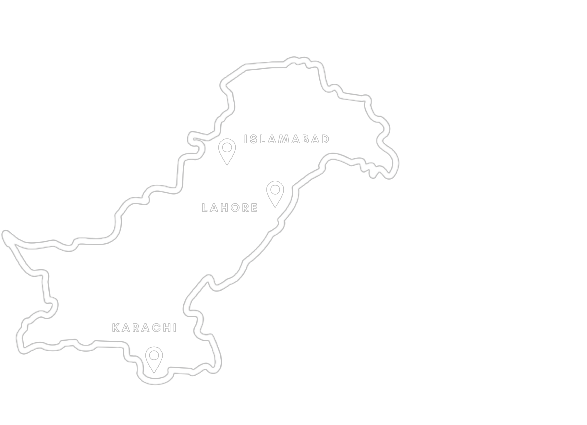
IslamabadKarachiLahore