Shahid Sattar and Sarim Karim
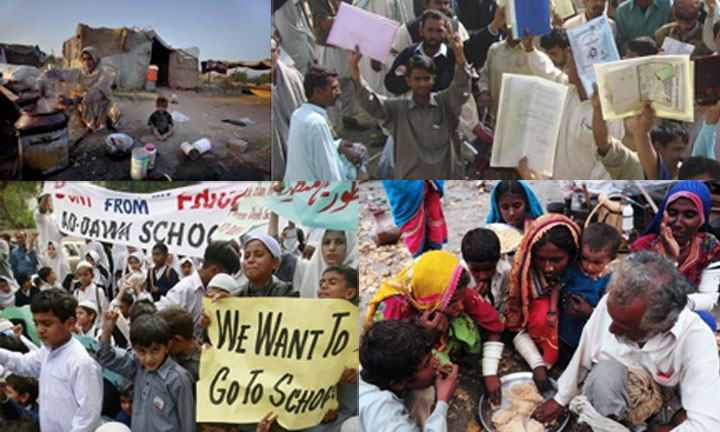
Pakistan is currently in difficult circumstances, grappling with deindustrialization and widespread unemployment. The country’s inflation rate at 36.4% has forced millions of families into subsistence conditions. Shockingly, 22% of the population now lives below the national poverty line, with 16.7% lacking access to education, electricity, sanitation, and water. The solution to these crises has historically been export-led development, which is pivotal for poverty alleviation, employment generation, and balancing the fiscal deficit.
However exports have not been given priority in Pakistan due to an unfounded fear of income inequality associated with trade liberalization. Protectionist policies wreak havoc on Pakistan’s export sector, generating cost burdens and inefficiencies which have led to an artificial loss of competitiveness and closures. This fear of income inequality disregards the fact that income equality alone cannot address the ongoing macroeconomic crisis. Pakistan cannot hope to achieve equitable growth or stable macroeconomic conditions unless priority is given to export-led growth.
When measuring inequality, institutions use the Gini index. The index ranges from 0 which implies perfect equality, and 1 which implies perfect inequality. Pakistan has a Gini index of 29.6, meaning that the wealthiest 10% of Pakistani households are responsible for 29.6% of relative consumption. At first glance, Pakistan appears relatively equal compared to its Asian peers. Bangladesh’s Gini coefficient stands at 32.4, India’s is at 35.7, and the South Asian average is 33.6. However if deindustrialization continues, this Gini Index score will become further unsustainable, as Pakistan’s shared prosperity has been decreasing since 2005, indicating that the poorest 40% are receiving fewer gains from economic growth.
To discuss the role of inequality in the context of development, Kuznets’ Curves help to outline long term trends. These suggest that inequality initially grows as a nation industrializes, due to the influx of cheap labour via rural to urban migration and capital investment. However, as labour becomes more organized, human capital expands, and incomes rise, inequality begins to decrease. Therefore, much of the fear-mongering centred around trade exacerbating inequality fails to account for two facts. First, deindustrialization would have worse outcomes for the working class. Pakistan’s current trajectory places it on the path of degrowth, employment loss, and a current accounts crisis that will hurt the entirety of its population but especially its rural and urban poor. Secondly, an unequal distribution of gains from trade can be mitigated using redistribution policies, expanding social safety nets, and increasing skill development. However these policy outcomes are harder to achieve without the revenue and current account balancing that exports provide.
Many of Pakistan’s protectionist policies are implicitly a consequence of this fear of inequality. World Bank data shows that customs duties on final and intermediate goods hinder capital intensity in production. Upstream duties have consistently increased since 2012 indicating a desire to maintain wages in labour intensive downstream sectors. The simultaneous imposition of duties on raw materials, which represent a cumulative 19% including a 7% customs duty on polyester staple fibre and a 12% anti-dumping duty, drive up production costs and render exporters uncompetitive. The first half of the decade witnessed some customs duties decrease, which led to growth in both the textile and apparel industries. The growth in these sectors outpaced other industries in the same period, but these gains were quickly stymied by a rise in regulatory duties post-2014. Currently, Pakistan fails to harness the potential of a growing export sector.
An investigation in 2016 on trade and inequality in Pakistan sheds light on the significant role of textiles. The study highlights that increased textile trade particularly benefits lower-income households. There are several reasons for this. Firstly, because textiles employ a substantial portion of non-farm, low skill labour, accounting for 28% of the workforce. Secondly, the textile value chain encompasses both rural non-farm and urban low-skill labour, thereby compensating for reduced agricultural earnings resulting from price reductions due to liberalization (Khan et al., 2016). Thirdly, this characteristic of the industry also ensures that restrictions on mobility do not impede equitable distribution of gains from increased textile exports. Lastly, textiles exhibit greater labour intensity than other manufactures like processed food, resulting in a more balanced distribution of earnings in favour of labour over capital (Khan et al., 2016). Therefore, it is evident that textiles hold the most potential for equitable growth as it provides employment in urban areas as well as income to cotton pickers (a largely female labour force) in the rural areas of Pakistan.
A general assessment of trade liberalization highlights three channels for equitable growth:
- Trade facilitates technology transfers and innovation, leading to increased productivity. This in turn fosters skill development and higher wages for labour as it adapts to innovative processes.
- Exports produce foreign exchange earnings that can finance imports and service foreign debt. This frees up fiscal capacity and lowers consumption costs.
- Increased employment and economic diversification enhance an economy’s resilience to exogenous shocks.
In summary, trade provides valuable tools to an economy to address its challenges.
Empirical research on the short-term link between trade openness and inequality is inconclusive especially among countries reliant on import tariffs for revenue. A 2020 investigation by the World Bank found that in 45 out of 54 countries, households benefited from trade, particularly due to lower food prices. Since food is the major source of expenditure for poor households, this is pertinent to Pakistan’s current cost of living crisis. Nine countries were identified as losing from trade, but this was due to overreliance on tariff revenue that was lost upon liberalization. In the short-run for 37 countries, the richest households (the top 20% income earners) gained more from liberalization than the poorest households (the bottom 20%). Kuznet’s curves explain this observation in inequality as a short-term impact for countries which are reliant on import tariffs. However, even these results exhibited strong heterogeneity. In the case of Pakistan for instance, the study found its lower-income population to be one of the largest beneficiaries of agricultural tariff liberalization. These gains occur because of two main factors: lower food prices and the role of agricultural goods as inputs for other industries. The reduction in food prices benefits households, as mentioned earlier. Additionally, since agricultural goods are used as inputs in various industries, the decrease in input prices for those industries has a multiplier effect. This multiplier effect leads to significant gains to the economy and particularly urban labour and labour involved in cotton picking.
Finally, it would help to also challenge the mainstream arguments that support the idea that trade openness leads to income inequality. The United Nations Conference on Trade and Development (UNCTAD) in 2019 summarized two channels through which trade contributes to inequality: the ‘race to the bottom’ and geographical clustering. The first argument suggests that countries compete by offering cheap goods, achieved through reducing wages, weakening labor rights, and relaxing regulations. However, the extent of the ‘race to the bottom’ depends on a nation’s ability to use foreign investment and trade-driven growth to improve workforce skills. Successful export-led developers like South Korea have transformed from impoverished societies to mass-consumption societies with dedicated poverty alleviation strategies. The second argument highlights that trade can lead to uneven geographical development, favoring specific sectors and creating clusters of industries. This means that certain segments of the population, typically rural communities, may not have access to higher incomes associated with employment in export industries. However, this issue can be addressed by improving infrastructure to better connect rural areas with industrial centers. Additionally, investment in small-scale handicraft enterprises, which employ significant rural non-farm labor, can enable them to contribute to exports as well.
Analysis of Pakistan’s peculiar economic circumstances suggests that protectionism actually leads to increased inequality. Pakistan is currently grappling with a cost of living crisis stemming from currency devaluation, rising import prices, and disrupted supply chains. Import tariffs incentivize rent-seeking behavior among inefficient firms that lack competition. These firms can maintain artificially high prices since consumers bear the burden of their inefficiencies. Another frequently overlooked aspect is the gender bias associated with protectionism. A 2019 study conducted by the World Bank, which analyzed data from 54 countries including Pakistan, revealed that protectionist policies disproportionately disadvantage women. Women tend to spend a higher share of their budget on agricultural products compared to men. Female labour also tends to derive a smaller share of income from agriculture compared to men. Therefore protectionism increases both the cost gap and wage gap between men and women. This further exacerbates inequality between female-headed and male-headed households, as men benefit more from income gains associated with protectionist measures. Additionally, there is a gender bias in the cost of living, commonly referred to as the ‘pink tax,’ where products marketed towards women are often priced higher than those targeted at men. When tariffs raise prices and diminish incomes, women bear a disproportionate burden during the cost of living crisis.
Income inequality is a complex and multifaceted phenomenon with many determinants that are difficult to isolate. An empirical investigation by the University of Karachi in 2015 also shared these conclusions. However, they did report a significant relationship between social spending and inequality. As social spending increased, Pakistan saw a decrease in income inequality. Export-led development can provide the fiscal revenue, current account balance, and macroeconomic stability necessary to embark on such projects. Without priority given to exports, Pakistan’s most vulnerable will remain subject to the dire conditions of the present stalemate of premature deindustrialization, failure to gain from export-led growth, and declining standard of living.
In conclusion, Pakistan stands at a critical juncture grappling with deindustrialization, unemployment, and a balance of payments crisis. The unfounded fear of inequality associated with trade liberalization persists, and it is the working class who suffer because of it. Trade openness offers opportunities for poverty alleviation, employment generation, and fiscal stability. To address income inequality effectively, Pakistan must realign its resources to empower export-led growth. By doing so, Pakistan can overcome its economic crisis, create inclusive growth, and improve the living standards of its most vulnerable populations. Failure to prioritize exports will perpetuate inequality, impeding progress toward a more equitable and prosperous future for the nation. It is crucial for Pakistan to embrace trade as a tool for achieving sustainable and inclusive development and end its reliance on protectionism.