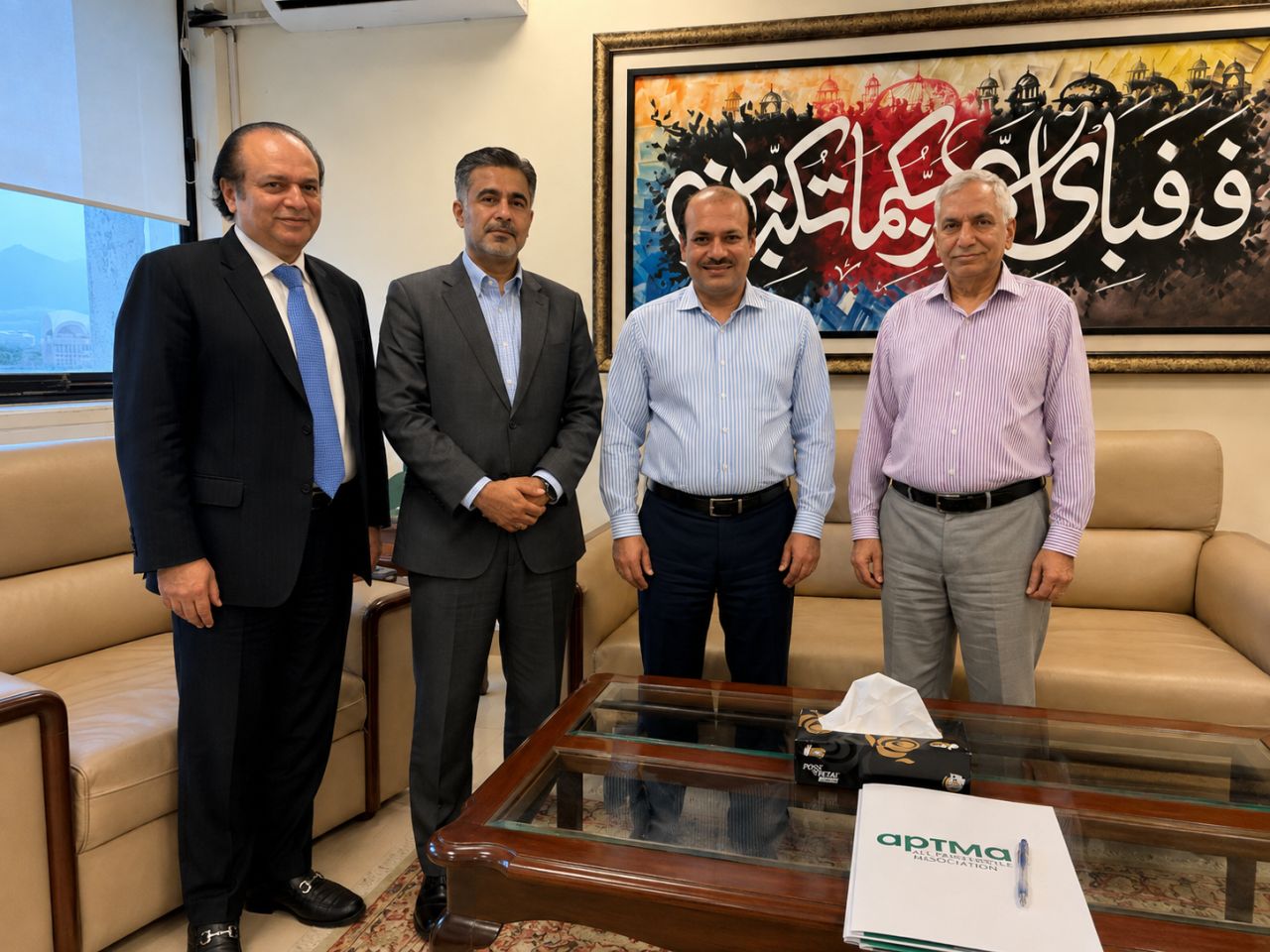
APTMA-MNFSR-Meeting-Moving-Forward-on-the-Pakistan-Cotton-Board.jpeg

August 20, 2026

APTMA–MNFSR Meeting: Moving Forward on the Pakistan Cotton Board

A high-level delegation of the All Pakistan Textile Mills Association (APTMA), led by Chairman Mr. Kamran Arshad, along with Secretary General Mr. Muhammad Raza Baqir and Cotton Advisor Dr. Muhammad Javed, met with Federal Secretary, Ministry of National Food Security & Research (MNFSR), Mr. Amir Ali Ahmed, today at MNFSR, Islamabad.

The meeting was held as a follow-up on the establishment of the Pakistan Cotton Board, as approved by the high-level committee chaired by the Deputy Prime Minister of Pakistan. The Federal Secretary briefed the delegation on the progress made so far and indicated that positive developments are expected within the next one to two weeks.

Chairman APTMA Mr. Kamran Arshad emphasized the urgent need to address the continuous decline in Pakistan’s cotton crop. He highlighted that inadequate research investment, limited access to advanced high-yielding and climate-resilient varieties, and weaknesses across the cotton value chain are putting increasing pressure on both farmers and the textile industry.

He stressed that Pakistan cannot sustainably continue spending valuable foreign exchange on importing huge quantities of cotton when the country has the agricultural potential, farming community and textile demand to produce quality cotton domestically.

“Our priority should be to support Pakistani farmers by enabling them to produce more, better and internationally competitive cotton here in Pakistan. APTMA is ready to work with the Government and all stakeholders to make cotton revival a national success.”

APTMA reiterated that the proposed Pakistan Cotton Board should provide inclusive and equitable representation to key stakeholders across the cotton value chain, bringing farmers, researchers, seed and technology providers, ginners, textile industry and relevant government institutions onto a common platform.

The vision is clear: revive Pakistan’s cotton crop through stronger research, advanced technologies and varieties, quality seed, better farm productivity, improved ginning and closer farmer–industry linkages — reducing import dependence while strengthening farmers, textiles and the national economy. CEO PCCC Dr. Khadim Hussain and Secretary PCCC Dr. Rao Muhammad Wali also attended the meeting.

Pakistan’s cotton revival requires collective ownership from seed to farm, farm to gin, and gin to textile.
Aptma-Warns-Transport-strike-1280x714.jpeg

August 16, 2026
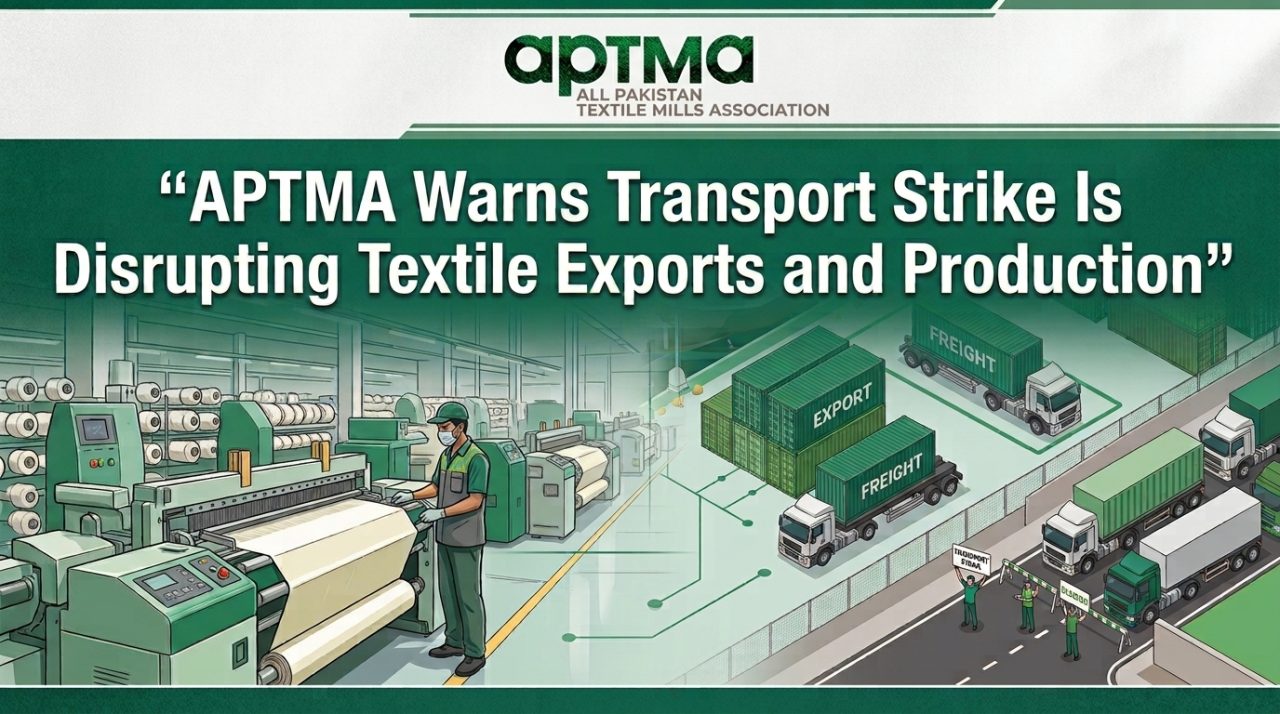
APTMA Warns Transport Strike Is Disrupting Textile Exports and Production

Islamabad, 16th August 2026: The All Pakistan Textile Mills Association has expressed serious concern over the ongoing nationwide transporters’ strike, which has severely disrupted movement of export consignments, imported raw materials, and industrial inputs across the country.
APTMA Chairman Mr. Kamran Arshad said the prolonged suspension of freight movement is directly affecting Pakistan’s textile and apparel sector, which depends on timely movement of cotton, yarn, fabric, dyes, chemicals, accessories, machinery parts, and export shipments.
He said containers are stuck at ports and terminals, while exporters are facing delays in meeting shipment deadlines. The disruption is also creating shortages of raw materials and may force mills to curtail production if normal transport operations are not restored immediately.
Mr. Arshad warned that delays in export shipments can damage Pakistan’s credibility with international buyers and lead to cancellation of orders, penalties, and loss of future business. He said the textile sector which is already facing high energy costs, liquidity pressure, and intense regional competition, and cannot absorb further disruption in the supply chain.
Over the past year, similar disruptions in transport and logistics have affected export shipments and caused serious losses to industry. Such disruptions weaken Pakistan’s reliability as a supplier and make it harder for exporters to retain international buyers.
He said textile exports account for over 60% of Pakistan’s total exports, yet they are stagnating at a time when export growth is most critical for the country. Any further disruption to the textile supply chain will directly affect foreign exchange earnings, industrial production, and employment.
APTMA urged the Federal Government and all concerned authorities to immediately engage with transporters and resolve the issue through dialogue. It also requested the Ministry of Maritime Affairs, port authorities, shipping lines, and terminal operators to waive demurrage and detention charges incurred due to the strike.
Mr. Arshad said swift restoration of the supply chain is essential to protect exports, industrial production, employment, and foreign exchange earnings.

Kamran Arshad

Chairman APTMA

https://aptma.org.pk/wp-content/uploads/2026/08/Press-Release-16-Aug-2026-APTMA-Warns-Transport-Strike-Is-Disrupting-Textile-Exports-and-Production.pdf


LOCATIONS

Where We Are


GET IN TOUCH

Follow Our Activity


IslamabadKarachiLahore