image_1752131679921.webp

June 17, 2025

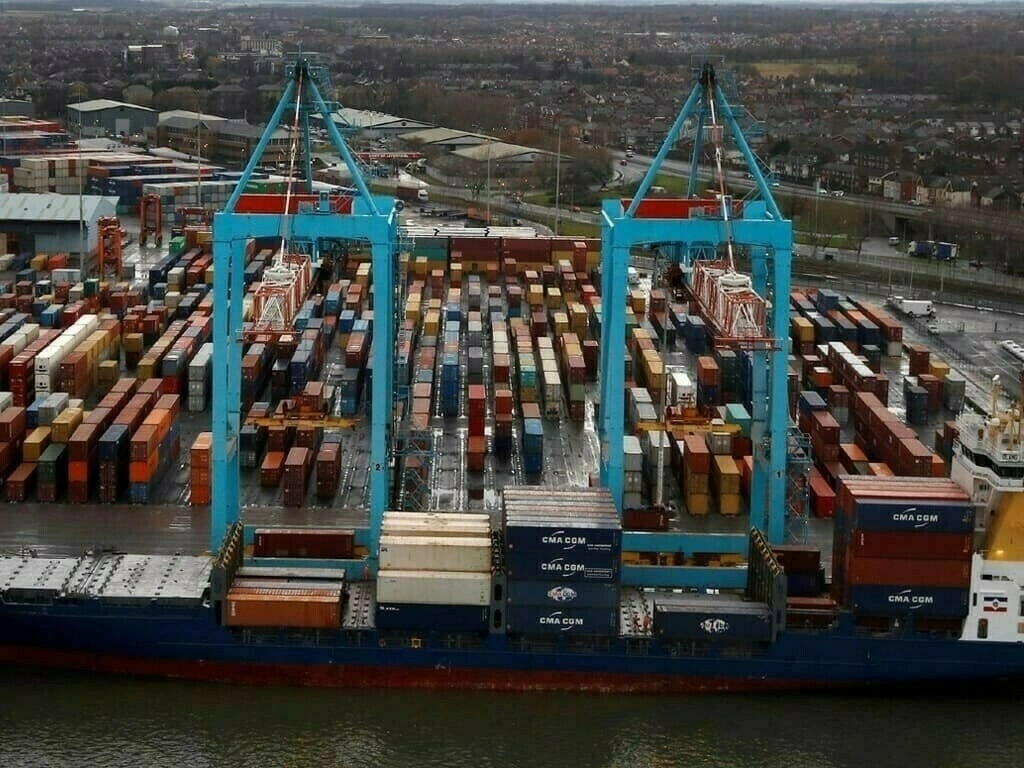
Over the past year, power tariffs in Pakistan have come down considerably and, contingent on key reforms being implemented over the next five years, are on their way to becoming “normal” by global standards.

As highlighted in a recent IEA report, power tariffs in Pakistan are almost twice as high as in most of the world. Behind this are a multitude of reasons, ranging from a high share of stranded capacity, high technical and commercial losses, cross subsidies and other economic distortions that have kept power tariffs prohibitively high and subdued demand, contributing to a utility death spiral, and most recently a solar boom that threatens the viability of the national grid.

While power tariffs have been brought down significantly over the past two years, it’s important to point out that they’re back around the pre-crisis levels of 2021-22 which were not very competitive to begin with. They spiralled from around 10-12 cents/kWh to 16-17 cents/kWh in the wake of the economic crisis of 2022-23; as the economy has adjusted some demand has recovered (though still below 2020-21), while international developments have also kept fuel prices at a low. Hence, the reduction in power tariffs has been brought about by a combination factors, including economic recovery, and a targeted subsidy with sunset clause.

The only “structural” or long-term sustainable change has been the termination and renegotiation of 1992/2002 policy IPP contracts, which brought about a relief of Rs. 16 billion and Rs. 17 billion in the third quarter of FY25, respectively. This translates into an annual reduction of around Rs. 120 billion in total capacity charges of Rs. 2.27 trillion (based on FY25 Power Purchase Price determination)—an impact of negative Rs. 0.92/kWh in the average power purchase price.

Some relief is also planned to be financed through the Grid Transition Levy on captive power plants, though it’s unclear how the government expects to raise funds from the captive levy while simultaneously shifting them to the grid and “eliminating captive power usage from the gas sector” in IMF agreement lingo. Except little to no relief from this front, especially as captive gas consumption was down by ~90% YoY in April 2025.

The reduction brought about by negative QTAs over last few quarters, primarily through the IPP termination/renegotiation and CPP transition, will be embedded into the base tariff as part of cost and demand projections for next year. Considering these factors, and the CPPA Power Purchase Price projections, which range between Rs. 24.75-26.70/kWh compared to Rs. 27/kWh for FY25, it is safe to assume that power tariffs will be rebased to around where they are at present.

Considering all these dynamics, any further reduction in power tariffs beyond current levels is unlikely without systemic overhauls. The good news is that the IMF Staff Report outlines a few such corrections that are now in motion. However, the way some energy sector policies—particularly the captive-to-grid transition—have been implemented over the past year raises serious concerns about transparency, adherence to the rule of law, and a troubling reliance on the notion that the ends justify the means.

Two measures that are likely to have a substantial positive impact on power tariffs are restructuring of the power sector circular debt and rewiring of energy subsidies mechanism for low-income groups.

Circular debt has been a major issue not only because the debt servicing cost has been a significant contributor to prohibitive power tariffs, but also because it is a major hinderance to broader power and energy sector liberalization. Investors don’t want to buy debt ridden entities, and as consumers fall off the grid who will service the debt?

Conversion of up to 80% CD stock to CPPA debt at a favourable rate and plan to clear it by FY31 is hence a very positive development. While lifting of the cap on the debt servicing surcharge as a contingency measure has attracted some criticism, it should not need to be increased above the 10% of revenue requirement level if all goes well, and the Rs. 3.23/kWh surcharge (at present) can be eliminated over the next 5 years. 

Removal of cross subsidies from power tariffs by FY27 is another very significant correction. Power tariffs across different consumers are highly distorted through cross subsidies, where high-end consumers—i.e., those with a high propensity to consume and ability to pay—are made to subsidize the consumption of lower-income consumers. First, not only does this significantly inhibit the demand of “good” consumers—industrial, commercial and residential—and create a significant incentive for them to move off the grid, the poorly designed and administered system has led to widespread abuse of the protected and lifeline tariffs, and theft under the guise of subsidized consumption.

There are numerous instances of a single household having multiple power meters to avail protected tariffs, and with massive proliferation of off-the-grid solar, more and more middle-to-high-income consumers are becoming eligible for low-consumption-based protected tariffs, the cost of which is again borne by the good consumers, furthering the utility death spiral. In addition to the cross subsidy, it also costs the government over Rs. 1 trillion annually through the tariff differential subsidy.

Under the Resilience and Sustainability Facility, the government has committed to reforming the energy subsidy system to “reduce incentives for overconsumption, wasted energy, and incentives for theft and losses.” In FY27, the country can expect a simplified power tariff structure without cross subsidies, and power subsidies for low-income consumers moved to the Benazir Income Support Programme, where they rightfully belong. Communication campaigns around this should be starting within a few weeks, consumers will be identified and verified by early 2026, a rebate mechanism will be defined by mid-2026, and the first rebates should start going out from early 2027.

The government is also moving forward with other key reforms, including addressing distributional efficiencies through privatization of DISCOs, improving the transmission system through restructuring of NTDC, and privatization of inefficient GENCOs.

Some progress has also been made on the Competitive Trading Bilateral Contracts Market (CTBCM). The proposal for a Rs. 28.45/kWh (10.2 cents) wheeling charge has been rationalized to Rs. 12.55/kWh (4.5 cents) + bid price, comprised of Rs. 3.23 debt servicing surcharge, Rs. 3.47 cross subsidy, Rs. 2.34 distribution margin, Rs. 1.45 use of system charge, and Rs. 2.06 in losses. Revenue generated through bidding above the base price will be contributed to the grid in lieu of stranded costs. The indicative plan is to operationalize the competitive market with a cap of 800MW to be allocated over 5 years. If the government succeeds in reforming the power subsidy and clearing the CD stock, the wheeling charge will come down to Rs. 9.08/kWh (3.3 cents) by FY27, and Rs. 5.85/kWh (2.1 cents) by FY31.

However, it is important to note that the 4.5 cents/kWh base price is still two to three times the 1.5-2 cents/kWh wheeling charge that is financially viable for industrial operations. Considering the generation tariffs of IPPs and GPPs, a wheeling charge of 4.5 cents/kWh takes the final price above the grid tariff of ~11 cents/kWh, leaving little to no incentive for industries to shift to the competitive market.

While a key objective of the CTBCM has been to transition industrial bulk power consumers to a competitive market where they can avail power at regionally and internationally competitive prices, operationalizing CTBCM at Rs. 12.55/kWh + bid price risks low to no participation from industrial consumers and the bulk of the capacity going to BPCs like housing societies whose load is non-productive in nature and does not create an economic multiplier like industry. Hence, the government must reconsider whether it wants to go this route.

Looking at these rosy reforms, one must also not forget the grim reality of the grid transition levy on captive power consumers. While the objective of shifting inefficient gas generators to the grid is appreciable, the blanket application of a purposefully miscalculated and contrary to the law levy is counterproductive and significantly undermines confidence in the broader reform agenda.

Gas price for captive was raised to Rs. 3,500/MMBtu, RLNG equivalent, in February 2025, which brought the cost of captive generation at par with the grid. Imposition of an additional levy, based on the peak industrial tariff applicable for 4/24 hours a day, under-assumption of captive generation costs, and inclusion of unrelated frivolous charges, contrary to the methodology specified by law, has led to undue penalization of efficient facilities like combined heat and power cogeneration plants.

Captive cogeneration plants are an international standard for industries requiring a stable and high quality of power supply and contribute to lower emissions to meet shifting buyer preferences. The 2021 CCoE decision that has been used as a basis for transitioning CPPs to the grid specifically exempted cogeneration facilities, and the spirit of this decision should be maintained by reclassifying cogeneration captive to the industrial power tariff category.

Beyond cogeneration, many captive consumers who have shifted to the grid are facing major challenges related to quality of supply. Industrial units across the country, but especially in Southern DISCOs, are regularly experiencing repeated tripping and severe voltage fluctuations, and feeders are burning out, causing damage to expensive equipment and operational disruptions. The forced transition to grid was premature in this regard. While the power division has advocated signing of Service Level Agreements, these provisions should be embedded into the Consumer Service Manual, and top-quality supply must be ensured for all power consumers across the board.

There are additional measures worth serious consideration. First, the government should reconsider its approach to incentivizing additional consumption. Another incremental package priced at Rs. 20–25/kWh is reportedly in the works, but the last such initiative—with its convoluted conditions and limited uptake—fell short of expectations, particularly for industry. A better approach would be to expand the Time-of-Use tariff regime, introducing more slabs priced at marginal cost. A deeply discounted night-time tariff for 3-shift-industries, for instance, would offer clarity and real value to consumers while driving up utilization of idle capacity far more effectively than the stopgap incentives tried so far.

Second, the DISCOs’ outdated consumer databases—which are often not reflective of sanctioned or actual loads, or the corresponding security deposits—must be updated. Doing so would enable proper recalibration of security amounts, injecting much-needed liquidity into the sector, and also help resolve many underlying mismatches and disputes between consumers and utilities.

In conclusion, while the horizon is finally beginning to show signs of light, the path to a sustainable, competitive, and equitable power sector hinges on transparent implementation, lawful policymaking, and a clear commitment to reform that prioritizes long-term efficiency over short-term optics. The proactive role of the Power Minister and his team in pushing fundamental corrections is highly appreciated—but the challenge now is not just to promise change, but to make sure that it sticks.
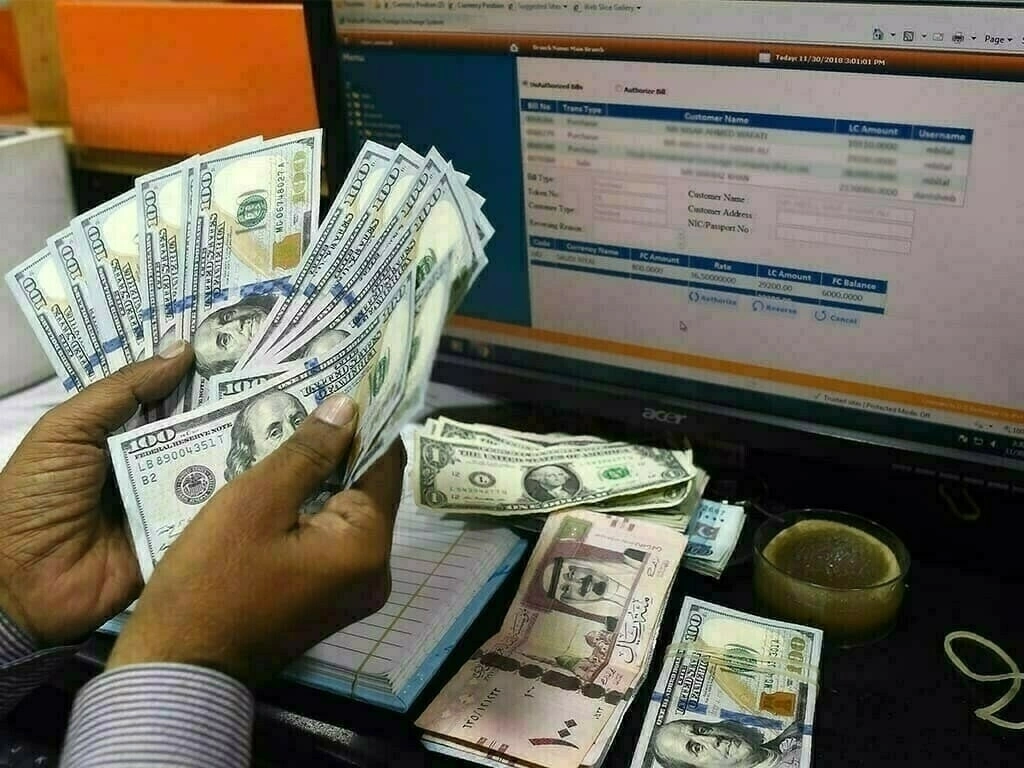

image_1753093681615.webp

June 5, 2025

By Shahid Sattar | Sarah Javaid
Pakistan’s implicit export strategy isn’t goods – it’s people. And the strategy continues. In a recent statement, the finance minister announced plans to train one million youth annually, priming them for jobs in Gulf economies, especially Saudi Arabia. The rationale? Pakistan’s skilled workers will power “Saudi Arabia’s transformation”, while the remittances they send back will help rescue Pakistan’s own faltering economy.

This policy begs three critical questions: Have we become a nation that equips its youth to build other economies? Has exporting people taken priority over exporting products?  And most importantly, have we embraced remittances as our default economic strategy?

For decades, Pakistan has leaned on remittances as a current account stabilizer. But let’s not mistake a dependence model for strategy. These dollar inflows aren’t the result of industrial upgrades or strategic reforms. They stem from the steady outflow of our manpower, intellect, and talent.

According to the World Migration Report 2024, Pakistan ranks 6th globally in remittance inflows, receiving $30.2 billion – nearly 9% of GDP in FY24. In March 2025, monthly remittance inflows crossed $4 billion for the first time in the country’s history. If current trends hold, FY25 could close with an all-time high of $36 billion.

The statistics surrounding outward migration are staggering. In 2024, the number of Pakistanis leaving for overseas jobs jumped 69% from 2020. Nearly half of them were classified as ‘skilled labor,’ according to the Bureau of Emigration and Overseas Employment. With the finance minister’s latest announcement, it’s clear: emigration is no longer market-driven – it has evolved into a national strategy.

Had the country prioritized skills training to boost domestic productivity and promoted a conducive job market, much of this brain drain could have been redirected toward wealth generation through productive activities.

The irony is that the impact stretches beyond the brain drain. Ample research reveals that while remittances boost household income and consumption, they also create a cycle of dependency, diverting demand and resources toward non-tradable goods. This drives up prices in non-tradable sectors and undermines export competitiveness – classic symptoms of Dutch disease.

While economists continue to debate the extent of this effect, Pakistan’s case is hard to ignore. Our analysis shows a clear negative correlation between rising remittances and exports-to-GDP, coupled with elevated consumption and imports. Meanwhile, human development indicators remain dismally low, suggesting that the influx of dollars has not translated into long-term socio-economic prosperity.

While this article may not exhaust every channel through which remittances affect the economy, it definitely makes one thing clear: remittances, while taken as short-term buffers in Pakistan, are no substitute for a serious growth strategy.

Remittances vs Human Development:

Approximately 727,000 Pakistanis left the country in 2024, and by March 2025, an additional 172,000 had followed. As a result, Pakistan is now the 7th largest source of international migration globally.

To place this in a broader context, over the past 50 years, more than 14 million Pakistanis have emigrated, 57% of whom were skilled professionals, including engineers, doctors, nurses, accountants, and technicians. Ironically, these are the very skills vital to the growth of Pakistan’s export-oriented manufacturing and services sectors. The result is a steadily shrinking pool of skilled professionals at home.

While emigration – having doubled over the past two decades – has led to a sharp rise in remittances (up 240% in dollar terms), the social payoff remains conspicuously absent, as the country’s HDI indicates a regressive trend in human development.

Among the top remittance-receiving countries, Pakistan has the lowest HDI (0.54) and the highest remittance-to-GDP ratio. China and Mexico, by contrast, boast high HDI scores of 0.79 and 0.78 – with remittances forming just 0.3% and 3.6% of their GDPs respectively (Figure 1). This suggests that their economies are not reliant on remittances, nor are these inflows a primary focus of their economic strategies.

The Twin Effects of Remittances:

But why isn’t Pakistan’s $30 billion remittance inflow translating into tangible gains in human development or sustained economic growth? Because the system isn’t structured to absorb it productively. Instead, the channels through which remittances are utilized in the economy are fueling Dutch Disease – driving consumption in non-tradables and weakening the export base.

As remittances increase household incomes, they boost overall consumption, particularly of non-tradable goods like food and housing. Given the short-run inelasticity of housing supply, rising real estate prices lead to demand-pull inflation. This is especially significant because housing carries the second-highest weight in the Consumer Price Index. As prices rise in the home country relative to its trading partners, the real effective exchange rate (REER) appreciates, eroding export competitiveness. Even though the central bank allows gradual PKR depreciation, persistent domestic inflation continues to appreciate the REER, thus impacting exports.

The outcome? Despite substantial financial inflows, socio-economic growth remains stagnant or negative. This reflects the classic spending effect of remittances – where increased consumption in non-tradables, rather than productive investment, predominates.

Another channel through which remittance inflows can stall growth is the resource movement effect. As non-tradables become more profitable – particularly real estate and construction – capital, labor, and investment shift away from tradable sectors like export manufacturing. This reallocation erodes industrial capacity and contracts the export base. In effect, the tradable sector is hollowed out, unable to keep pace globally.

Together, the twin forces of the spending and resource movement effects encapsulate the symptoms of Dutch Disease.

This distortion is further compounded by rising imports – driven by REER appreciation and consumption – and declining exports due to both a stronger REER and the structural shift away from tradables.

Figure 2 captures this dynamic: over the past five decades, Pakistan’s remittance-to-GDP ratio has steadily climbed, while the export-to-GDP ratio has declined. Imports, meanwhile, have grown in tandem with remittance inflows, underscoring the structural imbalances at play.

What we’re witnessing is not prosperity, but a cycle: more migration, higher remittances, increased consumption in non-tradables, rising inflation, and a weakened export base – leading to stagnating or declining economic growth.

As El Hamma (2018) noted, remittances promote growth only where strong institutions and financial systems exist. Without them, they serve as a survival tactic. The adverse impact of remittances is further supported by Acosta et al. (2009) and Chami et al. (2005), who show a negative correlation between remittances and growth. More recently, Dr. Ahmed Jamal Pirzada cautioned against the growth of remittances in Pakistan, noting that it could lead to broader economic vulnerabilities.

Impact of Remittances on Pakistan’s Export and Growth Trajectories:

To further assess whether remittance inflows drive growth in Pakistan, we ran OLS estimations to examine the impact of remittances (as a percentage of GDP) on exports to GDP, imports to GDP, consumption to GDP, and overall GDP growth. The results are summarized in Figure 3. Our estimates suggest that a one-percentage-point increase in remittances to GDP leads to a 0.67 percentage point decline in exports to GDP, a 0.23 percentage point increase in imports to GDP, a 1.209 percentage point rise in consumption, and a 0.07 percentage point decline in GDP growth.

The negative correlation of remittances with exports and GDP growth, and the positive correlation with imports and consumption comes as no surprise in our model, especially in the case of Pakistan.

As discussed, a key explanation lies in the emergence of a dependency culture. Higher remittance incomes boost overall consumption, which also increases imports. Additionally, financial inflows trigger spending and resource movement effects toward non-tradables, weakening the tradable sector and exports. Consequently, Pakistan’s over-reliance on remittances over the past 50 years has diverted resources from productive export sectors, thereby contributing toward declining economic growth.

Theoretically, even within the GDP equation Y = C + I + G + (X − M), the effect of increased remittances on growth is detrimental – especially when the marginal increase in consumption (C) is challenged by the negative marginal impact on the trade balance (X − M). Thus, while remittances may boost consumption, their adverse effect on exports and the trade balance dampens GDP growth, assuming investment (I) and government spending (G) remain constant.

We aren’t bracing for Dutch disease; we are already living through it:

For skeptics of Dutch Disease in Pakistan, the shift began decades ago when the country’s oldest and largest export-oriented composite textile unit started reinvesting and diversifying into cement, banking, insurance, power generation, hospitality, and now dairy. While power generation qualifies as backward vertical integration within the textile sector, all other investments are in non-tradables. This is a de facto sign of Dutch Disease: businesses avoiding reinvestment in tradable or export sectors due to reduced competitiveness. Today, nearly all export-oriented firms in Pakistan are following the same path.

In conclusion, while remittances may offer a short-term fix to Pakistan’s current account issues, they come at a high cost – deepening structural problems through the spending and resource movement effects.

In seeking temporary relief, Pakistan is sacrificing long-term growth, with fewer exports and deteriorating economic performance. What started as a cultural norm has now evolved into a strategic national policy. The evidence presented here underscores why this cycle must not continue, especially when sustainable sources of dollar inflow – exports and FDI – fail to show significant progress.

The debate is not how long this model can last, but whether it should.


image_1753096957280.webp

June 2, 2025

I’ll be blunt and direct — there’s no room for comforting illusions when it comes to export growth. The world thrives on exports. This isn’t new, and it’s not up for debate. So, let’s begin with the first consensus: exports are essential for economic survival.

The second consensus is clear: textiles are the backbone of Pakistan’s industrial economy. They’ve long driven growth, jobs, and foreign exchange — but that foundation is now weakening in the absence of sustained policy support needed to remain globally competitive.

Here’s the third and perhaps most urgent consensus: if exports are vital — and textiles are their engine — then supporting this industry isn’t optional. It must be treated as a national economic priority, not something to be strangled by misguided policies.

Yet Pakistan’s largest exporting sector is under siege by its own policymakers. While other countries are racing toward industrialisation, we are sliding into premature deindustrialisation. Why? Because Pakistan hasn’t even begun to prioritize export growth and instead treats its most valuable export sector with neglect — and at times, outright hostility.

The consequences are visible. The textile industry is unraveling, and the numbers speak for themselves. Textile exports fell 14.6% month-on-month in April 2025 and 1.4% year-on-year. Net textile exports dropped from USD 14.08 billion in FY2024 to USD 13.6 billion in FY2025, as imports of cotton, yarn, and greige fabric surged from USD 2.1 billion to USD 3.6 billion.

Since the irrational tax measures of Budget 2024, over 120 spinning mills have shut down, with many others operating below 50% capacity. Millions of jobs have been lost. More and more skilled labour is leaving the country as large-scale manufacturing is in retreat, with output shrinking 1.9% during July–February FY2025, compared to a 0.4% contraction last year.

With over 55% of our total exports stemming from textiles, the sector’s strategic importance should be unquestionable. Yet it is being treated as expendable.

Policymakers may speak of “reforms,” but any policy that undermines exports is not reform — it is a strategic blunder. The widening gap between rhetoric and reality is pushing the sector to the brink. The problems are well known, but they must be stated again — clearly, urgently, and without euphemism.

Energy is the sector’s most urgent crisis – no export industry can survive without reliable, affordable supply. At the core of the textile industry’s collapse is a deliberate pricing-out through inconsistent and inflated energy costs. While competitors like Bangladesh, India, and China offer gas at $6–9/MMBtu and electricity at 5–9 cents/kWh, Pakistan continues down a regressive, irrational path.

Since July 2023, the gas/RLNG tariff for captive use has surged from Rs. 2,364/MMBtu to Rs. 3,500/MMBtu. On top of that, a Grid Transition Levy of Rs. 791/MMBtu raises the effective captive gas price to Rs. 4,291/MMBtu -approximately $15.38/MMBtu – nearly double what our competitors pay. Even worse, this levy is calculated based on the B-3 peak rate, which applies for only four hours a day.

This isn’t a miscalculation – it’s an intentional policy choke. CPPs – once encouraged to fix load-shedding – are now being penalized just to spread the grid’s inefficiency costs across more users.

But switching to the grid offers no respite. Electricity tariffs in Pakistan are the highest in the region—12–14 cents/kWh compared to 5–9 cents/kWh elsewhere. The grid itself is unreliable, plagued by outages, stranded costs, and circular debt. Exporters face a brutal dilemma: either pay exorbitantly for unreliable power and lose competitiveness, or halt production and go out of business.

This is far from a free market where exporters cannot even choose their own energy inputs. What we’re witnessing isn’t just a distortion— it’s a deep, systemic policy failure.

Then there’s another policy absurdity: regressive taxation, one of the great ironies of Pakistan’s tax system, treating exporters more like easy tax targets than growth drivers. The FY2025 budget pushed exporters into the normal tax regime, imposing a 1.25% advance minimum turnover tax adjustable against a 29% income tax, alongside a super tax of up to 10%.

With that, exporters also face a 1.25% advance tax on export proceeds and a 0.25% export development surcharge – pushing their total tax burden up to135%. This is not only punitive but also blatantly discriminatory. Extensive research shows that such regressive taxes encourage evasion while stifling investment and growth. Textile firms, already operating on razor-thin margins, are now squeezed on liquidity, with the turnover-based tax alone drastically hampering cash flow and production capacity.

Compounding the crisis, FY2025 policies have crippled domestic suppliers. The Export Facilitation Scheme previously allowed duty- and sales-tax-free access to all inputs, but the government withdrew the sales tax exemption on local supplies for export manufacturing—while imported inputs remain zero-rated.

Ten months into this policy, the consequences are severe. Over 120 spinning mills have shut down, and associated industries are nearing collapse. Exporters are increasingly turning to imported yarn, whose value has surged by 225% in just three quarters—from USD 142 million to USD 462 million.

This isn’t just hurting our trade balance. Every day this policy remains in place, factories shut down and unemployment grows. Deindustrializing the spinning sector risks losing over $15 billion in sunk investment, in addition to the investment made under TERF.

Worsening the situation, the sales tax on domestic procurement is choking liquidity and halting production. Although refundable in theory, only 60–70% of sales tax refunds are paid—and with delays over six months. The FASTER system, which promised 72-hour automated refunds, is now defunct. Manual refunds have made no progress in four years. Working capital has dried up.

“Here’s the staggering reality: as of FY2024, the government owes the textile sector Rs. 55 billion in sales tax refunds, Rs. 105 billion in deferred sales tax, Rs. 25 billion in duty drawbacks, Rs. 100 billion in income tax refunds, Rs. 35.5 billion in DLTL/DDT dues, Rs. 4.5 billion in TUF payments, Rs. 3.5 billion in markup subsidies, and Rs. 1 billion in RCET differentials. All these funds remain stuck. Exporters aren’t asking for subsidies—only timely refunds of their own money to reinvest.”


But the state seems dependent on private sector liquidity to manage its fiscal distress.

Policies in Pakistan shift in the blink of an eye. Just rewind a few years. Between 2020 and 2022, the textile sector saw a rare surge, fueled by the TERF scheme, competitive energy tariffs, and strong post-COVID demand. Capacity grew across spinning, weaving, dyeing, and garmenting. But by 2023, this momentum collapsed—not due to global demand, but inconsistent and hostile domestic policies. Nearly 30% of capacity now lies idle, expansion plans seem elusive, and firms are either investing in non-tradables or considering relocation.

This must change immediately.

Today, amid Trump tariffs reshaping the global order, markets are starting to see potential in Pakistan over regional rivals. The USA has recently extended trade ties, and the now-cancelled Pak-EU Business Forum 2025 sparked hope for more trade and investment. But how can new capital come in when current businesses are struggling to survive?

In short, exports are declining and FDI has dried up. The government’s primary sources of dollar inflows are remittances—which, over time, suppress exports, drive up consumption and imports, and hinder growth—or external debt. But where is the sustainable dollar inflow from exports?

No matter how many URAAN plans are rolled out, without fundamental policy shifts, exports won’t recover.

And to achieve export-led growth, the government must recognize that the way forward begins with energy. Power tariffs need to be regionally competitive – capped at 9 cents/kWh – to restore cost parity. The cross-subsidy system, which unfairly burdens industry, must be abolished. A uniform tariff should replace the existing Time-of-Use system.

Exporters should be empowered to procure power directly via B2B contracts by implementing CTBCM or similar frameworks. Gas pricing must align with industrial realities. Co-generation users should be reclassified under industrial process tariffs. The flawed Grid Transition Levy requires transparent recalculation. Additionally, exporters must have the right to procure domestic gas or import LNG independently through Third Party Access.

With that, the EFS must also be revised. Ideally, zero-rating of local supplies should be restored to the June 2024 framework. If IMF constraints prevent this, implementing a negative list of EFS imports—including yarns and fabrics—is the only viable way forward to ensure a level playing field.

Corporate taxation needs immediate rationalization. The 1% advance tax on export proceeds, layered on top of income tax, constitutes double taxation and should be abolished. Pakistan must adopt a graduated sales tax system like India’s, where raw materials are taxed at lower rates than finished goods. This will improve tax compliance, curb evasion, and strengthen competitiveness.

Also, refund delays must be fixed immediately. The government should release all outstanding dues to exporters and restore their working capital to revive exports.

Most importantly, every policy must be based on clear cost-benefit analysis, which is currently missing, causing conflict and chaos. The Planning Ministry pushes the $50 billion URAAN package, while FBR focuses on irrational, anti-business taxes over industrial growth. Finance Ministry claims to seek sustainable dollar inflow but approves regressive taxes and gas levies that choke the industries meant to generate it.

While the world races ahead with traceability, ESG standards, and digital certification, Pakistan is pushing itself out of global value chains through inconsistent, anti-export policies. We’re not just falling behind—we’re cutting ourselves off. The math is clear: export growth means jobs, dollars, and stability; export decline means debt, IMF bailouts, and rising unemployment. It’s high time the government shifts focus away from remittances and bailouts – and commits fully to export-led growth.

There is no room for illusions anymore; the government must face reality and act


LOCATIONS

Where We Are


GET IN TOUCH

Follow Our Activity


IslamabadKarachiLahore