image_1752123720635.webp

February 19, 2025

With an IMF determined to punish past misdemeanours and a government unwilling to embrace meaningful reform, Pakistan’s gas sector is as good as finished and will take industry down with it.

For over three decades, the government actively promoted industrial captive power generation, yet as energy sector mismanagement has resulted in surplus power capacity and escalating tariffs, captive power producers (CPPs) have been made the scapegoat. As the power sector crisis deepened, CPPs were blamed. Under the 2024 Stand-By Arrangement (SBA), the government proposed eliminating CPPs’ gas usage and forcing them onto the national grid to address stranded power capacity. However, this policy—developed without adequate analysis—risks destabilizing both the gas and industrial sectors, with broader economic repercussions. After months of uncertainty regarding gas supply for captive power, the government has opted not to cut off supply but has instead hiked the captive gas tariff to Rs. 3,500/MMBtu plus an additional “grid transition levy” to force industrial energy demand to the grid.

Energy pricing in Pakistan lacks any coherent market-driven logic. Power and gas tariffs are set based on arbitrary calculations that balance the government’s books—even then to the extend possible—rather than reflecting economic realities or ensuring efficient resource allocation. The grid transition levy is the latest in a series of such ill-conceived interventions.

Its stated goal is to align the cost of gas-fired captive generation with the B3 grid tariff, removing any cost advantage for captive power. Yet even the Ordinance through which it has been implemented is unclear about the mechanism with which to achieve this. It first directs authorities to calculate the levy by comparing industrial B3 tariffs with captive power costs, only to contradict itself by mandating automatic rate hikes—5% immediately, increasing to 20% by August 2026.

These conflicting approaches expose the policy’s lack of foresight. If the intent is to eliminate the cost advantage of captive power, then the appropriate mechanism would be a benchmark tariff applied across the board rather than a levy, given that captive consumers can currently avail gas through the utilities at Rs. 3,500/MMBtu or through third-party access at mutually negotiated rates.

Given the variation in effective prices faced by consumers, for the levy to achieve its objective it needs to be tailored to each consumer’s effective gas price. Moreover, for third-party access consumers, economic logic suggests that shippers would simply adjust prices to match the benchmark, capturing the levy as profit rather than achieving the intended policy outcome. This is a textbook case of market distortion, where intervention begets more intervention, ultimately failing to achieve its objective.

Beyond pricing, the assumption that captive consumers can seamlessly transition to the grid is deeply flawed. Grid inefficiencies, infrastructure limitations, and supply reliability remain major concerns. Captive plants operate at different efficiencies based on gas quality and operational conditions, yet the levy applies a blanket cost increase.

The most efficient plants will be penalized, while inefficient operations on the national grid are effectively rewarded.

While the Power Division has directed DISCOs and K-Electric to sign service level agreements (SLAs) with industrial consumers that include penalties for non-compliance, the very need for such agreements raises fundamental concerns. Shouldn’t the national grid inherently provide reliable, high-quality power to all consumers without requiring formal assurances? The fact that DISCOs are now pledging improved supply through SLAs is, in itself, an admission that the existing grid power supply is inadequate for industrial consumers.

Moreover, the SLA clause mandating consumers to source at least 70% of their energy consumption from the grid is highly problematic. Globally, industrial consumers integrate multiple energy sources—including solar, wind, furnace oil, coal, and gas-fired captive power generation—to optimize costs and ensure energy security. There is no regulatory restriction in Pakistan preventing such integration, and this requirement contradicts international best practices. It also severely impacts export-oriented industries, which are increasingly under pressure to meet sustainability commitments and transition towards carbon neutrality. While Pakistan benefits from significant hydropower capacity, the overall carbon footprint of grid electricity remains high due to the intermittency of renewables and continued reliance on thermal generation. Restricting industrial consumers’ ability to diversify energy sources not only undermines their environmental objectives but also weakens their global competitiveness.

Additionally, the cost implications of this requirement are severe. Forcing consumers to rely predominantly on an expensive grid deprives them of the opportunity to optimize costs through alternative, more affordable energy sources. Moreover, fines imposed on DISCOs for SLA violations offer little incentive for genuine compliance, as the financial burden inevitably circles back to consumers—further exacerbating already prohibitive power tariffs.

Adding to the absurdity is the claim that the levy’s revenue will be used to lower power tariffs. Even at Rs. 3,500/MMBtu, captive power generation is already more expensive than the January 2024 B3 grid tariff of ~13 cents/kWh even for the most efficient generators:


Gas consumption has plummeted, as reflected in declining Sui line pack reports, but whether grid consumption increases correspondingly increase remains to be seen. Alternative fuel sources such as furnace oil or coal-fired captive power remain cheaper than grid electricity, further undermining the policy’s effectiveness and making any significant revenue generation from the levy highly questionable.

Rather than introducing arbitrary levies and counterproductive administrative controls, the government should embrace a market-based approach. Textile industries, for instance, have consistently stated their willingness to pay full RLNG rates for self-generation. Yet, instead of allowing industries to procure gas at international prices, the government supplies the same to other consumers at highly subsidized rates, contributing to a Rs. 3 trillion gas circular debt. Pricing out the highest-paying consumers will only lead to exacerbation of the circular debt, billions in lost exports and millions of job losses.

The core issue is that true market reforms would expose the fragile economic equilibrium the government has built through administrative and price controls, and cross-subsidies—not just in energy, but across taxation and industrial policy as well.

Consider the Export Facilitation Scheme, which is actively discouraging domestic value addition in exports while promoting imports. Since July 2024, imported raw materials have been duty- and sales-tax-exempt under EFS, while locally produced inputs are subject to an 18% sales tax. If an exporter purchases local supplies, they must first pay 18% sales tax, then wait six to ten months to file for a refund, only to receive a partial reimbursement of about 70% after a delay of over 6 months, while the remaining 30% remains indefinitely stuck in a broken manual processing system that has seen no progress for years.

Despite universal acknowledgment of the distortionary impact of this policy, the government has refused to correct it. The result has been catastrophic: over 100 spinning units—representing 40% of Pakistan’s production capacity—have already shut down, with the remainder teetering on the brink of insolvency. If unaddressed, this crisis will inevitably spread further downstream to weaving, processing, and garment manufacturing, if energy prices don’t kill them first.

The government must decide whether it genuinely supports economic reform or if it intends to persist with the status quo. If it is serious about reform, it must embrace a market-driven approach—starting with the energy sector.

The grid transition levy must be abandoned, and the gas market must be fully opened, allowing industries to procure gas through third-party access or import their own LNG, free from government-imposed price distortions. The role of the Sui companies in upstream gas allocation should be phased out, restricting them to the gas transportation business only while allowing private-sector players to take over supply.

Beyond gas sector reform, Pakistan must also move towards liberalization of the power sector by operationalizing the Competitive Trading Bilateral Contract Market (CTBCM) that would allow industries to procure competitively priced electricity through B2B contracts. However, for CTBCM to succeed, it must have a rational and transparent wheeling charge of 1 to 1.5 cents/kWh, excluding cross subsidies and stranded costs of the grid, to ensure that industrial consumers are not burdened with extraneous costs unrelated to their actual consumption. A well-functioning power market will improve efficiency, encourage competition, and provide industries with reliable and cost-effective electricity, removing one of the biggest constraints to economic growth.

This would also enable industries access to clean and green electricity that is an increasing necessity for maintaining global competitiveness under upcoming international trade regulations, such as the EU’s Carbon Border Adjustment Mechanism (C-BAM) and existing net zero commitments that require exporters to demonstrate low carbon emissions during production.

If the government is serious about industrial growth, opening up of energy markets is the only way forward. Pakistan’s economy cannot afford half-measures. The continued reliance on flawed interventions will only deepen the crisis. The choice is clear: let the market decide.

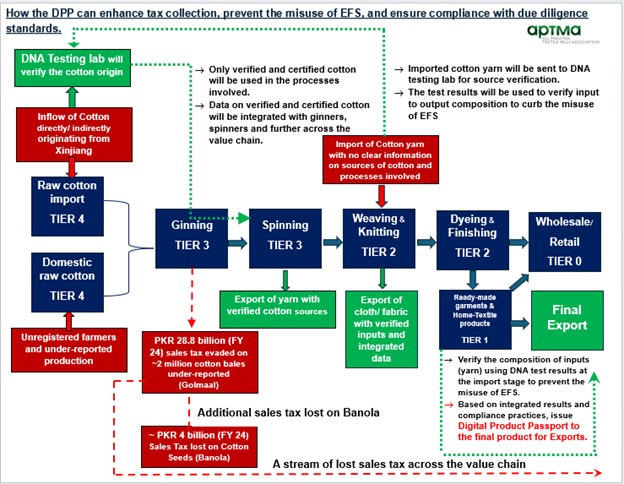
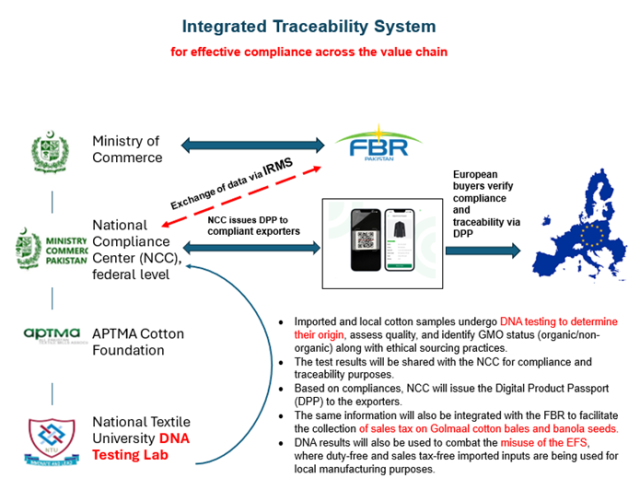
image_1753073243528-1280x853.webp

February 14, 2025

By Shahid Sattar | Sarah Javaid
As the EU tightens its regulations, many countries view compliance as a mere obligation, but the implications of this can have benefits far beyond maintaining trade relations. By aligning with sustainability standards, Pakistan can unlock access to global value chains, drive export-led growth, and tackle long-standing inefficiencies in the industrial value chain, including under-reporting, sales tax evasion, and the misuse of EFS.

With the EU accounting for 30% of Pakistan’s total exports, any regulatory shift from the EU will inevitably impact Pakistan’s trade. Rather than viewing this as a challenge, the policy makers need to turn this into an opportunity. While Pakistan has made progress under the GSP+ since 2014, continued access to the EU market will now depend upon compliance with their emerging regulations.

One such framework is the Digital Product Passport (DPP) under the Eco-design for Sustainable Products Regulation (ESPR), which was introduced in mid-2023 and will be enforced from 2027 onwards in sectors such as textiles, metals, and batteries. As the name suggests, the DPP represents a digital transformation in the industry’s value chain, enhancing transparency by digitally documenting product origins and production processes. It ensures due diligence in human rights and environmental standards across the value chain, preventing any product from qualifying for export without meeting transparency requirements. These requirements will be verified through a QR code displaying key production details, hence making the DPP a mandatory requirement for exporting to the EU.

But there’s more to it. Beyond ensuring due diligence, digitization through the DPP offers a real-time solution to perennial issues like under-invoicing, under-reporting, and EFS misuse. Pakistan must recognize this as a strategic advantage. Greater transparency will not only enhance access to global markets but also reinforce tax compliance.

Why Digitizing the Value Chain through DPP is Imperative?

Since 2013, Pakistan’s exports to the EU have grown significantly, with total exports increasing by 76% and textile exports by 87%. However, as buyers now prioritize transparency and traceability, the DPP is no longer just a compliance requirement – it is a binding regulatory necessity for maintaining and expanding Pakistan’s presence in the EU market.

Given this shift, it is crucial to recognize the link between the DPP and its potential role in addressing Pakistan’s structural challenges.

The FBR has long sought to curb tax evasion through initiatives like the Track and Trace System (TTS), but its limited scope has failed to eliminate illicit practices in many sectors such as tobacco and cement. True value chain traceability requires a broader approach – one that ensures due diligence while tackling tax fraud.

Pakistan’s textile sector remains highly fragmented, with SMEs constituting a significant portion of the value chain, primarily operating at the ginning and spinning stages. Many SMEs either supply large exporters or cater to the domestic market, but the lack of integration across the textile value chain leaves multiple supply channels vulnerable to tax evasion.

Following the FY 2025 budget’s removal of the sales tax exemption on local supplies for exports under the EFS, exporters increasingly turned to duty-free and sales tax-free imported yarn, which was comparatively cheaper. This shift away from sourcing domestic inputs – such as yarn from SMEs – combined with the EU’s strict traceability requirements, has made identifying the origins of imported yarn critical. Any product containing yarn that directly or indirectly originates from Xinjiang (Uighur region) faces an EU ban, jeopardizing not only exports but also brand credibility and future trade policies.

Despite these concerns, gaps in monitoring imported yarn usage persist. Many manufacturers misuse the EFS by diverting duty-free inputs to local production instead of exports, distorting the local yarn and cotton market. In parallel with the illegal use of this policy, 40% of SME spinning units have shut down due to the influx of imported inputs, further impacting local farmers who are left without buyers for their cotton.

At the farming stage, a significant number of unregistered cotton farmers in Pakistan operate within an informal market, relying heavily on uncertified seeds. This has led to poor cotton yields, increasing Pakistan’s dependence on high-value cotton imports from the US and Brazil.

Another major challenge requiring DPP’s digital intervention is the widespread tax evasion in cotton trading, commonly referred to as “Golmaal.” Approximately 2 million cotton bales are under-reported annually to evade sales tax. Estimates suggest that in FY 2024 alone, PKR 32.8 billion in sales tax was lost due to Golmaal cotton bales and banola, perpetuating tax evasion across the value chain.

Given these deep-rooted challenges, implementing the DPP is a fundamental prerequisite. A robust digital traceability system will ensure compliance, curb tax evasion, eliminate Golmaal practices, and expose corruption under the EFS.

Strategic Use of DPP and Role of FBR:

The implementation of this system requires urgent action from the FBR, starting with the creation of a centralized database shared with relevant ministries, such as the Ministry of Commerce. All players in the textile value chain must register and integrate into the system to qualify for exports to the EU. The final product will carry a QR-coded DPP, containing compliance details from farm to finished garment.

To begin with the first tier of the value chain, unregistered farmers will need to register once the DPP is implemented. Mandatory registration will enhance traceability and boost cotton productivity by curbing the use of fake seeds, documenting farmers’ produce, and streamlining underreported production.

To track Golmaal cotton bales, RFID (Radio Frequency Identification) technology can assign unique group IDs for real-time monitoring from the field to ginning, storage, and shipping, all linked to the centralized database. Similarly, QR codes on yarn, fabric, and finished products will trace raw material origins – whether imported or domestic – while also verifying compliance with sustainability standards, including water and energy usage, as well as any form of forced labor practices. Transaction records documenting manufacturers, suppliers, and buyers will ensure full value chain visibility.

With real-time digital records, the FBR can monitor value addition at each stage, significantly reducing tax evasion. Value addition currently stands at 5% in ginning, 10% in spinning, 15% in weaving/knitting, 20% in finishing, and 50% in garment manufacturing. The DPP will make this data transparent for policymakers. Linking it to POS-based tax collection will automate tax calculations, eliminating underreporting, fake invoicing, and ghost transactions, while also reducing manual intervention in tax collection.

Preventing the misuse of EFS through automation:

As discussed, the EFS has caused two major distortions in the textile value chain: the misuse of duty-free imports in local manufacturing and the challenge of tracing imported yarn origins. These issues undermine the system’s purpose and demand immediate intervention.

As of 2024, EFS supports over 1,700 exporters, who must submit an annual reconciliation statement within 30 days of the fiscal year’s end, with audits every five years. The previous five-year retention period for duty-free imports – now reduced to nine months – enabled large-scale misuse, with imports meant for exports diverted to local manufacturing to evade taxes.

Consequently, concerns arise over the origins of imported inputs, putting supply chain credibility at stake.

Ensuring export compliance with the EU now hinges on tracing imported yarn – its cotton source, production process, and adherence to sustainability standards. The DPP will strengthen oversight by digitally linking each imported input under EFS to its final exported product, preventing misuse and guaranteeing compliance.

By integrating DNA testing and digital verification, imported yarn and fabric can be tested at entry points and assigned a QR code verifying their origin. These records will be matched with final products to ensure compliance with EU regulations and prevent EFS misuse.

This system will ensure exporters use duty-free inputs within the nine-month retention period, eliminating misdeclaration and diversion. Failure to reconcile input usage with output will result in penalties or EFS revocation by the FBR.

Additionally, sales tax collection will be automated, ensuring that tax refunds under zero-rated regimes like EFS are granted only to genuine exporters.

Urgent call for making traceability mandatory in Pakistan:

To make this digital transformation happen, the government needs to urgently step up.

Past experiences demonstrate that without a legally binding system, the desired outcome will remain elusive. Therefore, the NCC must be designated as the sole regulatory body for exporters’ compliance.

A centralized database integrated with the NCC will enable it to oversee compliance with sustainability standards across the value chain and issue DPPs (in the form of QR codes) to textile exporters, allowing European buyers to access due diligence details directly from the final product.

Exporters who fail to provide the required information will not receive a DPP and, consequently, will be unable to export.

This will ensure exporters cooperate in data sharing and adhere to tax regulations. Non-compliance should result in penalties, including the revocation of EFS benefits.

Urgent attention is needed to designate the NCC as the regulatory authority and make the DPP a mandatory requirement. This will not only give Pakistan a first-mover advantage in South Asia but also enhance tax management, ensuring the country stays ahead in both sustainability and fiscal discipline.


LOCATIONS

Where We Are


GET IN TOUCH

Follow Our Activity


IslamabadKarachiLahore