image_1753075713678.webp

December 21, 2024

By Shahid Sattar | Sarah Javaid
After a challenging year in 2023, Pakistan’s value-added textile sector has demonstrated remarkable resilience in 2024. Export data reveals a return to pre-crisis performance levels, echoing the record-breaking achievements of 2022. At the outset of the current fiscal year, projections for textile and apparel exports estimated a range of USD 15-16 billion for FY 2025. However, the latest export figures suggest a potential recovery to the export levels seen in 2022.

As the current calendar year ends, a sneak peek at value-added textile exports during CY 2024 indicates a strong finish, reinforcing optimism that CY 2025 might at least match the record levels of 2022, if not outperform.

In order to ensure a better year for exports in 2025, key actions are needed, including continuing gas supplies to captive power plants, reversing the withdrawal of zero-rating on local supplies, reducing industrial power tariffs, and boosting domestic cotton production to safeguard net exports.

Textile Industry Performance: A Sneak Peek into the 2024 Calendar Year:

Pakistan’s total value-added exports (knitwear, woven garments, and home textiles), which saw a 15% decline in the 12-month CY 2023 compared to CY 2022, are expected to rebound with a year-on-year growth of 13% in CY 2024 as the year closes on a positive note for the downstream industry. A closer look at the numbers reveals that value-added textile exports have reached, or in some cases exceeded, the monthly levels seen in 2022. Knitted garments outperformed 2022’s record in October 2024 (Figure 1a), while woven garments and home textiles came close to matching their 2022 peaks (Figure 1b and 1c). Despite remaining below the USD 500 million mark per month, knitted garment exports show potential to surpass this threshold if the current growth trend persists.

The bullish trend in Pakistan’s value-added textile exports can be attributed to a mix of demand-side and supply-side factors, including rising demand from the West for compliant suppliers, increased orders driven by the weak performance of regional peers, and a global demand surge fueled by easing inflation in the US and Eurozone. If this momentum continues, Pakistan’s export growth could stay strong through 2025, further fueling the textile sector’s recovery and growth.

Global Trade is Projected to See an Uptick in 2025:

Meanwhile, WTO economists forecast a 2.7% increase in world merchandise trade volume in 2024, recovering from the -1.2% contraction in 2023. This rebound is primarily driven by declining inflation in Pakistan’s key export markets, the US and Eurozone. Lower inflation has enabled monetary easing, setting the stage for increased economic activity and demand for imports, which boosts the outlook for Pakistan’s textile exports in these regions.

Building on 2024’s momentum, the global trade outlook for 2025 is even more optimistic, with world merchandise trade projected to grow by 3.0%, despite challenges like regional conflicts and policy uncertainty. Asia is expected to lead global trade, with export growth of 4.7% and import growth of 5.1%.

These global trends present a significant opportunity for Pakistan’s export sectors, particularly value-added textiles, to sustain their growth in 2025. With knitted garments already surpassing 2022 export levels and woven garments and home textiles approaching their peaks, Pakistan’s exporters are well-positioned to capitalize on the global recovery, provided that supportive policies are enacted to maintain competitiveness and ensure long-term growth.

Did Pakistan’s Export Gain Ground Amid Bangladesh’s Setbacks?

While future demand for Pakistan’s exports from Western markets shows potential for growth, Bangladesh has also played a short-term role in driving Pakistan’s exports. Political unrest and labor disputes in Bangladesh caused some export orders, between December 2024 and March 2025, to be redirected to textile producers in Asia, including Pakistan. Although this redirection has provided short-term gains, other developments in Bangladesh could have long-term implications for Pakistan’s exports throughout 2025.

The Bangladesh Knitting Owners Association (BSCIC) has reported significant strain on the industry, with over 2,300 registered and unregistered factories struggling, many of which have closed in the past 18 months. An estimated 85% of BSCIC knit traders are operating at a loss. Bangladesh has already experienced a decline in knitted garment exports, dropping from USD 6.43 billion in the four-month period from July to October 2023 to USD 5.34 billion in the same period in 2024.

In contrast, Pakistan has demonstrated remarkable growth in value-added exports, with an overall increase of 21% during the same period (Figure 2a). This includes 19% growth in knitted garments, along with 25% and 20% growth in woven and home textiles, respectively, outpacing Bangladesh (Figure 2b).

Given that both Pakistan and Bangladesh share the same key markets for textile exports, this growth in Pakistan’s exports is particularly noteworthy and underscores its ability to perform well in 2025, contingent on protecting the full value chain and sustaining export momentum across all segments.

The grass isn’t always greener on the other side:

Although 2024 proved to be a strong year for downstream textile exports, it has been a setback for the upstream sector. Data indicates that Pakistan’s exports of cotton, cotton yarn, cotton cloth, and other intermediate goods are at their lowest in the past three years, even falling below 2023 levels. In 2022, exports of this group were valued at USD 3.5 billion, while in 2023, they decreased to USD 3.02 billion. However, in 2024, exports are expected to hover around USD 2.7 billion (Figure 3).

While value-added exports have driven overall growth, the decline in upstream textile exports may prevent total exports from reaching 2022 levels. Given this declining trend in exports of intermediate goods, total exports for CY 2024 are projected to reach USD 17 billion, with USD 13.4 billion from value-added textiles, USD 2.4 billion from intermediates, and USD 1.2 billion from other textile exports.

A Word of Warning—if the declining trend in intermediate goods’ production and exports continues due to withdrawal of zero-rating and rising energy costs, CY 2025 may not match even 2024 levels and could fall significantly below those of 2022.

As a result of these policy lapses, Pakistan is on the brink of facing an annual export loss of intermediates valued at USD 3 to 3.2 billion.

Based on our projections, value-added textile exports in CY 2025 are expected to remain consistent with CY 2024 levels, hovering around USD 13.3 billion (Figure 4a). However, the total export outlook hinges on the recovery of intermediate exports. If this downward trend continues, Pakistan’s total textile exports are projected to remain around USD 16.9 billion in CY 2025 (Figure 4b).

What Lies Ahead for Exports?

Amid declining inflation, the SBP has reduced the policy rate by 750 basis points since July 2024, bringing it to 13%, offering some relief to the strained business community. This follows a challenging period when Pakistan faced a record-high policy rate of 22% for 12 consecutive months (June 2023–July 2024), which significantly pressured businesses. This strain was further exacerbated by the 2024 budget, which shifted businesses from a fixed tax regime to the normal tax regime, resulting in a cumulative tax burden of 39%, including the super tax.

However, with total exports rising by 8.7% (July-Oct 2024), driven by growth in value-added textile exports, recent data indicates signs of recovery in economic activity. Nevertheless, given the policy volatility in Pakistan’s economic landscape, the future still remains uncertain.

Market Based Solution is the only Sustainable Solution:

To sustain the export momentum which is the only sustainable solution to Pakistan’s twin deficit problem, the government must foster an environment that promotes industrial activity rather than stifles it. Cutting gas supplies to Captive Power Plants is a counterproductive policy that not only jeopardizes textile manufacturing but also drives up gas prices for lifeline consumers, who have long benefited from cross subsidies provided by the industry.

Aligning Pakistan’s Policies with International Regulations through Traceability and Compliance:

Apart from addressing the power sector’s structural challenges, the government must prioritize enhancing Pakistan’s export competitiveness in international markets through compliance and traceability.

As textile value chains evolve, super-vendors – vertically integrated companies managing all processes across the value chain – are emerging as the future of global supply networks. Buyers are now seeking fewer, but more reliable partners, driven by rising trade tensions and ethical sourcing concerns.

Pakistan’s textile businesses are well-positioned to meet these demands, but their success depends on compliance with international regulations. To strengthen Pakistan’s position in global value chains, the government must operationalize the National Compliance Center and align with Western policies without any further delay. Traceability and adherence to environmental and labor standards must be ensured from cotton fields to finished garments, guaranteeing compliance at every stage and preventing the negative impact of ‘blaming and shaming’ on Pakistan’s textile exports.

Through establishing a comprehensive traceability plan, Pakistan will unlock a first-mover advantage in the region.

In conclusion, to sustain the export growth momentum of 2024 and beyond, securing competitive access to inputs—whether energy or raw materials—is crucial. Protecting all segments of the value chain is vital to avoid disruptions that could jeopardize overall export performance. Prioritizing compliance with international standards is equally important. The government must focus on export-led growth and sustainable solutions to fiscal mismanagement, rather than relying on short-term fixes.

As the current year comes to an end, the industry hopes for a policy-shock-free year and, most importantly, a Happy New Year for Pakistan’s export sector and overall economy.
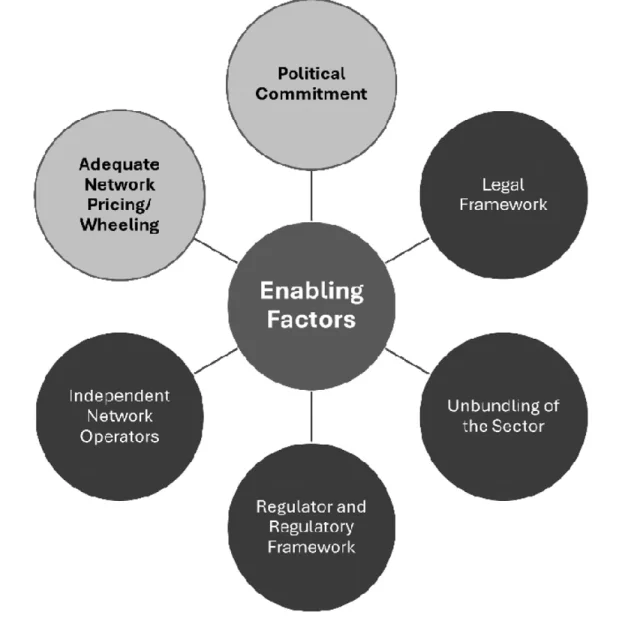
image_1753083350606.webp

December 16, 2024

Pakistan’s energy sector stands ensnared in inefficiencies, financial instability, and a chronic inability to implement meaningful reform.

With the combined gas and power sector circular debt now exceeding Rs 5 trillion, and electricity tariffs among the highest in the world, Pakistan’s energy sector is in despair and has severely eroded industrial sectors’ competitiveness.

Despite decades of promises, reform initiatives like the Competitive Trading Bilateral Contracts Market (CTBCM) have exposed rather than addressed the sector’s systemic dysfunctions. Central to this failure is the absence of competitive and feasible wheeling charges for business-to-business (B2B) power contracts, a key enabler without which CTBCM or any other free-market model is bound to fail.

Indeed, the CTBCM risks being stillborn—ambitiously conceived but fatally undermined by structural flaws and poor implementation.

The CTBCM, intended as a solution to inefficiencies in Pakistan’s electricity sector, is a prime example of these challenges. Despite its promise of introducing wholesale competition, the initiative is hampered by significant obstacles that call its viability into question.

One of the CTBCM’s greatest hurdles is systemic inertia. Much of Pakistan’s power generation remains tied up in long-term contracts with excessive guaranteed returns, stifling market-driven dynamics. Without renegotiating these agreements, competition becomes an illusion.

Meanwhile, the country’s energy infrastructure is riddled with inefficiencies, theft, and excessive transmission losses. These failings inflate costs and burden the system with unsustainable circular debt. Instead of addressing these foundational issues, policymakers appear content to layer new initiatives over old problems, exacerbating rather than solving the crisis.

Currently, Pakistan operates under a single-buyer model where electricity procurement is centralized, a setup that fosters inefficiency by passing costs directly onto consumers through inflated tariffs.

The CTBCM aims to shift this model by introducing competition in the electricity market through bilateral contracts and dynamic pricing. Yet, the framework has been burdened with structural flaws, including the contentious inclusion of stranded costs and cross-subsidies in wheeling charges.

Stranded costs, the legacy financial liabilities tied to underutilized capacity, and cross-subsidies, aimed at protecting vulnerable consumers, are critical elements of the dysfunction. Their inclusion in wheeling charges has turned bulk power consumers (BPCs) into the scapegoats of a broken system. Instead of addressing the root causes of these costs through renegotiations or targeted reductions, the government has chosen to pass

them on, inflating wheeling charges to unsustainable levels.

The Discos’ and CPPA-G’s proposed Use of System Charges (UoSC), averaging Rs 27.16/kWh, are far removed from what is economically viable for industries or competitive in global markets. At 9.7 cents/kWh, the wheeling charge alone in Pakistan would be as much as twice the full power tariffs in countries like China, India, Bangladesh and Vietnam.

When challenged on the inclusion of stranded costs and cross-subsidies in wheeling charges, the Power Division entities frequently lean on the argument that these provisions are mandated by the Power Policy.

However, this justification is as unconvincing as it is shortsighted. Policies are not immutable doctrines; they are practical tools designed to evolve with shifting realities. Insisting on treating the Power Policy as a rigid, unchangeable mandate reflects a lack of political will to confront rooted interests and rethink outdated frameworks.

What’s more troubling is that the CPPA-G’s exorbitant figure raises serious questions about the bureaucracy’s commitment to reform. The proposal appears designed to perpetuate the status quo, and discourage reform rather than enable it. If the true goal were to incentivize competition and pave the way for a functional electricity market, a proposal with such prohibitive charges would never have been advanced.

Adding to these bureaucratic hurdles, bulk power consumers (BPCs) opting for wheeling arrangements would face the requirement of a one-year advance notice. This stipulation creates further disincentives for industries already grappling with high energy costs, as it forces them to bear the financial burdens of an inefficient grid for an extended period even after committing to shift. Worse still, even after exiting the grid, these consumers would be charged for recovery of stranded costs for up to five years. This extended financial obligation unfairly penalizes industries pursuing competitive alternatives.

Moreover, CTBCM must include the option of a hybrid setup—allowing consumers to draw power from both private suppliers and the grid. This would preserve grid reliability while prioritizing competitive wheeling arrangements. Such a policy can foster a more balanced energy market and help mitigate the rigidity and inefficiency currently plaguing Pakistan’s energy governance.

Another critical issue is that Pakistan’s regulatory framework lacks the resources and expertise to oversee a reform like the CTBCM.

Regulatory bodies in lower-income countries often operate with significantly fewer resources than their developed counterparts, leaving gaps in enforcement, oversight, and transparency. Poor regulation enables monopoly abuse and cartel-like behaviour among power producers, as seen in California and Turkey, where distorted markets led to inflated prices and financial losses. A stable, transparent, and fair regulatory framework is necessary to attract investment and maintain confidence in the energy sector.

Implementing the CTBCM without first strengthening regulatory institutions risks compounding existing problems. The plan calls for the creation of multiple new organizations, which could easily devolve into avenues for patronage and waste, with leadership positions awarded based on connections rather than competence. Instead of fostering competition, such a setup would exacerbate existing inefficiencies and deepen the financial strain on the energy sector.

The consequences of these policies are dire. By inflating grid tariffs and wheeling charges with stranded costs and cross-subsidies, the government has accelerated the exodus of industries from the grid to captive sources like solar power and gas/FO/coal-fired captive generation.

While this shift benefits individual enterprises, it undermines the stability and sustainability of the grid and power sector. As the pool of contributors shrinks, per-unit prices increase, pushing remaining consumers—industrial and otherwise—further into financial strain and towards more competitive alternatives.

Amid this grim outlook, recent negotiations and the termination of contracts with Independent Power Producers (IPPs) offer a glimmer of progress. These renegotiations signal a long-overdue move to rationalize the burdensome long-term agreements that have hamstrung the energy sector for decades.

Similarly, the reduction of the cross-subsidy from Rs 240 billion to an estimated Rs 75-100 billion is a notably welcome step toward alleviating the financial burden on industrial consumers. However, even at reduced levels, the cross-subsidy remains economically unviable, continuing to distort energy prices and erode the competitiveness of critical economic sectors.

To address these challenges holistically, the power sector bureaucracy must fundamentally reassess its pricing strategies. Stranded costs and cross subsidies must not be included in the wheeling charge if it is to be made financially viable for B2B power contracts.

Additionally, the one-year notice requirement for transitioning to wheeling must be revisited to foster greater flexibility and encourage broader participation in competitive energy markets, and the concept of hybrid BPCs must be allowed.

Finally, implementing a robust regulatory framework is crucial to ensuring transparency, equity, and efficiency across the energy sector, laying the groundwork for sustainable reform.

It should be crystal clear to all stakeholders involved that without market-driven and financially viable wheeling charges, the CTBCM is doomed to fail. These charges are the backbone of any functional electricity market, and their absence renders the promise of competition a hollow illusion, ensuring that the CTBCM will remain an exercise in futility rather than a pathway to meaningful reform.


image_1753082530732.webp

December 9, 2024

Pakistan’s textile industry, a key component of the economy and a full-spectrum value chain, is unravelling under the weight of poorly conceived policies. The government frequently champions private sector-led growth in rhetoric, yet its actions are stifling competition and undermining the very firms they claim to support.

Instead of fostering market-driven progress, policies remain entrenched in short-termism and mismanagement, suffocating the private sector and driving Pakistan closer to economic collapse. The textile sector – a vital contributor to exports and employment—now finds itself in a crisis, its decline symptomatic of broader structural failures.

At the centre of this are two policy measures: the elimination of gas supply to captive power plants (CPPs) by January 2025 and the withdrawal of zero-rating for local supplies under the Export Facilitation Scheme (EFS). These decisions, taken under the guise of economic adjustments to meet IMF conditions, reflect a myopic focus on immediate fiscal concerns rather than the long-term health of Pakistan’s industrial base.

From cotton farming to spinning, weaving, and garment production, Pakistan is one of only three countries with a full textile value chain that supports an entire ecosystem of employment, sustaining millions of livelihoods and billions in revenue.

However, this value chain is fragmenting thanks to short-sighted policies that actively exacerbate the challenges faced by this sector.

The removal of zero-rating for local supplies under the Export Facilitation Scheme has hit upstream segments of the textile industry – such as spinning and weaving – particularly hard. These segments, critical for creating intermediate goods used in finished textile products, now face an 18% sales tax, while imported inputs remain duty-free and exempt from sales tax.

This imbalance creates an uneven playing field, making imported inputs cheaper and more attractive than domestically produced goods.

The consequences have been immediate and dire: domestic yarn production fell by 40% year-on-year in 2024, while yarn imports surged to an unprecedented 27 million kilograms in November 2024, up 391% YoY.

The resulting erosion of local manufacturing capacity has destabilized the entire value chain, jeopardizing jobs, exports, and the trade balance.

Compounding this problem is the inefficiency of the sales tax refund system, which has failed to provide exporters with timely and adequate reimbursements.

Refunds, legally required to be processed within 72 hours, are often delayed by six months or more. Exporters typically recover only 60% of their claims, according to the World Bank’s 2022 Country Memorandum.

These delays and partial refunds add an additional interest cost of 10-15% to working capital required for procurement of intermediate inputs made in Pakistan, eroding competitiveness and forcing exporters to substitute domestic inputs with imports to avoid cash flow constraints.

While recent months have seen a modest increase in textile exports of approximately $200 million, this is concentrated in a handful of large companies and attributable to a low base effect from when Pakistan’s economic crisis was at its peak last year.

It does little to offset the broader challenges and financial unsustainability facing the industry and economy. In fact, the limited progress underscores the fragility of the sector, as critical segments of the value chain continue to face deindustrialization, threatening its long-term viability.

If the government genuinely aspires to foster private sector-led growth, it must offer the private sector breathing space it so desperately needs.

One way forward would be to adopt a progressive sales tax structure akin to India’s model. This system applies a graduated tax rate of 5-12% on raw materials and inputs as they progress up the value chain, with final consumer goods taxed at the higher rates of 12-18%.

Such a structure not only ensures robust revenue collection under the value-added GST regime—where input taxes are fully refundable—but also provides a fairer, more efficient tax framework that bolsters local industries.

By aligning taxation policy with industrial development goals, this approach would safeguard domestic producers while maintaining fiscal discipline.

Energy policy missteps are another major source of the crisis. The decision to eliminate gas supply to captive power plants reflects a fundamental misunderstanding of Pakistan’s energy and industrial dynamics.

Captive power plants, which many industries rely on, provide a stable and cost-effective alternative to the national grid, which is both expensive and unreliable.

Grid electricity costs in Pakistan range from 14–16 cents/kWh, significantly higher than the 5–9 cents/kWhin regional competitors like China, Bangladesh, India, and Vietnam.

Moreover, the grid is plagued by frequent interruptions, voltage fluctuations, and frequency instability, rendering it unsuitable for precision industries such as textiles.

The government argues that diverting gas from CPPs to the grid will optimize resource allocation and improve efficiency. Yet this rationale fails to account for the efficiency of CPPs, particularly those using combined heat and power systems, which operate at 80–90% efficiency.

In contrast, government-run RLNG plants achieve net efficiencies of just 40–52%, as the grid suffers from substantial transmission and distribution losses. Forcing industries to rely on the grid would not only increase their costs but also destabilize their operations, pushing many firms toward closure.

The cumulative effects of these policies threaten a cascading collapse of the textile value chain.

As spinning mills shut down due to exorbitant energy costs, weaving units are next in line to fail. This domino effect will ripple through the entire sector, crippling the cotton sector, destroying livelihoods, and plunging the economy into deeper instability.

The textile sector, which accounts for $3–6 billion in annual exports, is vital to Pakistan’s foreign exchange earnings. Its collapse would exacerbate an already precarious balance of payments crisis, further depleting foreign reserves and undermining economic stability.

The broader energy landscape of Pakistan is a result of decades of mismanagement and inefficiency. Circular debt in the gas and power sectors now exceeds Rs. 5 trillion, a testament to years of poor governance, unrealistic pricing models, and unplanned capacity additions.

The decision to eliminate CPPs is emblematic of this broader failure, conflating systemic issues with short-term fixes that only exacerbate inefficiencies. Instead of addressing the root causes of circular debt and grid inefficiency, policymakers are imposing measures that threaten to dismantle the very industries that underpin the economy.

To provide industrial sectors with competitively priced energy and allow them to compete in international markets, Pakistan must adopt a comprehensive, market-driven approach that prioritizes efficiency and transparency.

The continuation of RLNG supply to industrial self-generation facilities is essential, with measures to ensure ring-fenced RLNG pricing for stability, rationalized unaccounted-for-gas (UFG) rates in line with actual UFG of RLNG consumers, and the elimination of cross-subsidies that force industries to subsidize gas consumption in other sectors like fertilizer.

Additionally, industries must be granted the right to import their own RLNG, with transmission and distribution facilitated through wheeling on the Sui companies’ network. This would enable greater flexibility and reduce dependence on an inefficient centralized system.

Further reforms should grant industries the right to establish bilateral contracts with local gas fields, consistent with government policies that allow third-party access to 35% of domestic gas resources from new discoveries.

In the power sector, the operationalization of the Competitive Trading Bilateral Contracts Market (CTBCM) is imperative, enabling industries to engage in B2B contracts for power procurement.

This must be supported by rational Use of System and wheeling charges that exclude cross-subsidies and stranded costs. Such a framework would ensure access to competitively priced electricity while adhering to international environmental regulations and supporting net-zero targets.

Particularly, the distinction between gas used for power generation and other industrial applications must end, as in-house power generation, often through cogeneration systems, is an integral part of the industrial process.

Many industries utilize cogeneration not only for power but also for heat, steam, and hot water, making energy an essential input to manufacturing. It is not the government’s role to dictate how this input is used within industrial premises. A uniform gas tariff for industry is not only fair but essential for sustaining industrial competitiveness.

Importantly, all these recommendations are grounded in market principles without any reliance on subsidies. They represent a clear pathway toward creating an energy system that supports industrial growth while maintaining fiscal discipline.

By fostering a competitive, transparent, and market-oriented energy framework, Pakistan can provide its industries with the tools they need to drive economic recovery and sustainable development.

It is also important to address the flawed structure of the winter incentive package for incremental consumption that could otherwise be an excellent means to stimulate demand on the grid.

The package has been designed to fail as it is exceedingly complex and difficult for industrial consumers to comprehend and implement.

The estimated savings for the industry under the package amount to only 5-6%, which is inadequate for meaningful rejuvenation, particularly when savings are capped at 25% of incremental consumption over base units.

Power consumption among APTMA members was down by approximately 40% YoY in October 2024, and 60% compared to the year before, with similar trends in other LSM industries.

To benefit from the incremental package in its current form, industries must first recover their reduced consumption to previous years’ levels, which is calculated based on the 50-30-20 weighted average of the past three years for the same month. After this, they are required to increase power usage by an additional 25% to fully maximize benefits.

This mechanism is highly unrealistic, as increasing power consumption is tied to manufacturing demand, which depends on confirmed orders. Scaling up production also involves significant costs, including labour and other overheads, which far outweigh the limited relief offered by the 25% incremental savings.

The 25% cap on incremental consumption is also unnecessarily restrictive. Current demand remains highly suppressed due to skyrocketing tariffs over the past two years, meaning the tipping point for higher generation costs is still far off. Removing the cap would allow industries greater flexibility to benefit from the package.

Furthermore, the proposed Rs. 26.07/kWh tariff is misaligned with actual marginal generation costs, which, based on expected winter demand levels of 8,000-13,000 MW, is closer to Rs. 17/kWh.

The higher tariff figure provided by CPPA-G appears inflated and fails to create a meaningful incentive for industries to increase energy demand on the grid. A revised tariff closer to Rs. 17/kWh would encourage significantly higher consumption and support the government’s energy demand and transition-to-grid objectives.


LOCATIONS

Where We Are


GET IN TOUCH

Follow Our Activity


IslamabadKarachiLahore